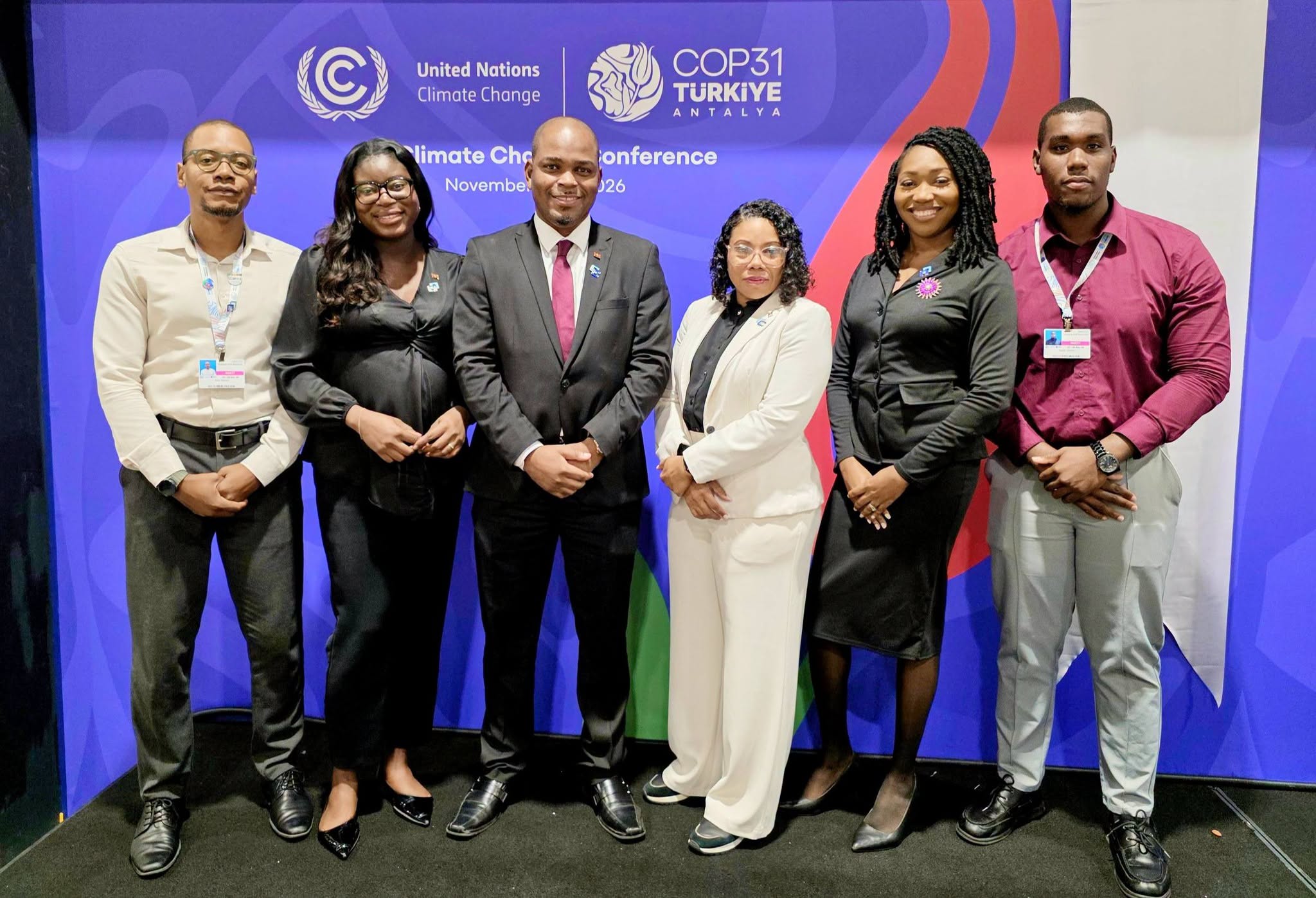
Held in Antalya, Türkiye, the 31st United Nations Climate Change Conference (COP31) has emerged as a critical global platform for forging coordinated cross-border action to tackle the escalating climate crisis, and Antigua and Barbuda is ramping up its engagement to safeguard the core interests of its small island population. The Honourable Michael Joseph, who oversees the twin portfolios of Health, Wellness and Environment and Civil Service Affairs, has launched a series of targeted, in-depth strategic consultations with the full national delegation stationed at the global summit to align on real-time negotiating priorities. The high-level delegation assembled to represent Antigua and Barbuda’s interests brings together cross-sector technical and diplomatic expertise: it is led by Ruleta Camacho Thomas, the country’s Climate Change Ambassador and Director of the Department of Environment, alongside Department of Environment team members Arry Simon, Garth Simon and Gita Nicholas, J’noure Smith-Kellman from the Ministry of Health, and Zachary Phillips from the Ministry of Legal Affairs. During these closed-door engagement sessions, frontline negotiators walk Minister Joseph through granular, up-to-the-minute updates from every active COP31 negotiating track, lay out the unified position papers Antigua and Barbuda has co-developed with broader Caribbean regional partners, and troubleshoot actionable strategies to keep the island nation’s unique vulnerabilities front and center in every draft decision tabled at the summit. COP’s multi-year negotiation framework is designed to deliver binding global agreements on collective climate action, spanning core pillars including steep cuts to global greenhouse gas emissions, the disbursement of accessible, no-strings-attached climate finance for frontline vulnerable nations, scaled-up investments in community resilience, and formalized frameworks to address the growing toll of loss and damage from increasingly frequent extreme weather events. For small island developing states like Antigua and Barbuda, these far-from-abstract negotiations carry immediate, tangible stakes for national livelihoods and long-term survival: the outcomes directly determine access to critical funding for coastal erosion mitigation, climate-resilient public infrastructure upgrades, long-term water security programs, targeted support for low-income communities at highest risk of storm damage, and hurricane and drought preparedness systems that shield public health and economic stability. To amplify its voice on the global stage, Antigua and Barbuda coordinates closely with peer nations through two key blocs: the Alliance of Small Island States (AOSIS) and the Caribbean Community (CARICOM), where collective bargaining power far outstrips the influence any single small nation could wield alone. The unified regional negotiating agenda prioritizes non-negotiable targets including full global adherence to the 1.5°C global warming threshold, predictable and simplified access to dedicated climate financing, expanded global investment in local adaptation measures, and formal, mandatory recognition of the unique structural disadvantages small island developing states face in all formal COP decision texts. Minister Joseph’s sustained, on-site consultation framework is a deliberate governance mechanism to bridge the gap between fast-moving international summit negotiations and Antigua and Barbuda’s domestic national development plans, public health targets and community resilience priorities, ensuring no outcome agreed at COP31 runs counter to the island nation’s most urgent public and national interests.
Minister Joseph Meets Antigua and Barbuda Delegation to Review Climate Negotiations