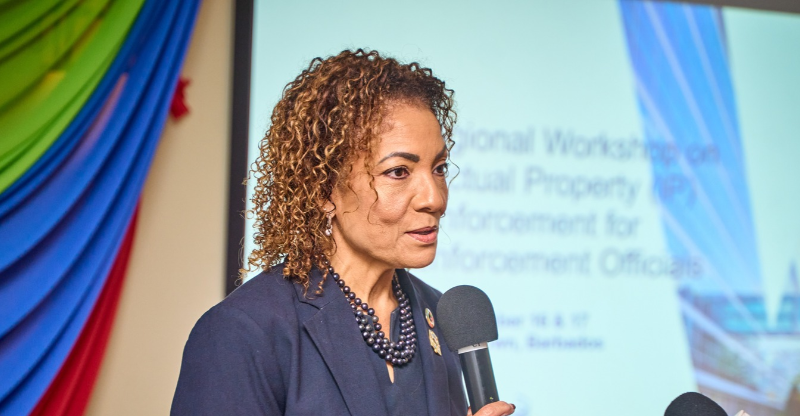
Against a backdrop of rapidly expanding cross-border digital commerce that has spawned ever-more sophisticated intellectual property crimes, top Barbadian business and government officials have laid out a urgent case for coordinated, multi-stakeholder action to shore up IP protections across the Caribbean sub-region. The call came during the official launch of a two-day specialized training workshop for frontline law enforcement personnel, hosted at the Courtyard by Marriott in Hastings, Barbados this Monday. Convened as a joint initiative by the World Intellectual Property Organization (WIPO) and the Business Barbados Intellectual Property Office (BBIPO), the training is designed to equip attendees with actionable strategies to navigate the growing complexities of modern IP infringement cases. In her opening address, Business Barbados chair Connie Smith emphasized that intellectual property rights carry no tangible value without robust, well-resourced enforcement systems behind them. She warned that unchecked counterfeiting, digital piracy and unauthorized exploitation of trademarks and creative works do not only harm individual rights holders: they erode the viability of law-abiding local businesses, stifle innovation and creative output, and erode consumer trust in the integrity of domestic and regional marketplaces. Smith outlined that workshop participants would dive into hands-on problem-solving for persistent pain points across the full IP enforcement pipeline, from evidence collection during digital infringement investigations, to navigating cross-border legal hurdles for prosecutions, and addressing fast-growing emerging threats specific to the digital economy and global sports merchandise sectors. She laid out three non-negotiable priority outcomes for the gathering: first, to upgrade the technical investigative and prosecutorial skill sets of participating officials; second, to break down information silos between IP offices, law enforcement, customs units, prosecutors, the judiciary and private sector stakeholders, while formalizing cross-border information sharing protocols; and third, to build proactive readiness to counter increasingly complex IP crime tactics that evade traditional regulatory guardrails. Adding to the call for systemic reform, Kevin Hunte, Permanent Secretary of Barbados’ Ministry of Business, confirmed that the country is already advancing legislative updates to modernize its national IP regulatory architecture, as a foundational step toward building a fully coordinated cross-agency enforcement regime. Hunte stressed that standalone legal reforms would not deliver meaningful impact, noting that the ongoing development of a comprehensive national IP strategy will serve as a unifying roadmap to position intellectual property as a core driver of national economic development, streamline fragmented enforcement workflows, and create a more resilient, interconnected IP protection ecosystem for Barbados and its regional partners.
Business Barbados chair calls for stronger action on intellectual property offences