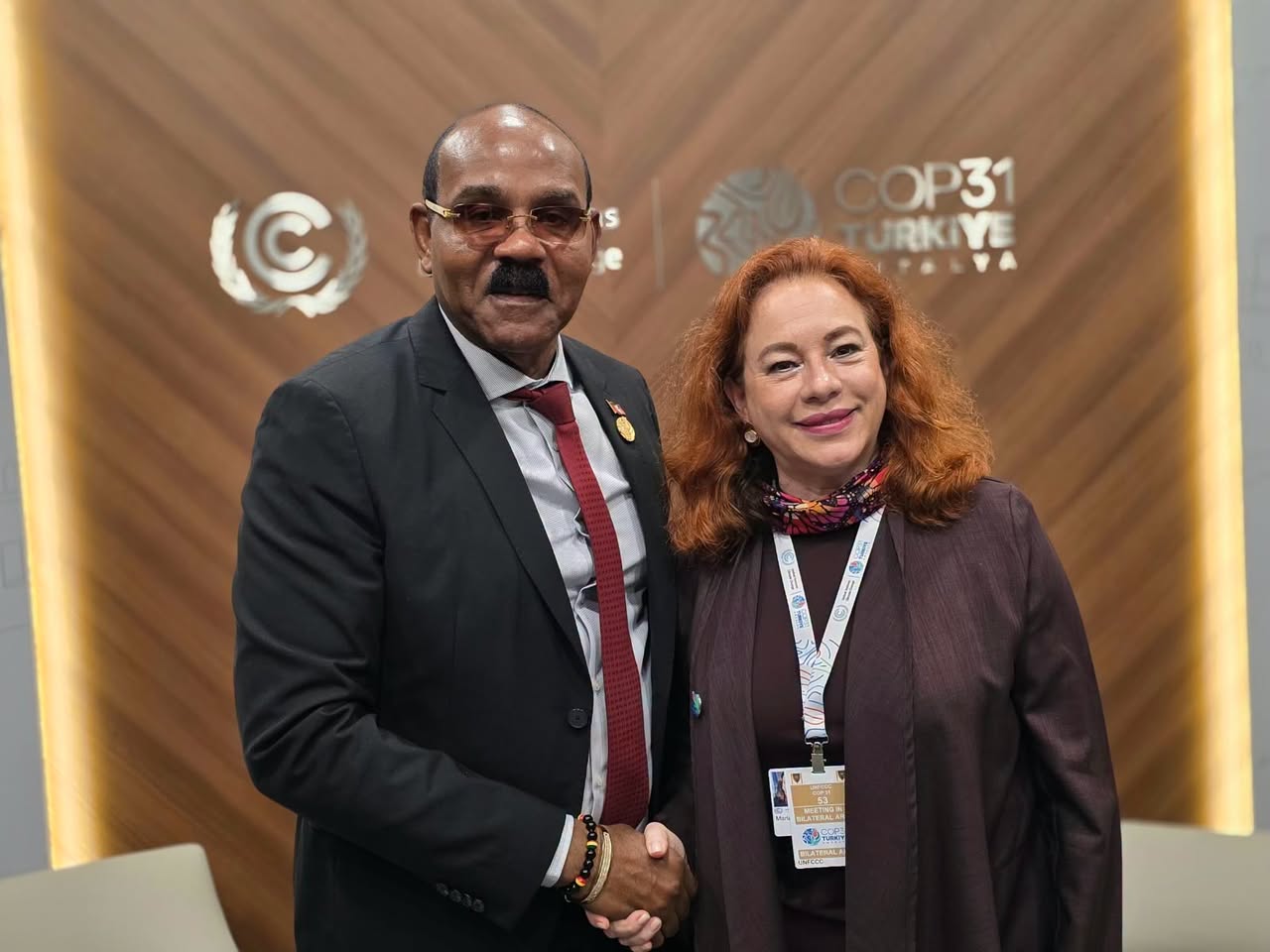
Against the backdrop of high-stakes global climate negotiations at the 31st United Nations Climate Change Conference (COP31) hosted in Antalya, Türkiye, Antigua and Barbuda’s Prime Minister the Right Honourable Gaston Browne held a pivotal bilateral discussion with Her Excellency María Fernanda Espinosa Garcés, the Caribbean nation’s official nominee for the top post of United Nations Secretary-General. The closed-door engagement marked a key milestone in the island nation’s diplomatic push to place a seasoned, multilateralism-focused leader at the helm of the UN, following the government’s formal submission of Espinosa’s candidacy on May 11, 2026. Espinosa, an acclaimed Ecuadorian career diplomat, boasts an unparalleled track record of global public service: she made history as only the fourth woman to ever preside over the 73rd Session of the UN General Assembly, and previously served as Ecuador’s Minister of Foreign Affairs, with decades of senior leadership spanning international diplomacy, cross-border environmental governance, and inclusive sustainable development frameworks. Prime Minister Browne underscored during their talks that Espinosa’s deep, decades-long focus on mitigating systemic barriers facing developing nations, particularly Small Island Developing States (SIDS), aligns seamlessly with Antigua and Barbuda’s decades-long advocacy to reform the UN into a more inclusive, representative, and responsive global governance body. The timing of their COP31 meeting carried added symbolic weight, as Espinosa has long been a leading voice in global climate action, a priority that sits at the very core of Antigua and Barbuda’s national survival agenda as a low-lying SIDS disproportionately vulnerable to sea level rise and extreme weather events. The nomination also signals Antigua and Barbuda’s unwavering commitment to dismantling long-standing gender gaps at the highest echelons of global governance: in the 81-year history of the United Nations, no woman has ever been appointed to the Secretary-General role, making the upcoming selection cycle a historic chance to advance gender parity across the UN’s senior leadership structure. For Prime Minister Browne, the discussion with Espinosa formed a core component of his broader COP31 diplomatic itinerary, where he has spent the duration of the summit lobbying world leaders for bolder, more actionable climate mitigation commitments, scaled-up financial support for vulnerable nations, and guaranteed SIDS representation in all top-tier global decision-making forums. Browne has repeatedly emphasized in recent public addresses that the contemporary international community faces a cascade of overlapping, unprecedented crises — from accelerating climate breakdown and simmering geopolitical flashpoints to stalled sustainable development progress and widening global economic inequality — that demand a far more cohesive, effective multilateral leadership model than the UN has deployed in recent years, a gap he argues Espinosa is uniquely qualified to fill.
Prime Minister Browne meets Antigua and Barbuda’s Nominee for United Nations Secretary-General at COP31