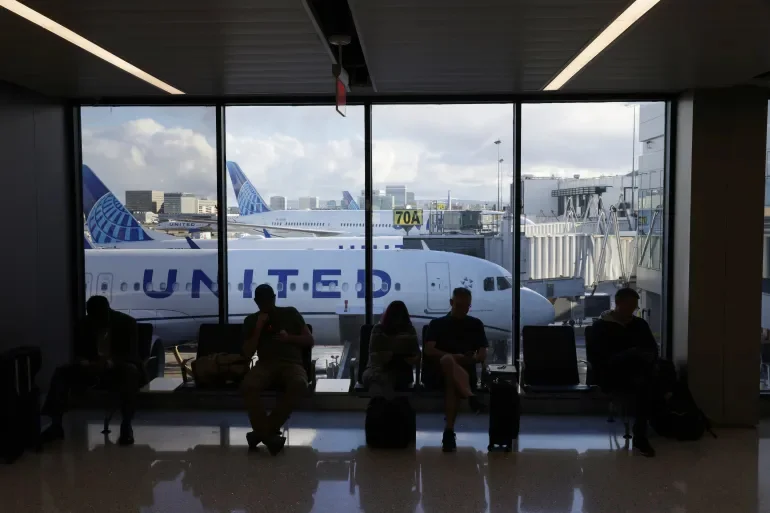
On November 13, 2026, a cascading technical failure in U.S. air traffic control telecommunications networks triggered an unprecedented nationwide ground stop that upended travel for more than 1.5 million passengers, sending ripple effects across North American and global aviation systems. The Federal Aviation Administration (FAA) implemented the full hold on all departing U.S. flights at approximately 4:15 p.m. local time, lifting the restrictive order just over four hours later at 8:15 p.m., but the operational chaos generated by the outage has continued to unfold days after the initial incident. The root of the disruption was traced to a malfunction affecting the core communication networks linking 22 regional air traffic control centers, the critical facilities responsible for safely transferring flight tracking data and aircraft oversight between jurisdictions across the national airspace. U.S. Secretary of Transportation Sean Duffy confirmed preliminary investigations point to incompatibility issues between decades-old legacy communication hardware and recently deployed modern digital upgrades, emphasizing that no evidence has emerged to indicate a cyberattack, deliberate sabotage, or malfunction of the FAA’s newly launched AI navigation system contributed to the failure. Real-time flight tracking data recorded more than 4,700 total flight cancellations across the U.S. on Friday alone, alongside over 10,000 delayed departures and diversions for hundreds of airborne aircraft that were rerouted to alternate airports to avoid congested, closed airspace. By early Saturday, hundreds more cancellations had already been logged as carriers struggled to untangle a completely misaligned operational grid: aircraft, flight crews, and ground staff were no longer positioned at the locations required to run pre-published schedules, creating massive backlogs at major hubs including Los Angeles International Airport, where United Airlines passengers were pictured waiting in crowded terminals, and Harry Reid International Airport in Las Vegas, where fleets of aircraft sat parked idle during the ground stop. Major U.S. and regional international carriers rolled out emergency mitigation policies in response: Delta Air Lines initiated a phased return to service and allowed all affected passengers to rebook their itineraries without change fees, United Airlines resumed partial operations but scrapped the vast majority of remaining Friday evening flights, JetBlue canceled nearly all of its Friday services entirely and outlined a gradual restart plan for Saturday, while Air Canada axed all remaining cross-border flights to and from the U.S. for the rest of the day. The disruption spilled far beyond U.S. borders: an estimated 70 scheduled flights at Mexico City International Airport faced knock-on delays and cancellations, while Toronto Pearson International Airport reported that flights not transiting U.S. airspace operated on normal schedules. The chaos also rippled into professional and collegiate sports travel, with multiple NBA, NHL, and U.S. college football teams unable to make planned trips for weekend fixtures: the Brooklyn Nets were forced to delay their departure for a Saturday away game, while the San Jose Sharks waited hours for airspace clearance to travel to Utah, forcing league administrators to explore alternate ground transport options to avoid match postponements. The high-profile outage has reignited long-simmering policy debates over chronic underinvestment in America’s aging air traffic control infrastructure, with federal officials noting the incident starkly illustrates the vulnerability of the national aviation network when critical legacy systems fail. The U.S. government has previously pushed for multi-billion-dollar additional appropriations to fund full modernization of FAA air traffic management systems, a priority that has taken on new urgency as the country prepares for the upcoming Thanksgiving holiday travel rush, one of the busiest annual travel windows when millions of Americans take to the skies to visit family. Aviation regulators and carriers are racing to restore full operational capacity well before the Thanksgiving peak begins later in November, but officials warn that residual disruptions are expected to persist for multiple days, and all passengers are strongly advised to confirm their flight status directly with their airline before departing for the airport.