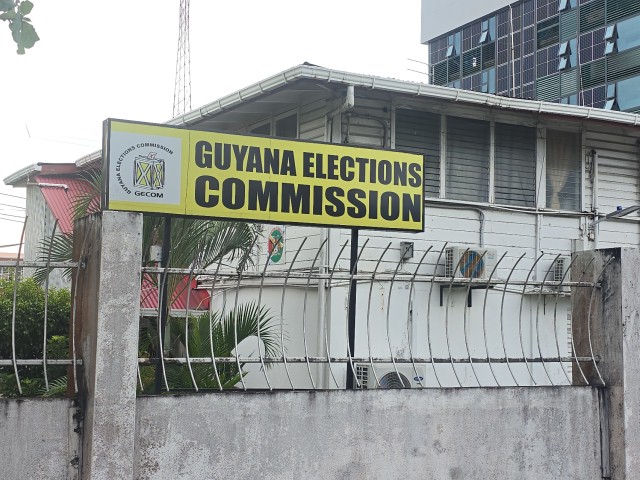
Georgetown, Guyana – November 14, 2026: President Irfaan Ali has explicitly rejected proposals to pursue a targeted, standalone constitutional amendment to adjust the composition of the Guyana Elections Commission (GECOM) to reflect the post-2025 parliamentary opposition power balance, insisting that all governance and institutional adjustments must be channeled through the country’s broader national constitutional reform exercise. In an exclusive interview with Demerara Waves Online News, Ali emphasized that the ongoing constitutional reform process was designed to holistically review every facet of national governance that requires updating to align with Guyana’s current socio-political landscape and global 21st-century norms, rather than addressing isolated issues through fragmented, “nitpicking” legislative tweaks. The deadlock over GECOM’s membership has paralyzed the independent elections oversight body for more than 12 months, with GECOM Chair Claudette Singh repeatedly declining to convene official commission meetings. The impasse traces back to the September 2025 general elections, where the newly formed We Invest in Nationhood (WIN) party secured 16 parliamentary seats to claim the status of official main opposition, displacing the long-dominant People’s National Congress Reform-led A Partnership for National Unity (APNU) coalition, which finished with 12 seats. APNU has continued to back its three long-serving nominated GECOM commissioners – Vincent Alexander, Charles Corbin, and Desmond Trotman – arguing that their positions are protected by constitutionally enshrined security of tenure that can only be altered via formal constitutional or statutory amendment. For over a year, WIN has also failed to follow through on repeated public pledges to petition the High Court for a formal ruling on whether it, as the new largest opposition bloc, is automatically entitled to fill the three opposition-nominated seats on GECOM’s seven-member panel, having already put forward three legal professionals – Siand Dhurjon, Roysdale Forde, and Damien Da Silva – as its preferred commissioner nominees. President Ali, whose ruling People’s Progressive Party Civic (PPPC) administration has repeatedly confirmed it is fully prepared to hold long-delayed local government elections for neighbourhood and municipal town councils, noted that the only viable pathway to deliver those polls in 2026 is for aggrieved stakeholders to turn to the judiciary for binding adjudication. “The judiciary is a co-equal, independent arm of government established explicitly to resolve disputes of constitutional interpretation, and any party that believes a specific issue requires legal scrutiny, analysis, or formal adjudication should make use of that institutional mechanism,” Ali stated. In an official public statement released earlier this week, GECOM confirmed that Chair Singh’s position remains strictly guided by the text and spirit of Article 161(3)(b) of Guyana’s Constitution, which stipulates that three of the commission’s members must be appointed by the President acting on the formal advice of the Leader of the Opposition, following meaningful consultations with all non-governmental political parties holding seats in the National Assembly. Retired Justice Singh has maintained that a constitutionally compliant reconfiguration of GECOM to reflect the new opposition makeup would require corresponding changes to national law, if relevant constitutional oversight authorities determine such adjustments are necessary. APNU-nominated commissioner Vincent Alexander has pushed back sharply against Singh’s interpretation, arguing that the same constitutional provision she cites for blocking the current opposition commissioners’ tenure should apply mutatis mutandis (with necessary contextual adjustments) to her own appointment, which was formally made on the advice of a previous Leader of the Opposition prior to WIN’s rise to main opposition status. While stopping short of directly accusing Singh of deliberate misconduct, Alexander noted that the GECOM chair’s actions had left the elections body “comatose and in crisis,” describing unaddressed questions about the motivations behind her decisions as “the elephant in the room.” GECOM’s official statement also pushed back against widespread public criticism that Singh’s adherence to her constitutional interpretation amounted to a unilateral, arbitrary suspension of the commission’s operations, expressing regret that her commitment to upholding institutional constitutional legitimacy had been misrepresented to the Guyanese public.