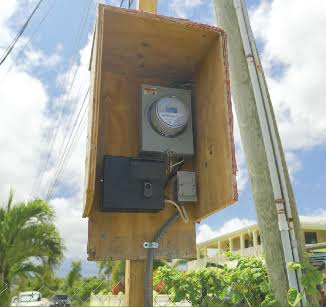
During a November 10 appearance on Pointe FM’s popular Taking Stock program, Antigua and Barbuda’s Minister of Utilities Melford Nicholas laid out stark new data on soaring operational costs for the Antigua Public Utilities Authority (APUA), revealing that the agency’s monthly fuel expenditure for power generation has skyrocketed from $11 million in January to over $23 million for the exact same volume of imported fuel. Nicholas explained that the unprecedented spike, driven by volatility in global fossil fuel markets, has left the state-owned utility no longer able to absorb the full cost burden internally, prompting a targeted partial pass-through to residential and commercial electricity customers. The minister emphasized that the core base energy tariff for electricity has remained completely unadjusted, with the entire uptick in consumer bills limited exclusively to a separate, line-item fuel surcharge that reflects APUA’s real-time procurement costs under its existing power purchase agreements. “We have not transferred the full weight of this cost increase to end users,” Nicholas clarified, noting that APUA’s contractual structure for fuel supply for grid generation leaves the utility fully exposed to unforeseen international price shocks and supply chain disruptions. He added a formal public assurance to ratepayers that the fuel surcharge component on all monthly electricity bills will be automatically reduced in lockstep as soon as global fossil fuel prices decline, with no additional administrative or regulatory delays. The minister framed the crisis as an urgent wake-up call for the twin-island nation to fast-track long-planned investments in domestic renewable energy infrastructure to eliminate its costly, volatile dependence on imported petroleum for power. Nicholas detailed a proposed 55-megawatt utility-scale solar farm paired with grid-scale battery energy storage, noting that technical teams are currently conducting full feasibility assessments to map project requirements, total capital outlay, and long-term cost savings, after which the proposal will be submitted to the national Cabinet for formal approval. He stressed that continuing to rely on volatile global fuel markets for the country’s electricity needs is no longer economically sustainable, as external geopolitical and market disruptions will continue to drive unpredictable, unaffordable spikes in household and business energy costs.
APUA fuel costs more than double, pushing up electricity bills in Antigua and Barbuda