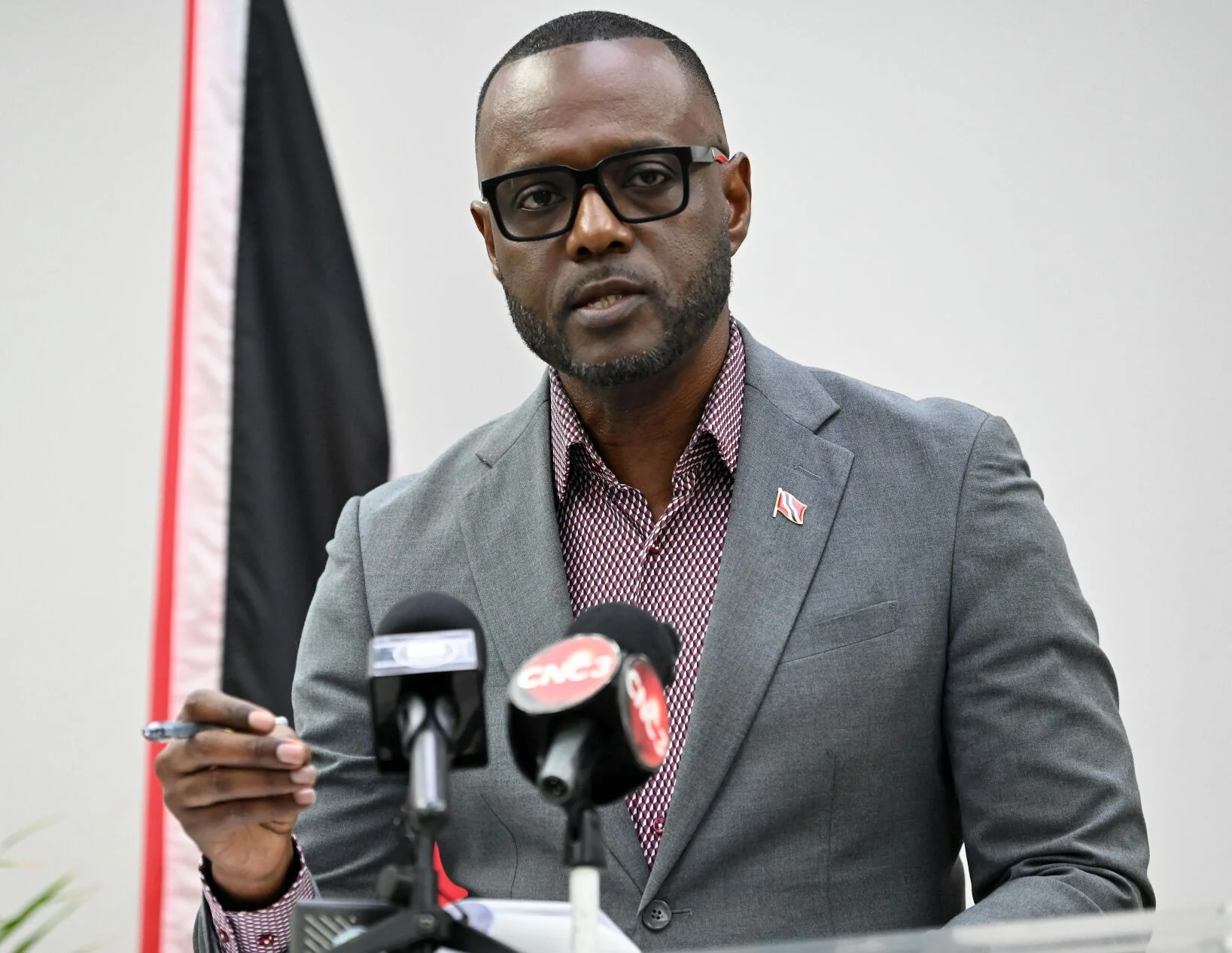
During a press conference held yesterday at the Office of the Leader of the Opposition in Port of Spain, Arouca/Lopinot Member of Parliament and former public utilities minister Marvin Gonzales laid out a series of formal demands targeting Trinidad and Tobago’s national security leadership, calling for full public accountability over the recently established Special Operations Zone, or “closed area”, in Maloney. Gonzales opened his remarks by pressing Police Commissioner Allister Guevarro and the sitting government to provide explicit, verifiable confirmation that all standard operating procedures were followed throughout the deployment of combined Trinidad and Tobago Police Service and Defence Force personnel to the Maloney restricted zone, with specific scrutiny over whether all deployed officers were equipped with and actively using body cameras during operations. The opposition lawmaker raised significant constitutional concerns over the operation’s legal foundation, noting that all data generated by law enforcement activities in the restricted zone must be accessible to a defined set of independent oversight bodies to prevent abuse of power. The agencies named by Gonzales as entitled to full, unredacted access to operational records include the Police Service Commission, the Professional Bureau of Standards, the Police Complaints Authority, the Director of Public Prosecutions, and the Office of the Ombudsman. Gonzales took deliberate care to clarify that the People’s National Movement, his party, remains a staunch supporter of national law enforcement, noting that the vast majority of police stations across the country were constructed under successive PNM administrations to reinforce public safety. He then turned to public remarks made by Commissioner Guevarro earlier this Tuesday, where the top police official criticized critics of the Maloney operation as residing in “ivory towers”. Gonzales stated he was personally offended by the comment, expressing deep disappointment that the Police Commissioner had dedicated the majority of his recent public address to attacking members of the public and elected officials who had raised legitimate questions about the operation’s legality, rather than addressing the substance of their concerns. He warned that a Police Commissioner who demonstrates excessive reactivity to public scrutiny creates an uncomfortable, unaccountable governance dynamic for all residents of Trinidad and Tobago, and formally called on Guevarro to take full, unreserved responsibility for invoking the Special Operations Act to authorize the Maloney deployment. Citing specific clauses of the existing legislation, Gonzales alleged critical gaps in compliance with training mandates laid out in Section 5, Subsection 4 of the Special Operations Act. According to intelligence received by the Opposition, only a single cohort of senior first division officers completed the legally required training to operate in a Special Operations Zone, while no second division officers — ranging in rank from Constable to Inspector, who made up the bulk of deployed personnel in the Trinity/Maloney area — received any of the mandated training specified under the law. Gonzales further questioned whether all formal protocols and procedures outlined in Section 9 of the Special Operations Act were fully implemented prior to the operation’s launch in Maloney. He demanded that the government publish all relevant protocols and compliance records on the public official record, so that both Opposition elected representatives and ordinary Trinidad and Tobago citizens can fully verify that the rule of law was upheld and that constitutional safeguards designed to protect civilian rights during special security operations were not bypassed.