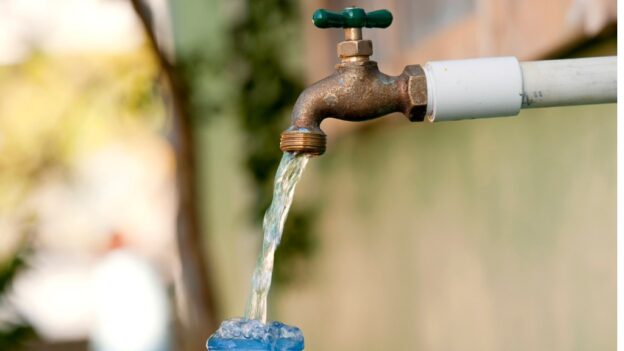
Antigua and Barbuda’s Utilities Minister Melford Nicholas has laid out a clear timeline for the island nation to achieve uninterrupted, around-the-clock piped water service for all residents, projecting the milestone could be reached in as little as 18 months as multi-phase upgrades to the country’s water network move forward at a steady pace. Delivering remarks during a recent appearance on local radio station Pointe FM, Nicholas voiced full confidence that the Antigua Public Utilities Authority’s (APUA) targeted capital improvement plan will close longstanding gaps in water delivery that have left many communities facing scheduled or unplanned supply cuts for decades. The minister’s 18-month timeline is tied to the successful completion of a suite of interconnected infrastructure projects, the centerpiece of which is the implementation of a state-of-the-art SCADA (Supervisory Control and Data Acquisition) system for real-time water monitoring and distribution management. Additional core components include the full rollout of a new high-capacity water transmission pipeline network and the expansion of national water storage capacity to eliminate supply shortfalls during peak usage periods. As of the latest progress update, construction crews have already laid 6 miles of the planned 14-mile new transmission pipeline, leaving 8 miles of installation work remaining to connect key production facilities to underserved residential zones. Nicholas also detailed plans for the upcoming development of a two-phase reverse osmosis treatment plant at the Crabbs site, a facility that will add 1.6 million gallons of fresh, treated water per day upon the completion of each phase, for a total combined daily production boost of 3.2 million gallons once both stages are fully operational. Even before the Crabbs plant comes online, the minister noted that current national water production volumes have consistently held above 8 million gallons per day, a notable milestone that has been achieved entirely without the 1.6 million gallons in daily supply that the network previously drew from the Potworks Dam and associated well fields, which were taken offline due to operational constraints. Despite these production gains, Nicholas openly acknowledged that service disruptions persist in a number of local communities. He specifically cited recent issues with turbid, cloudy water at the Fort James treatment facility that has impacted service quality for residents in the Villa, Point, and Fort Road neighborhoods. To resolve this gap, officials are set to deploy a new transmission line running through Cedar Valley that will redirect excess treated water from the Barnacle Point facility to supplement supplies for the affected zones. The minister added that APUA teams are actively tracking all resident-submitted reports of supply interruptions and inconsistent delivery schedules to prioritize targeted repairs and network adjustments. While he emphasized that the upgrades delivered to date represent a substantial leap forward for the country’s water infrastructure, Nicholas conceded that the system has not yet hit the full performance benchmarks the government has committed to delivering for all Antigua and Barbuda residents.
Round-the-clock water supply within reach in 18 months, Antigua and Barbuda minister says