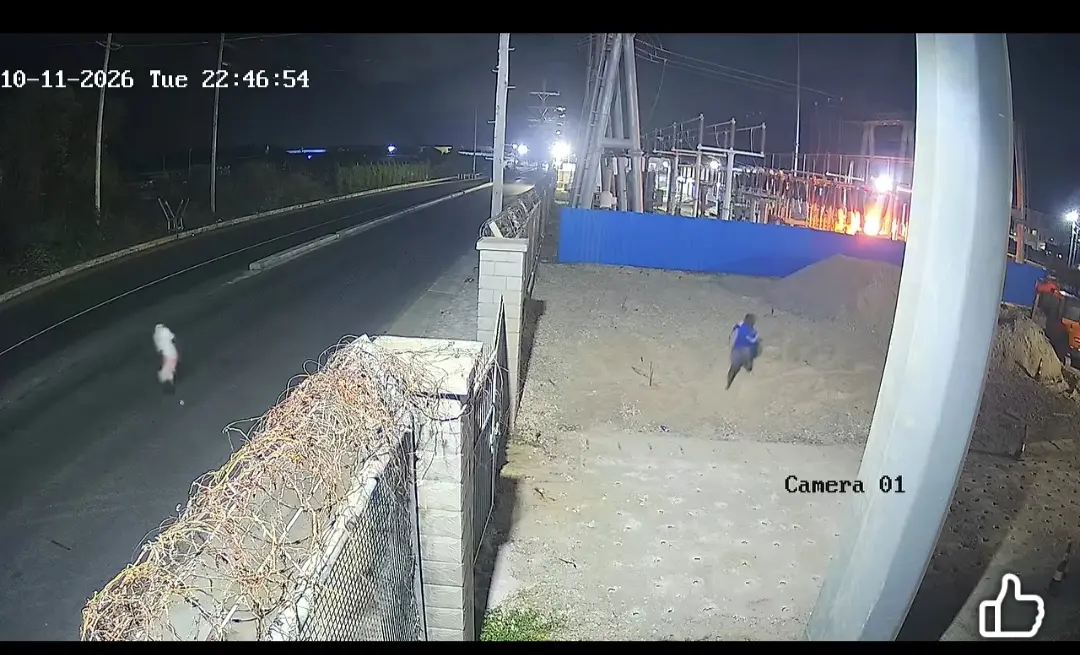
Georgetown, Guyana – November 11, 2026: State-owned utility Guyana Power and Light (GPL) has formally denounced a coordinated firebomb assault on its Good Hope distribution substation along East Coast Demerara, and called on the Guyana Police Force to pursue the case under national anti-terrorism legislation, framing the brazen overnight attack as a direct threat to critical national infrastructure. The targeted incident unfolded just after 10:46 p.m. on Tuesday, November 10, 2026, when GPL’s on-site closed-circuit television systems captured two unidentified individuals trespassing on substation grounds, one of whom hurled a Molotov cocktail – a crude improvised incendiary device – directly into the energized 69kV high-voltage switchyard. GPL immediately alerted law enforcement to the breach, and responding patrols later recovered a cache of related evidence scattered in the surrounding area of the transmission line, including four intact glass bottles filled with a kerosene-like flammable liquid fitted with cloth wicks, a black disposable lighter, a metal saw frame, and scattered shards of broken glass. Utility officials emphasized that the malicious plot far exceeded petty vandalism, noting that a successful detonation of the firebomb in the live high-voltage yard could have ignited highly flammable transformer oil, power cables, and heavy switchgear, triggering cascading explosions and fires that would have put on-site staff, nearby residential communities, and first responders at severe risk of injury or death. GPL’s technical assessment team confirmed that a full-scale breach would have collapsed the entire Demerara Berbice Interconnected System (DBIS), cutting power to more than 220,000 residential, commercial, and industrial customers across a wide swath of coastal Guyana. The full reconstruction of the Good Hope substation, if the attack had achieved its intended outcome, would have required no less than 12 months of specialized work and billions of Guyanese dollars in capital expenditure, alongside massive lost revenue for the utility, crippling emergency restoration costs, and prolonged systemic grid security vulnerabilities. In a rare stroke of good fortune, the incendiary device failed to trigger any line or feeder trips, and no power supply disruptions were reported for any connected customers. Overnight site inspections by GPL’s senior electrical engineers confirmed that no core high-voltage equipment sustained permanent damage, though forensic and operational investigations remain active. Citing the 2015 Anti-Terrorism and Terrorist Related Activities Act, GPL’s legal and executive leadership argued that the deliberate attack on a public utility facility falls squarely under the legal definition of a terrorist act, as the plot was designed to disrupt essential public services, endanger public safety, and intimidate the broader civilian population. The utility has formally requested that law enforcement pursue the case under both the anti-terrorism statute and relevant provisions of the Criminal Law (Offences) Act Chapter 8:01, including charges of arson, malicious damage to property, and criminal conspiracy. GPL has already submitted all full CCTV surveillance footage of the two fleeing suspects to police investigators, and has rolled out immediate enhanced security protocols, including doubled foot and mobile patrols at every substation and power generation facility across the national grid. Utility spokespersons warned that any individuals found to have planned, funded, aided, abetted, or carried out attacks on GPL infrastructure will face full criminal prosecution, and the company will pursue all available civil legal channels to recover 100% of any related losses incurred. GPL concluded its public statement with a note of gratitude to its frontline engineering teams, contracted security personnel, and responding police units for their rapid, coordinated action in containing the aftermath of the incident and preventing far more catastrophic outcomes.