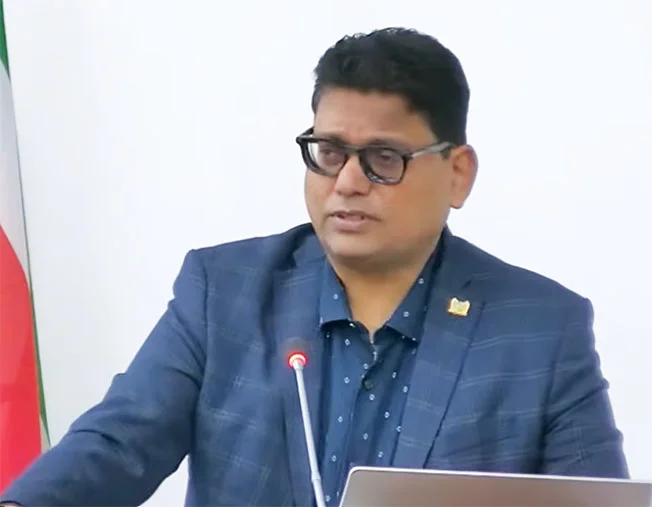
On November 11, parliamentary deliberations over Suriname’s draft Deposit Protection System Supervision Law sparked sharp cross-party pushback against provisions that would grant the Central Bank of Suriname (CBvS) sweeping, overlapping authority over the newly planned deposit guarantee fund. Leading the critique is Asiskumar Gajadien, faction leader of the Progressive Reform Party (VHP) and sitting parliamentary commission member, who argues that allowing the CBvS to simultaneously manage the deposit protection fund, oversee its operations, and adjudicate complaints against its own actions creates a fatal conflict of interest that undermines the fund’s core public purpose. Gajadien has tabled formal proposals to establish a full-time, fully independent executive board for the fund, with no sitting members holding concurrent roles at the CBvS, plus at least one independent financial expert on its supervisory body to eliminate institutional bias. He further criticized the draft law’s loose framework that would let the CBvS set binding operational rules via internal guidelines, rather than embedding key obligations, penalty structures, and major regulatory measures directly in formal legislation. To boost transparency, he is also pushing for mandatory annual public accountability reports from the fund, submitted directly to the National Assembly (DNA), alongside strict guardrails to prevent the fund from making high-risk investments in the very financial institutions it is mandated to protect. The concerns are fully bipartisan: Silvana Afonsoewa, chair of the parliamentary commission and member of the ruling National Democratic Party (NDP), noted that pre-draft consultations confirmed CBvS staff could be tapped for senior leadership roles at the new fund, and stressed the current text lacks sufficient safeguards to prevent unaddressed conflicts of interest. Fellow NDP parliamentarian Tashana Lösche echoed calls for independent oversight, advocating for mandatory annual third-party external audits and direct parliamentary reporting lines for the fund’s full operations. As drafted, the deposit protection fund will be capitalized via regular premium contributions from participating financial institutions, with the Surinamese government providing an initial SRD 14 million in seed funding that the current text requires to be repaid within five years. Lawmakers across party lines have also raised urgent questions over whether the initial capital pool is large enough to cover payouts in a scenario where multiple financial institutions face simultaneous insolvency, and have demanded the administration submit detailed, legally binding provisions for independent governance, oversight, and public accountability before the draft moves to a final vote.