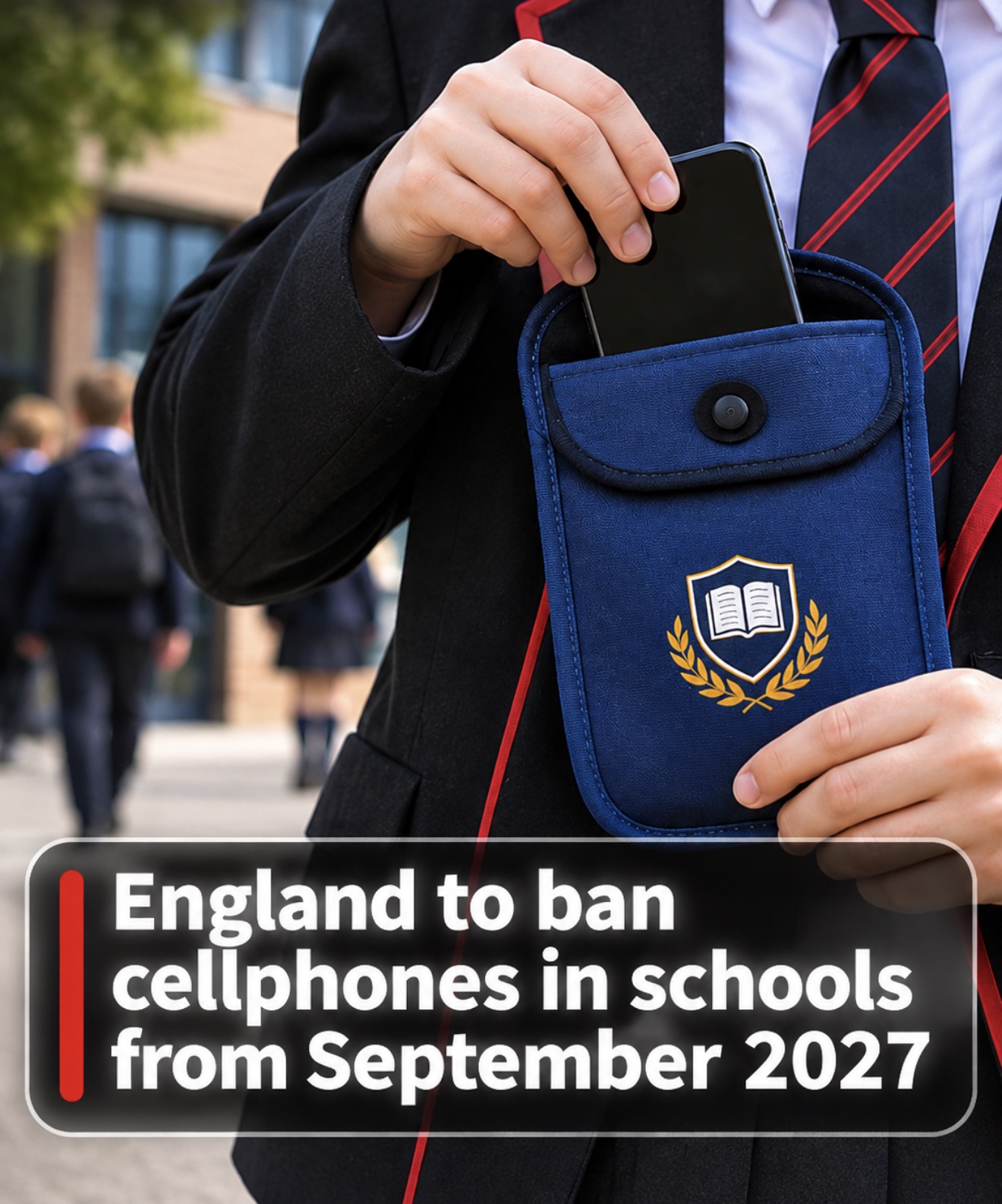
The UK’s Department for Education has unveiled landmark new regulatory guidance that will enforce a total ban on student access to mobile devices across every part of the standard school day in England, set to come into full force in September 2027, per official reporting from the BBC. The sweeping new rules represent a major tightening of existing informal “no see, no hear” protocols, which previously permitted students to stow mobile phones in their backpacks as long as the devices remained completely out of sight and silenced. Government policymakers designed the stricter framework to cut down on persistent classroom distractions, lift overall academic attainment, and foster more in-person social connection between young learners. Education Secretary Lucy Powell laid out the core principle of the policy in a public statement, noting: “The purpose of school is to nurture learning and real human friendship, not to give space for endless social media scrolling.” These upcoming restrictions are an extension of statutory guidance first rolled out in June of the current year, which established formal legal accountability for all state-funded schools and academy trusts to maintain distraction-free learning environments for their entire student body. Crucially, national policymakers have opted not to impose a one-size-fits-all enforcement model, granting individual school leaders full autonomy to select implementation strategies that align with their campus needs. Approved options include mandatory collection of all mobile devices at the start of the school day, installation of dedicated secure storage lockers for student use, or requiring every phone to be sealed in tamper-proof lockable pouches that can only be opened by designated staff. Many forward-thinking schools across England have already piloted comparable measures with measurable positive outcomes. Karl Harrison, headteacher at Burnage Academy for Boys in Manchester, shared that his institution invested £20,000 to install metal detection systems and roll out lockable pouches to eliminate unregulated student access to mobile phones. He reported that the policy shift has driven a sharp rise in spontaneous face-to-face social interaction among pupils, drastically improved on-task focus during instructional time, and delivered tangible gains in end-of-term academic performance. “Our students now actually talk to one another during break periods, rather than huddled alone scrolling through their screens,” Harrison explained during a BBC Breakfast interview. Despite these promising early results, leading education sector unions have raised critical concerns about the potential financial burden the new national mandate will place on underfunded school budgets. Paul Whiteman, general secretary of the NAHT school leaders’ union, acknowledged that unregulated mobile phone use does create legitimate safety risks and frequent learning disruptions, but cautioned that robust, consistent enforcement of the new national rules will carry significant unplanned costs for campus administrations. Pepe Di’Iasio, general secretary of the Association of School and College Leaders, pushed back against the assumption that schools can easily eliminate unapproved mobile phone access without targeted government support. He emphasized that outfitting every campus across England with enough lockable pouches or secure device storage infrastructure would require tens of millions of pounds in collective spending that most schools cannot afford under their current operating budgets. “This policy is simply not practically deliverable unless the central government allocates dedicated, ring-fenced funding to cover these necessary costs,” Di’Iasio stated in a public response. Education Secretary Powell has since clarified that school leaders will never be forced to purchase specific enforcement tools, and will retain full authority to pick low-cost or no-cost implementation approaches that work best for their unique student populations. The proposed policy has garnered broad cross-stakeholder support outside of school administration circles. Dame Rachel de Souza, England’s official Children’s Commissioner and a leading youth advocacy figure, praised the government’s decisive action to remove disruptive mobile devices from learning spaces. The opposition Conservative Party has also endorsed the new regulations, with Shadow Education Secretary Laura Trott noting she was pleased the ruling Labour administration had adopted the tougher restrictions her party first proposed, while raising targeted questions about the government’s broader strategy for integrating appropriate educational technology into classroom instruction. The policy announcement arrives as the other devolved nations of the UK explore their own regulatory frameworks for school mobile phone use: the Scottish government has tabled draft legislation to restrict personal mobile device use in educational settings, while the Welsh government has launched a formal public consultation process to develop tailored national policies for its schools. Due to the devolved structure of UK education governance, the full 2027 mobile phone ban will apply exclusively to primary and secondary schools operating within England’s jurisdiction.
England to Ban Students From Using Cellphones During School Hours Starting September 2027