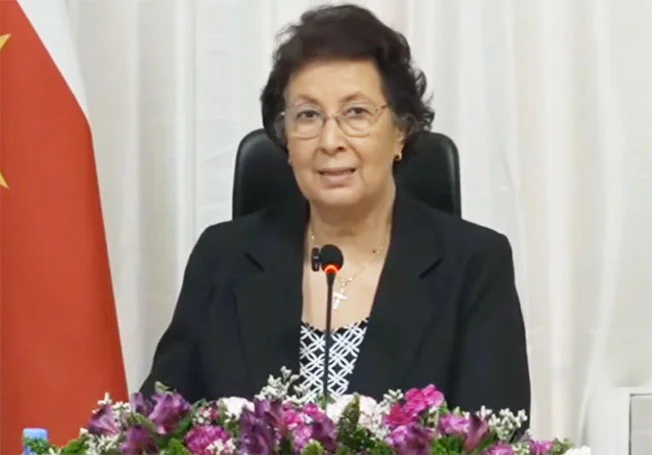
On Monday, 10 November, Suriname’s President Jennifer Simons announced at an official press conference that the national government will roll out a comprehensive nationwide registration campaign for all foreign nationals residing in the country, starting first with the remote inland regions. Current preliminary estimates, drawn from aggregated on-ground intelligence rather than a formal completed census, place the total foreign population in Suriname somewhere between 20,000 and 40,000, a significant share of whom are believed to be living in the country without valid legal residence documentation.
The core objectives of the registration drive are to generate verified, official data on the exact number of foreign residents across Suriname, map their geographic distribution, and confirm each individual’s formal residence status. The first phase of the inland data collection is scheduled to kick off in January, and the operation is explicitly linked to ongoing regulatory reforms for Suriname’s large artisanal and industrial gold mining sector, which employs a substantial share of the country’s foreign migrant workforce. President Simons noted that many of these undocumented foreign residents have lived and worked in Suriname for multiple years, and the government’s first priority is to conduct individual case reviews to confirm their identities and the circumstances that led to their current residence status.
Following the completion of the registration process, the government will develop tailored policy responses for each case: eligible foreign residents will be offered pathways to formalize and legalize their stay in Suriname, while other cases will be addressed via targeted alternative administrative measures. Simons emphasized that the administration cannot carry out blanket mass deportations of all undocumented residents, as every individual’s unique personal situation must be assessed thoroughly before any enforcement action is taken. She also acknowledged that a subset of registered foreign nationals will ultimately be deemed ineligible to remain in the country, though no projected figures for this or other outcome categories have been released to the public.
A large portion of the inland registration effort will focus on Brazilian migrant workers who make up a dominant share of the foreign labor force operating in Suriname’s gold mining zones. Simons confirmed that during her recent official state visit to Brazil, she held high-level bilateral discussions with Brazilian federal authorities on the profile of Brazilian nationals residing in Suriname’s interior, as well as concrete plans to strengthen joint cross-border surveillance frameworks. She noted that the historically porous shared border between the two nations has long made it nearly impossible for authorities to fully track cross-border population movements, so the new initiative will pair the resident registration drive with long-term upgrades to formal border control infrastructure. The ongoing bilateral negotiations with Brazil are also set to produce formal shared agreements for processing undocumented cross-border residents and addressing other transnational security and governance challenges in the border region.
When pressed by reporters to share a projected timeline for the full completion of the national registration operation, Simons stated that no reliable end date has been established to date. “I cannot confirm whether this process will take three months, seven months, or a full 12 months to finish,” she told assembled journalists, explaining that the total duration will depend on three core variables: the overall scale of the foreign population uncovered during registration, the accessibility of remote, hard-to-reach inland communities, and the volume of trained administrative personnel allocated to the campaign. The president further clarified that the registration drive is not intended as a one-off temporary operation, but will be structured as a permanent, ongoing administrative process to give the Surinamese government far greater oversight and regulatory control over cross-border migration, long-term foreign residence, and all formal and informal economic activities operating across the country’s vast inland territories.