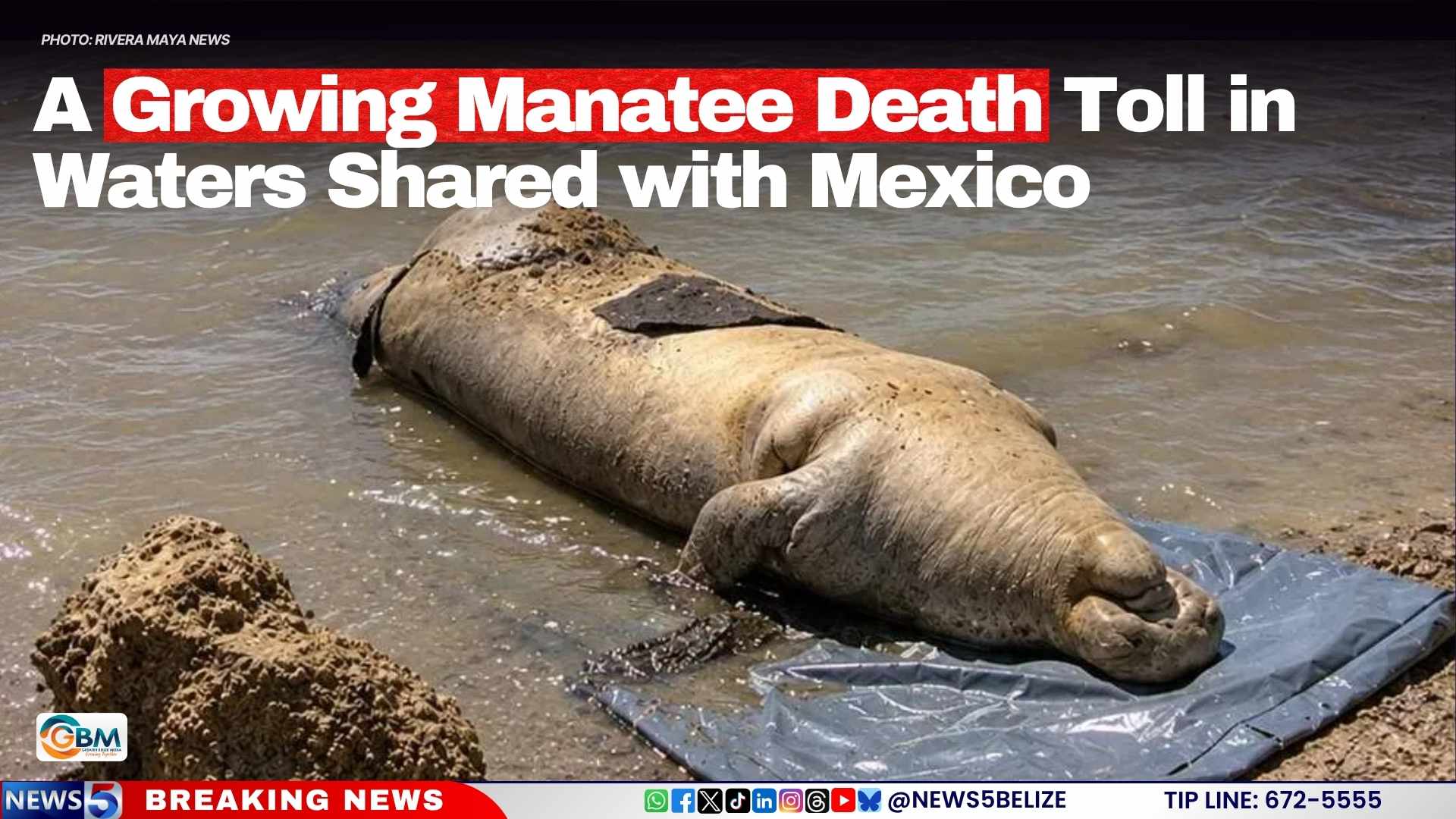
As of November 8, 2026, a troubling, unexplained surge in manatee fatalities across the transboundary Chetumal Bay waterway, shared by Belize and Mexico, has sparked widespread alarm among regional conservation groups, prompting urgent demands for coordinated, long-term official action to safeguard the vulnerable migratory aquatic species.
Field data collected over the past two years by the Sarteneja Alliance for Conservation and Development (SACD), a leading Belizean grassroots conservation organization, has documented a steady uptick in manatee deaths in the bay, though no definitive root cause has been verified to date. While local environmental stakeholders have widely hypothesized that water pollution may be driving the elevated mortality rates, no formal scientific testing has confirmed that link, leaving critical gaps in understanding the unfolding crisis.
SACD program lead Joel Verde emphasized that the challenges facing regional manatee protection extend far beyond solving the immediate mystery of the rising death toll. For years, ad-hoc conservation partnerships between non-governmental groups and research bodies on both sides of the border have operated without structured, long-term continuity, leaving routine population monitoring, necropsy work, and habitat assessment efforts exposed to disruptive funding shortfalls and inconsistent cross-border cooperation.
In a bid to address these gaps, SACD has already established a working collaboration with Mexico’s Quintana Roo Institute of Biodiversity and Protected Natural Areas (IBANQROO), backed by targeted international donor funding that has supported specialized on-the-ground research conducted by the Mexican agency. Additional local private sector support, including a recent joint initiative between Marie Sharp’s and the Clearwater Marine Institute, has also expanded resources dedicated to Belize’s manatee protection efforts.
Even with these incremental wins, Verde stressed that informal, project-level partnerships are insufficient to secure the species’ long-term survival. He noted that deep structural differences exist in how Belize and Mexico integrate civil society conservation groups into official regulatory and protection frameworks, and that binding, formal bilateral government agreements are required to sustain monitoring programs, streamline cross-border data sharing, unlock stable long-term financing, and create unified response protocols for emerging manatee health threats across the shared transboundary habitat.
A Growing Manatee Death Toll in Waters Shared with Mexico