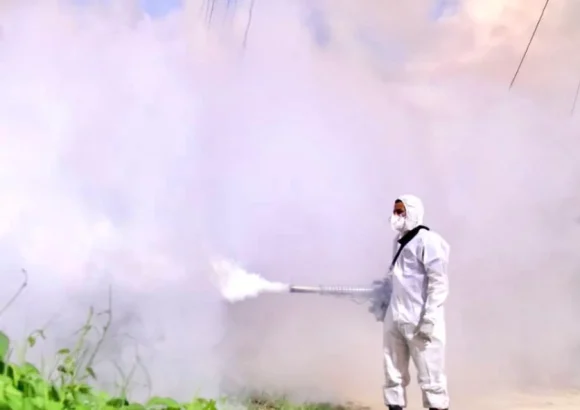
The Dominican Republic’s Ministry of Public Health has released its official epidemiological update for the 42nd surveillance week of 2026, covering the period October 18 to 24, laying out granular data on the spread of vector-borne diseases, respiratory pathogens, and maternal and infant mortality across the Caribbean nation. Over that seven-day monitoring window, public health teams confirmed 76 new cases of dengue, pushing the cumulative year-to-date caseload for the mosquito-borne viral infection to 556. That figure translates to a national dengue incidence rate of 6.24 cases per 100,000 residents, a metric that places the country in a comparatively strong position across the wider Americas region, per data cross-referenced from the Pan American Health Organization (PAHO). Regional PAHO surveillance bulletins note that neighboring and larger nations including Brazil, Colombia, Peru, Mexico and Ecuador have logged far higher dengue caseloads this year, making the Dominican Republic one of the lowest-incidence dengue jurisdictions in the hemisphere, a milestone public health officials have attributed to sustained vector control outreach campaigns in high-risk neighborhoods. For malaria, health authorities logged 2 new confirmed infections during week 42, bringing the 2026 cumulative total to 140 cases. That figure represents a staggering 82% drop compared to the 842 malaria cases recorded over the identical January to late October surveillance window in 2025, pushing the current national malaria incidence rate down to 1.57 cases per 100,000 people. Officials confirmed the sustained downward trajectory of malaria transmission means the disease is now fully contained under existing public health protocols. The latest weekly update also recorded zero new confirmed leptospirosis cases, keeping the 2026 cumulative tally at 297 infections. While that total is higher than the 154 leptospirosis cases logged over the same period in 2025, public health analysts emphasized that the current 3.33 per 100,000 incidence rate is following a steady, sustained downward trend in recent weeks, driven by targeted flood zone sanitation campaigns. Notably, the Dominican Republic has recorded zero confirmed cholera cases across all of 2026 to date, with no imported or local transmission detected by surveillance networks. Turning to respiratory disease trends, the ministry’s data shows that influenza-like illness (ILI) rates have remained low and stable across the country, sitting well below seasonal expected thresholds for late October. Active pathogen surveillance has detected co-circulation of non-subtypeable Influenza A, alongside low levels of SARS-CoV-2, Influenza A(H3N2), and respiratory syncytial virus (RSV), with no signs of an imminent severe seasonal respiratory surge. The bulletin also released updated figures for maternal and infant mortality for the year to date. During week 42, five maternal fatalities were reported: three among Dominican national women and two among Haitian national women, bringing the full 2026 cumulative maternal death toll to 133. That total breaks down to 71 Dominican maternal deaths, 59 Haitian maternal deaths, and 3 fatalities among women of other nationalities, representing a measurable reduction from the 155 maternal deaths recorded over the same surveillance period in 2025. For infant mortality, 32 new fatalities were logged in the latest week, pushing the 2026 year-to-date infant death total to 1,623. Ministry officials noted that health care providers are continuing to ramp up real-time hospital monitoring systems and strictly enforce evidence-based clinical protocols to mitigate avoidable risk factors in all maternal and neonatal care facilities nationwide, with targeted outreach planned for border communities with high Haitian resident populations to expand access to prenatal care.