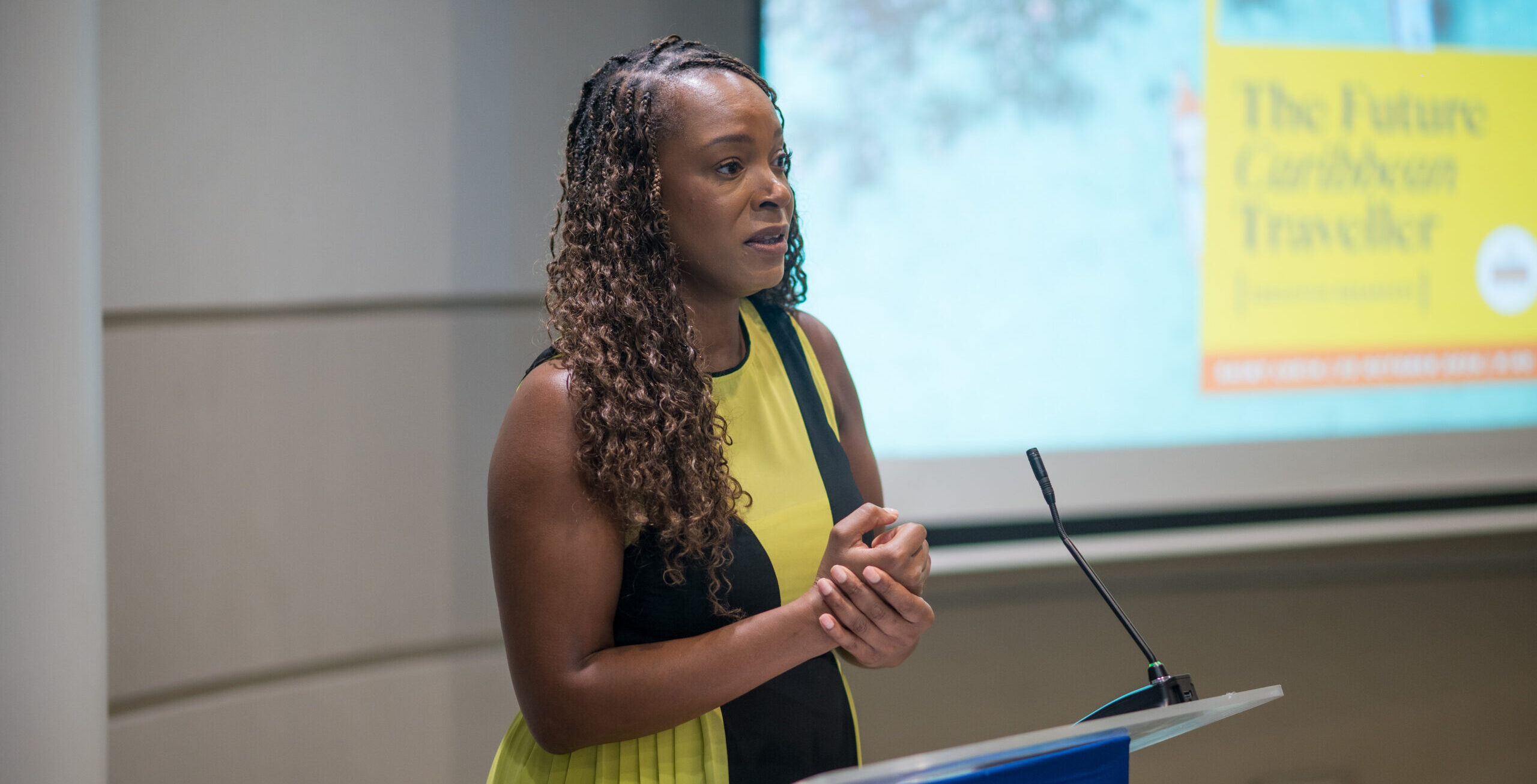
Against the backdrop of the recent Future Caribbean Traveller Executive Breakfast hosted at Saint Lucia’s Harbor Club, leading inclusive travel advocate Atlyn Forde has laid out a actionable, low-barrier roadmap for the island’s tourism industry to expand its market reach and sharpen competitive edge without requiring costly, large-scale overhauls of existing properties. As the founder of the two-and-a-half-year-old Inclusive Travel Forum and CEO of Communicate Inclusively, Forde shared insights with the St Lucia Times following the industry gathering, which brought together key stakeholders including Saint Lucia Tourism Authority CEO Louis Lewis, Caribbean Tourism Organization Deputy Director of Sustainable Tourism Narendra Ramgulam, and local accessibility advocate Kevin Jn Baptiste, first vice president of the National Council of and for Persons with Disabilities. Forde noted that awareness of accessibility and inclusive service design has surged across the Caribbean tourism ecosystem over the past 24 months, with local Saint Lucia stakeholders demonstrating clear eagerness to deepen their knowledge rather than viewing inclusion as a regulatory burden. Instead, she frames inclusive service design as a core commercial growth strategy, rather than a costly compliance mandate. The untapped market potential is substantial: 1.3 billion people globally, or 16% of the world’s population, live with a disability, including 85 million residents across Latin America and the Caribbean. In the UK, a top source market for Caribbean tourism, disabled consumers and their households hold an estimated £274 billion in annual spending power. The opportunity extends far beyond travellers with mobility impairments: one in seven UK residents identify as neurodivergent, while Muslim travellers completed 176 million international trips in 2024, with total spending from this demographic projected to hit $230 billion by 2030. Forde outlined three practical, low-investment steps that hotels can implement immediately to advance inclusivity, no major renovations required. First, properties should publish granular, fully accurate details about their existing facilities on their websites and booking platforms, covering metrics such as doorway widths, step counts at entrances, bed heights, distances from parking to guest areas, and exact limits of accessible features. This level of detail is increasingly critical as travellers leverage AI tools to filter for stays that match their specific needs, and eliminates mismatched expectations between guests and operators. Second, Forde encourages local tourism businesses to collaborate rather than develop inclusive practices in silos, with industry bodies including the Saint Lucia Hospitality and Tourism Association positioned to facilitate shared training, distribute free resources, and create peer learning networks for operators to exchange successful strategies. Third, properties should build seamless, multi-channel feedback systems that let guests disclose specific needs before arrival, adjust requests during their stay, and share post-departure feedback to refine services over time. Forde emphasized that true inclusive hospitality extends far beyond physical ramps and wheelchair-accessible rooms, requiring operators to accommodate a full spectrum of traveller needs including dietary restrictions for allergies, diabetes, or religious requirements such as halal, kosher, or ital meals, neurodivergent-friendly quiet zones, cultural sensitivity training for all frontline staff, safety provisions for solo female travellers, and respectful accommodation of religious practices such as modest dress guidelines. She noted that these needs are not new, but modern travellers are far more willing to articulate their requirements openly than in previous decades, creating a clear incentive for operators who can meet those demands. Beyond private hospitality businesses, Forde also called for inclusive design to be embedded from the earliest planning stages of all new public infrastructure projects across Saint Lucia, including roads, sidewalks, parks, public buildings, and parking lots, to benefit not just wheelchair users, but elderly residents, people recovering from injuries, parents travelling with strollers, and all members of the public. While retrofitting older infrastructure presents practical cost challenges, Forde stressed that new builds can integrate accessibility standards at minimal extra cost if considered during initial design. Her long-term vision is for inclusive travel principles to become so deeply normalized across the entire Caribbean tourism ecosystem that dedicated advocacy bodies like the Inclusive Travel Forum will no longer be required to push for progress, a goal she says the region is steadily moving toward.