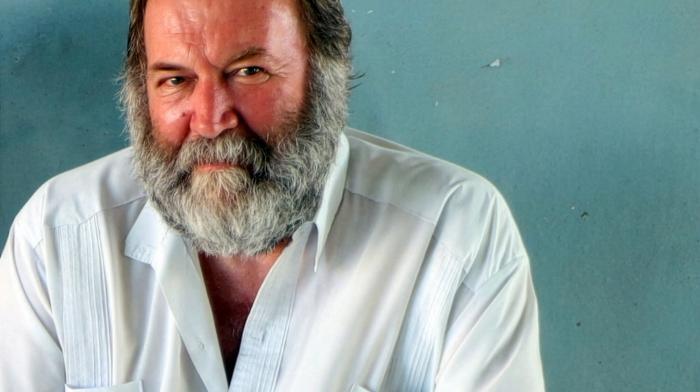
On the evening of October 21, 2026, the global network of solidarity advocates supporting Cuba bid farewell to a beloved, quiet champion: Ulrich Fausten, who passed away in the Cuban capital of Havana, the city and nation he had dedicated decades of his life to uplifting through his work leading the German-language edition of Granma International.
As the article’s author Arlin Alberty Loforte notes, true cross-border friendship and international solidarity reveal their tangible power when people choose to stand in shared struggle with marginalized communities, and center the pursuit of collective justice as a core life mission. For Granma, Cuba’s official national newspaper, generations of international collaborators from every continent have spent decades translating and amplifying unfiltered narratives about the island to global audiences, breaking through language barriers to spread Cuban realities far beyond the newsroom’s walls.
Many public figures leave loud, fleeting marks on public life, but the most enduring legacies often belong to quiet, consistent contributors whose commitment is rooted in shared purpose rather than public fanfare. Fausten, whom Loforte frames as still present in the collective memory of the Granma team, was one such figure. For most of Loforte’s tenure at Granma International, he worked closely with the tight-knit pair of Fausten and his life and work partner Renata, whom the newsroom staff affectionately nicknamed “the Germans” while playfully referring to their office space as “the yacht,” a nod to the historic Granma yacht that carried the leaders of the Cuban Revolution to the island in 1956.
Long before they joined the Granma International team, Fausten and Renata held a deep, abiding love for Cuba’s unyielding spirit and vibrant cultural heritage. Their solidarity work stretched back to 1994, one of the most economically and socially turbulent periods of Cuba’s post-Soviet “Special Period,” when they began their lifelong journey standing in support of the Cuban Revolution thousands of miles away in Europe. Born in the small German town of Kempen, Fausten was first drawn to Havana by its world-famous music, arts, and vibrant street culture. He embraced the island’s sweltering tropical heat with good humor, and wore the traditional Cuban white guayabera shirt with such unbridled, native-esque pride that he treated it as the most elegant formal attire for every official and social gathering.
Fausten faced repeated, severe personal and professional trials over the course of his life, but his commitment to Cuban solidarity never wavered. Just hours before the entire nation was set to mark its annual National Culture Day, his long battle with a debilitating illness ended; while the disease weakened his body, it never broke his iron will to stand for the causes he believed in. In line with his explicit final wish, carried out with unwavering devotion by Renata, his ashes were scattered in the vivid, turquoise waters off Havana’s iconic Malecón seawall, so he could remain permanently anchored to the city he loved.
No linguistic divide or thousands of miles of ocean can erase the bonds of shared struggle and cross-cultural affection. The quiet young man from Kempen will live on forever in the pages of Granma, in the rhythms of Havana’s streets, and in the collective memory of the Cuban people whose lives he touched so deeply.