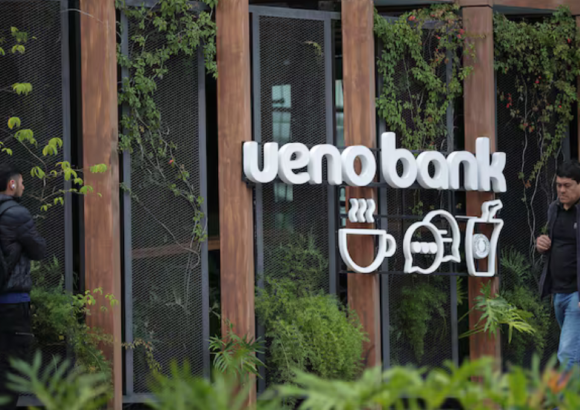
A cascading dual financial and political upheaval has engulfed Paraguay, sparking a nationwide institutional crisis after the Central Bank of Paraguay (BCP) moved to intervene and fully dissolve Ueno Bank, a once high-flying rapidly expanding lender that has locked hundreds of thousands of customers out of their savings and cast a harsh spotlight on alleged mismanagement of public and social security pension funds.
The first signs of trouble emerged on Tuesday, November 3, when Ueno customers across the country opened the institution’s mobile banking app only to find their account balances completely erased from the platform. Within hours, the BCP issued an official public notice confirming it had seized control of the bank and initiated full dissolution proceedings, after auditors discovered its solvency ratio had plummeted to less than half of the legally mandated minimum threshold. The announcement sent immediate shockwaves through the public: crowds of desperate depositors swarmed Ueno’s Asunción headquarters and all 75 of its national branch locations, with many tearful customers explaining they could not access funds earmarked for critical daily needs, life-saving medical care, and grocery costs for their families.
What began as a localized financial panic rapidly spilled over into the highest levels of national politics. Just two days after the bank’s collapse, President Santiago Peña announced his formal resignation from office on Thursday, after opposition legislators and even key members of his own ruling Colorado Party threw their support behind formal impeachment proceedings tied to his alleged failure to oversee regulatory safeguards for Ueno and prevent the crisis. In a nationally televised address, Peña stated his choice to step down was made to safeguard Paraguay’s democratic institutions, preserve social peace, and avoid deeper national instability, while issuing a public apology to all affected citizens and noting that restoring widespread public trust in the country’s fractured financial system remained his core immediate priority.
The dramatic downfall of Ueno Bank follows a period of unprecedented, almost unheard-of growth for the Paraguayan financial sector. Originally founded as a small financial institution in 1976, the lender was acquired by the powerful Vázquez Group in 2021, rebranded fully as Ueno Bank in 2023, and then expanded exponentially in 2024 when it absorbed rival Visión Banco, adding more than 1 million new customers to its user base. By September 2026, Ueno reported a staggering 3 million total registered customers in a nation of only 6.5 million residents, processing more than 3 million daily financial transactions across its digital and physical networks.
This breakneck expansion has now come under intense scrutiny from regulators, independent analysts, and the public at large. Orkun Saka, a leading financial economics professor at City St George’s, University of London, emphasized that the Ueno scandal extends far beyond basic corporate mismanagement, pointing to verified reports of massive, unreported preferential loans issued to companies directly linked to the Vázquez ownership group, as well as documented overly cozy ties between Ueno leadership, financial regulators, and senior government officials. Opposition lawmakers have levied formal accusations of conflicts of interest against Peña, claiming he deliberately turned a blind eye to years of documented irregularities involving public treasury deposits and national pension funds held at Ueno. Even former Paraguayan president and dominant Colorado Party leader Horacio Cartes publicly endorsed the impeachment push, stating that the ruling party would not tolerate any alleged misuse of public, private, or pensioner retirement funds. Parallel to the political fallout, national public prosecutors have issued formal arrest warrants for top Ueno and Vázquez Group leadership, including bank president Juan Manuel Gustale, vice president Julio Rey Fernández, and prominent businessman Federico Miguel Vázquez Villasanti.
As Paraguay grapples with the aftermath of the unprecedented collapse, citizens and policymakers are now confronting urgent, unresolved questions: how a financial institution that grew to serve nearly half the national population could deteriorate to the point of insolvency without early intervention, and whether systemic regulatory failures allowed the crisis to escalate to the point of triggering a full-scale national institutional collapse.