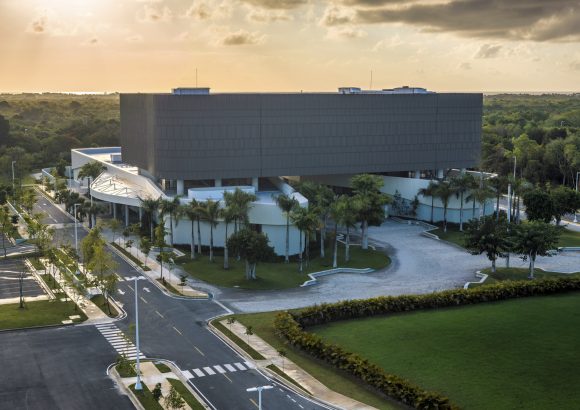
In a striking departure from conventional sustainability investments that prioritize renewable energy infrastructure or large-scale tree-planting drives, Punta Cana has unveiled what local leaders describe as the region’s most critical sustainability milestone of 2026: the Centro Cultural Rainieri, affectionately known across the community as El Nido, or “The Nest”, located in the heart of Puntacana Village.
While the idea that a cultural facility could serve as a cornerstone of environmental stewardship may seem counterintuitive at first, its mission is rooted in a decades-old, globally recognized conservation principle first articulated by Senegalese forestry engineer Baba Dioum at a 1968 international conservation summit in New Delhi: “In the end we will conserve only what we love; we will love only what we understand; and we will understand only what we are taught.”
This core logic underpins the entire project: meaningful, long-term protection of natural ecosystems never happens by chance. It emerges from a deep sense of connection to a place, nurtured through shared learning, collective memory, and a strong, cohesive cultural identity. For Punta Cana, a fast-growing destination that is home to more than 200,000 residents, most of whom migrated from other Dominican provinces or overseas, and welcomed over 5 million international tourists in 2025 alone, that sense of shared identity has long been fragmented. Many visitors leave the resort bubble with little awareness that Punta Cana is part of the Dominican Republic, seeing it only as a generic stretch of white sand and turquoise coastal waters, with no distinct cultural or ecological narrative of its own.
Without a centralized, shared cultural identity, the region’s natural resources, local language, ancestral traditions, and collective stories run the risk of becoming a disconnected, unclaimed asset, belonging to no one in particular and thus vulnerable to overexploitation or erasure. El Nido was built to change that, serving as a dedicated home for Punta Cana’s unique identity that invites both international visitors and local Dominican residents to engage with the region’s rich natural history, cultural heritage, and shared legacy. The facility’s programming is intentionally designed to surprise even long-term local residents, inviting them to see their own stories reflected in exhibits that weave ecological context directly into every element, rather than treating nature as a decorative afterthought.
The center’s official motto, “Un nido abierto para todos” — “a nest open to everyone” — is brought to life through every design choice. The project’s research team identified “acogida”, or the Dominican cultural instinct for radical, inclusive welcome, as the defining national character trait, and selected the palmchat — Hispaniola’s unique national bird, the only species in its entire taxonomic family, found nowhere else on Earth — as its symbolic mascot. Palmchats are known for building large, communal shared nests where dozens of individuals live, protect one another, and even welcome other bird species to take up residence, a perfect metaphor for the center’s mission as an inclusive shared public space.
Even the building’s physical architecture draws directly from the region’s native landscape: its soft, rounded forms were inspired by the natural freshwater springs known locally as ojos de agua, iconic features of the nearby Ojos Indígenas Ecological Reserve, one of Punta Cana’s most treasured protected natural sites. The unifying message embedded in every corner of the facility is unambiguous: no community will fight to protect a forest, coral reef, mangrove wetland, or coastal lagoon that they do not feel a sense of ownership and belonging toward. As Dioum’s 1968 framework makes clear, pride of place is the unshakable foundation of place protection.
This vision traces its roots back to the earliest founding principles of Punta Cana, co-created by developers Frank Rainieri and Ted Kheel, the great uncle of the author, Jake Kheel, who currently serves as Vice President of Sustainability at Grupo Puntacana. During the final years of Ted Kheel’s life, the author collaborated closely with him in New York for three years, and saw firsthand that one of his most cherished long-term goals was to create structured opportunities for visitors to experience authentic Dominican culture beyond the beach, rather than treating cultural engagement as a trivial add-on to the tourism experience. For the co-founders, this was a core resilience strategy that would set Punta Cana apart from every other generic Caribbean coastal destination, with far more long-term value than marginal adjustments to hotel occupancy rates. They never viewed sustainability as a single, siloed initiative: for them, it was an interconnected system that united business success, environmental health, community well-being, and cultural vitality as interdependent, inseparable priorities.
The vision was further reinforced in 2009, when Grupo Puntacana became the first Caribbean organization to win the prestigious Destination Stewardship Award at the World Travel & Tourism Council’s Tourism for Tomorrow Awards, accepted by the author alongside Frank and Haydée Rainieri at the ceremony in Florianópolis, Brazil. On their return trip, the team stopped in Curitiba, Brazil — a city globally celebrated for its 1970s-era integrated urban planning framework that tied park development, public transit, waste management, and cultural investment into a single cohesive sustainable strategy, which would later earn it the 2010 Global Sustainable City Award. The most enduring memory from that visit was the city’s iconic Oscar Niemeyer Museum, nicknamed “The Eye” for its distinctive giant eye-shaped tower, which sits at the center of a sprawling public cultural park where hundreds of local families and children gather daily. The museum is far more than a cultural exhibition space: it is the civic heart of Curitiba, and a unifying symbol of the city’s collective identity.
Curitiba has its Eye, and now Punta Cana has its Nest: a purpose-built public space poised to become the region’s new civic core and most recognizable cultural landmark. Drawing one final lesson from the palmchat that inspired its name, no palmchat ever builds its communal nest alone: every structure is assembled branch by branch through collective, collaborative labor, growing larger and more welcoming as more members of the community join in. The same principle applies to building a shared sense of belonging and collective identity for Punta Cana: it cannot be completed by a single company or a single building. The Rainieri Cultural Center is the very first branch of that shared nest, brought to life through the tireless work of Frank and Haydée Rainieri, and now it falls to every member of the Punta Cana community to continue building it into the inclusive, unifying home it was always meant to be.
El Nido: The New Heart of Sustainability in Punta Cana