A cohort of healthcare practitioners, medical specialists, and global public health partners from across the Caribbean convened at Baha Mar this week for a three-day targeted workshop focused on advancing regional cancer care frameworks and addressing longstanding gaps in the upkeep of critical diagnostic radiation medical equipment. Titled “Strengthening Operations and Maintenance of Diagnostic Radiation Medicine Equipment in the Caribbean”, the event marks the first official activity under the Accelerating Scientific Collaboration and Excellence in Nuclear Technology (ASCENT) initiative, a joint bilateral partnership between the United States and United Kingdom designed to scale the peaceful, safe, and secure deployment of nuclear science applications for public good.
Delivering opening remarks, U.S. Embassy Deputy Chief of Mission Kimberly Furnish emphasized that the Caribbean had long lacked a dedicated, cross-border forum centered on cancer care and nuclear medicine infrastructure, noting that the region’s shared geographic ties, shared ocean ecosystems, and shared collective future make coordinated action a moral and practical imperative. Furnish added a personal, human touch to the proceedings by sharing that her own mother had just completed treatment for lymphoma and celebrated her recovery the week prior, ringing the official end-of-treatment bell at her care facility. “Every single piece of diagnostic equipment we will deliberate over this week exists to serve a patient waiting for a clear, timely answer about their health,” she told attendees. Furnish stressed that while purchasing new diagnostic tools is a relatively straightforward first step for health systems, building sustainable, long-term maintenance systems to keep that equipment operational for years is the far greater, underaddressed challenge that the workshop was designed to solve.
The three-day event agenda includes structured knowledge-sharing sessions with subject matter experts from across the Caribbean, as well as representatives from the International Atomic Energy Agency (IAEA) and Pan American Health Organization (PAHO), focused on aligning regional practices with global safety guidelines and rigorous quality standards. Attendees will also participate in on-site visits to the Cancer Centre Bahamas and Princess Margaret Hospital to assess existing diagnostic infrastructure firsthand, and collaborate to draft actionable sustainable financing proposals that will be presented to international financial institutions and private sector partners to unlock funding for expanded diagnostic services across small island nations. Furnish also announced a key new U.S. contribution to Bahamian cancer care: Washington has provided targeted funding to the IAEA to procure two new mammography machines that will be donated directly to public health facilities in The Bahamas. She noted that leading U.S. diagnostic imaging and radiation technology firms are participating in the workshop not to pursue immediate sales, but to build long-term collaborative partnerships that will help regional health teams keep their existing equipment running consistently and reliably for years.
Acting Prime Minister of The Bahamas Chester Cooper echoed calls for deepened cross-regional collaboration to reduce stark disparities in healthcare access that disproportionately impact small island nations across the Caribbean. He framed cancer as a universally personal crisis that touches nearly every household in the region, noting that almost every Bahamian has a family member, neighbor, or close friend who has faced a cancer diagnosis. “A single cancer diagnosis can upend the financial and social stability of an entire household in the space of 24 hours,” Cooper stated. “Our entire public health response must be centered on the patient, rooted in clear, accessible information, timely diagnostic testing, compassionate treatment, and continuous wrap-around support for patients throughout their entire care journey.” He added that all solutions drafted during the workshop must be tailored to the unique operational constraints of small island developing states, with explicit planning for post-delivery equipment upskilling, workforce retention for specialized technical roles, and adaptive service delivery models that can evolve to meet shifting public health needs over time.
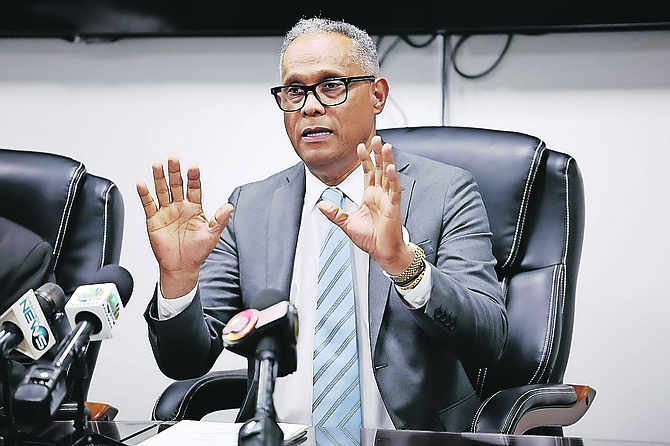
Health and Wellness Minister Dr. Michael Darville framed the workshop as a historic opportunity to unify regional resources to turn the tide against cancer, with a specific focus on expanding early detection capacity, and establishing standardized safe handling and disposal protocols for radioactive materials used in diagnostic medical equipment. Local medical oncologist Dr. Tracy Roberts-Halkitis flagged breast, prostate, and colorectal cancers as the three highest-burden cancer types driving mortality in The Bahamas, and pushed for expanded public education campaigns to counter widespread misinformation about cancer risk: she clarified that while hereditary genetic mutations do contribute to some breast cancer cases in the country, the vast majority of diagnoses are sporadic, non-inherited cases that occur in women with no prior family history of the disease. She emphasized that regional screening programs must be expanded beyond breast cancer to include routine, accessible testing for prostate, colorectal, and cervical cancers as well. Cancer Centre Bahamas President and CEO Dr. Conville Brown closed out the opening session by arguing that prevention and early intervention remain the most cost-effective, high-impact public health strategies to reduce regional cancer mortality, and called for far more sustained public outreach to encourage all Bahamians to schedule regular preventative health check-ups even when they are not experiencing obvious symptoms.
Regional healthcare leaders unite to enhance cancer care and diagnostic equipment at Baha Mar workshop