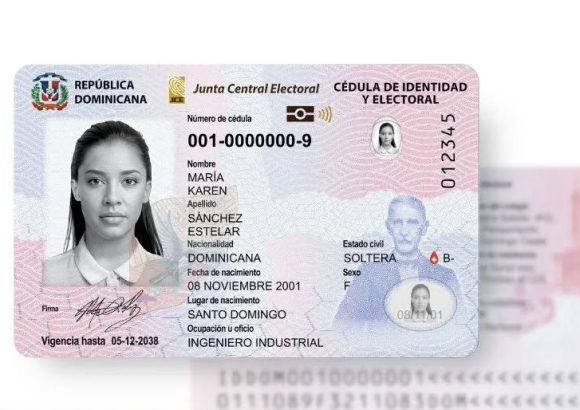
Santo Domingo – A new legislative proposal tabled before the Dominican National Congress aims to roll out a targeted, special administrative framework designed to formalize identity documentation and resolve long-standing legal ambiguities for a large group of residents who have held official Dominican national ID cards for years, but now face precarious legal status due to past discrepancies, cases of impersonation, or unaddressed inconsistencies in their Civil Registry files. Introduced by Representative Maribel Almánzar de Ogando, a member of the ruling Modern Revolutionary Party (PRM), the draft legislation is crafted to close unaddressed loopholes left by earlier regulatory measures, most notably Law No. 169-14, which explicitly barred any records found to contain falsified data from accessing its regularization benefits. The bill’s text acknowledges that the vast majority of people caught up in this bureaucratic limbo have built fully integrated lives across decades within Dominican territory, relying on state-issued official documents to enter marriages, register the births of their children, purchase real estate, secure formal employment, open bank accounts, and access public services. These established civil, familial, and economic ties, the proposal stresses, deserve formal legal protection rather than retroactive invalidation. Lawmakers behind the initiative note that decades of systemic underfunding, administrative mismanagement, and procedural gaps within the national Civil Registry system created the conditions for many residents to receive official identity papers under a clear, state-endorsed presumption of legality, only to have that status called into question years or decades later – a chain of events that puts core fundamental rights, including the right to a recognized legal identity, official name, equal treatment before the law, and full legal personhood, at severe risk. The proposed special regime would lay out clear, streamlined administrative pathways to correct long-irregular civil records, while explicitly preserving the full legal validity of every action these residents took using their previously state-approved identity. This protected scope covers all prior marriages, child birth registrations, signed contracts, pension benefits, property ownership claims, and inheritance entitlements, shielding not just the directly affected individuals but their entire families from sudden, disruptive loss of hard-earned rights. The draft also codifies a framework of shared accountability between the Dominican state and affected residents for cases where record irregularities directly stemmed from internal Civil Registry operational failures, all in service of upholding broad legal certainty and preventing systemic shocks to the country’s civil and financial administrative systems. The bill’s accompanying explanatory memorandum emphasizes that resolving long-ago registration errors should never come at the cost of stripping people of rights they accumulated over generations under official state documentation, and clarifies that the measure is designed to end prolonged civil vulnerability for affected groups rather than provide amnesty for intentional unlawful conduct. For the latest breaking Dominican news updates, readers can access full headline coverage via DominicanScope.
New bill proposes special regime for those facing identity documentation uncertainty