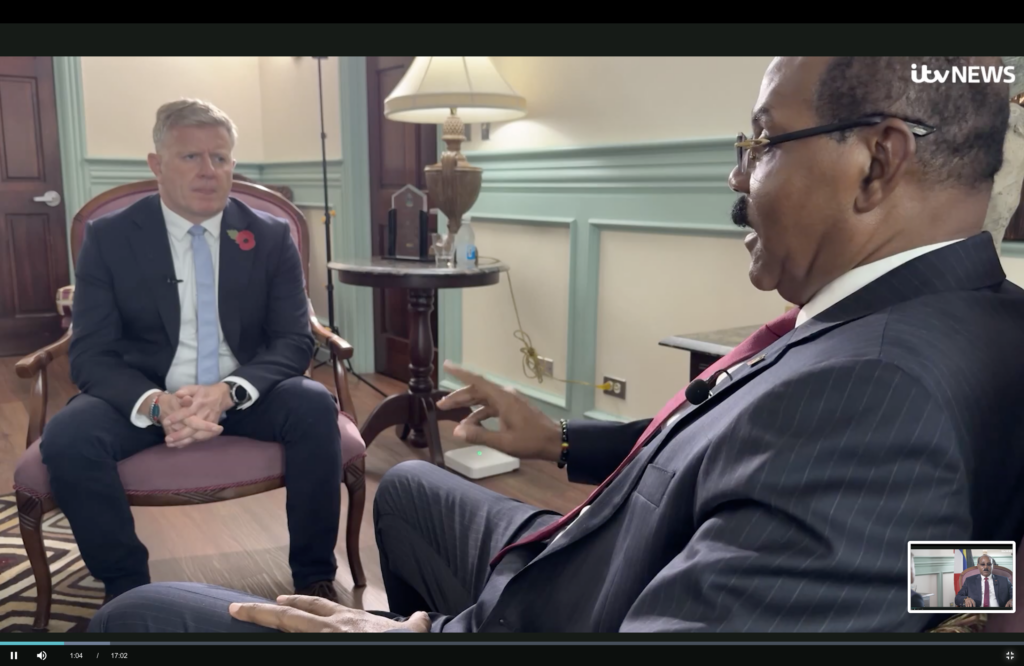
Days before Antigua and Barbuda plays host to the pivotal Commonwealth Heads of Government Meeting (CHOGM), Prime Minister Gaston Browne has laid out a clear, pragmatic framework for long-stalled negotiations over historical slavery reparations between the United Kingdom and Caribbean Commonwealth nations. In a wide-ranging exclusive interview, Browne emphasized that any upcoming bilateral and multilateral discussions on the legacy of transatlantic chattel slavery must be structured, fully inclusive, and bound by a pre-agreed timeline to avoid endless, unproductive deliberations that fail to resolve longstanding rifts between the two blocs. Browne struck a receptive tone toward newly installed British Prime Minister Andy Burnham’s recent public indication that his administration is open to working toward a formal, official apology for the UK’s central, decades-long role in the transatlantic slave trade, a position that marks a notable shift from successive previous British governments that have avoided formal accountability for the colonial-era atrocity. Even so, Browne was realistic about the near-term outcomes of the upcoming summit, stating explicitly that he does not anticipate a full, binding consensus on formal reparations terms to be reached by assembled Commonwealth leaders during the Antigua-hosted gathering. “I do not believe that we will be able to come to a consensus at this CHOGM,” he confirmed, while framing the summit as a critical launching pad for structured, good-faith dialogue that can pave the way for eventual mutual understanding. While Browne declined to put forward a rigid, exact deadline for the full conclusion of the negotiations, he stressed that a non-negotiable time-bound structure is non-negotiable to ensure conversations remain focused and serious, rather than being sidelined by shifting domestic political cycles in the UK. The Antiguan leader acknowledged the very real domestic political constraints that Burnham faces at home when addressing the reparations file, but pushed back firmly against the idea that those internal political hurdles eliminate the moral and practical imperative for the UK to take tangible action to redress the intergenerational harms of slavery and centuries of colonial exploitation. “I understand the politics in the UK in which it may be a difficult proposition for him to agree to any form of reparations, but that does not negate the need for reparations,” he explained. To reduce immediate political friction for the British government, Browne outlined a pragmatic, low-friction proposal that would not require the UK to allocate new, additional public funds for the Caribbean reparations framework: instead, he called for a targeted partial reallocation of the UK’s existing official overseas development assistance (ODA) budget toward targeted, region-wide Caribbean development programmes. He added that targeted debt restructuring for Caribbean nations could also form a core component of this remedial package, even as both sides remain divided on the exact parameters of direct financial compensation for descendant communities. Crucially, Browne noted that the UK would not even be required to formally label this redirected development funding as “reparations” to satisfy domestic political sensitivities; what matters most, he argued, is that the region receives a sustained, systematic stream of dedicated funding to address the persistent economic, social and structural gaps created by centuries of enslavement and colonial rule. “You don’t have to call it reparations, but there has to be a systematic programme of funding to help to develop this region,” he stated. Browne also pushed back against skeptical commentary that framed Burnham’s new, more open stance on slavery accountability as nothing more than a temporary public relations gesture to smooth tensions during his upcoming visit to Antigua and Barbuda. He confirmed that Caribbean host governments have already given formal assurances that all discussions during CHOGM will be conducted in a respectful, constructive tone, free from unnecessary bitterness or personal animosity, and said that Caribbean leaders are choosing to take Burnham’s stated commitments at face value. Even with significant outstanding gaps between the two sides’ positions on formal compensation, Browne voiced measured, long-term optimism that consistent, good-faith dialogue will eventually yield a mutually acceptable agreement. He added that a preliminary announcement of targeted new development assistance for the Caribbean unveiled during the CHOGM proceedings would be widely welcomed across the region as a meaningful, tangible gesture of goodwill to kickstart the formal negotiation process.