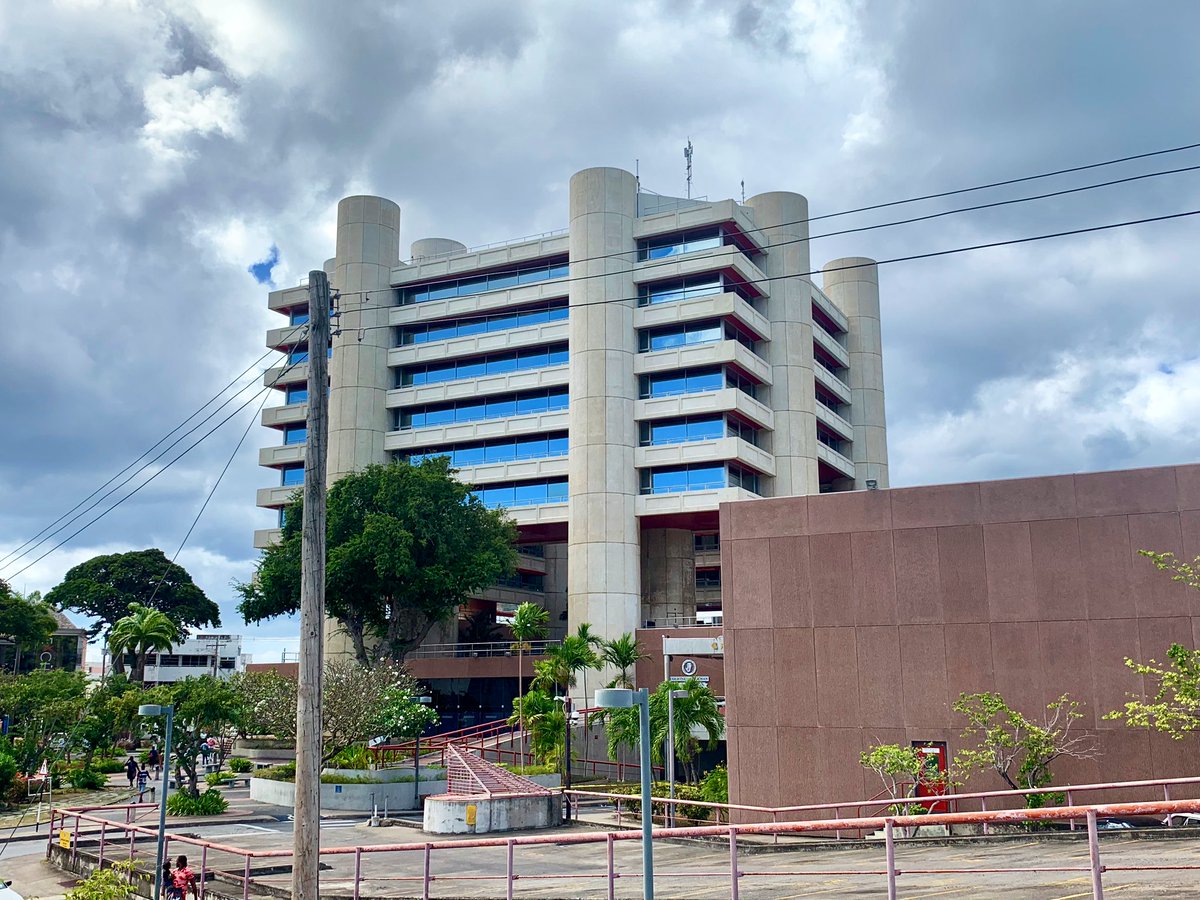
A joint assessment from Barbados’ top two financial oversight bodies has confirmed that, to date, there is no quantifiable proof that artificial intelligence poses a systemic threat to the island nation’s financial ecosystem, even as officials ramp up targeted surveillance of the technology’s expanding footprint across all financial sub-sectors.
Released as a companion document to the 2025 Financial Stability Report, the joint research paper titled *Artificial Intelligence and Financial Stability in Barbados* was co-developed by the Central Bank of Barbados (CBB) and the Financial Services Commission (FSC), with analysis anchored in peer-reviewed international studies and on-the-ground reviews of local financial institutions’ current AI deployment practices.
Regulators emphasized that while AI is already driving tangible transformations in the global financial industry – with firms leveraging the technology for automated credit scoring, real-time fraud detection, 24/7 AI-powered customer support, advanced risk modelling, and streamlined back-office operations – its widespread adoption brings a dual set of opportunities and unmitigated hazards that demand proactive governance. On the upside, AI-powered analytical tools can refine lending decision accuracy, flag suspicious transactions far faster than legacy systems, and reinforce early warning protocols for emerging market risks. The technology also unlocks new efficiencies via RegTech solutions that cut compliance burdens for financial firms, and SupTech tools that enable regulators to conduct more granular, real-time sector monitoring.
However, the 2025 assessment flags a suite of underaddressed vulnerabilities that could escalate as AI penetration deepens across Barbados’ financial landscape. Opaque, un-auditable AI models, algorithmic bias that skews lending outcomes, unvetted inaccurate model outputs, and insufficient human oversight of high-stakes financial decisions all create untested operational gaps. Generative AI tools, meanwhile, have already lowered barriers for bad actors to launch hyper-personalized phishing campaigns, sophisticated financial fraud, and targeted misinformation that could erode public trust in financial services. Regulators also highlighted critical concentration risks: the vast majority of local financial firms rely on a small pool of third-party AI service providers and cloud infrastructure platforms, meaning a single outage, cyber breach or service disruption at one of these vendors could cascade across multiple unrelated domestic institutions simultaneously.
The cross-border spillover risks of AI-related financial disruptions also feature prominently in the report. Given Barbados’ deep integration with global financial markets, AI-driven shocks originating in overseas jurisdictions can quickly transmit to the local economy via shifting capital flows, disrupted trade financing channels, and borderless cyber threats that do not respect national geographic boundaries. The assessment also notes uneven distribution of AI impacts across stakeholder groups: local businesses and households stand to gain from faster, more affordable access to formal financial services and productivity gains, but widespread AI adoption could also trigger labour displacement in administrative and entry-level financial services roles, putting downward pressure on household incomes, deposit volumes, and consumer loan repayment capacities.
The CBB and FSC explicitly stressed that robust, forward-looking governance frameworks will be the determining factor in whether Barbados can capture AI’s full economic benefits while mitigating its associated harms. For all financial institutions deploying AI at scale, regulators are mandating clear lines of accountability for model performance, mandatory human sign-off on all material customer-facing and risk-related decisions, layered cybersecurity protocols tailored for AI systems, and rigorous due diligence for all third-party AI and cloud vendors, with consumer protection embedded as a non-negotiable core requirement for all AI use cases.
Aligning with guidance from the global Financial Stability Board (FSB) that calls for national regulators to close critical gaps in data collection on financial sector AI usage, the CBB and FSC have outlined a multi-year work plan to expand their supervisory AI monitoring capabilities, build a centralized repository of anonymized data on local AI deployment in financial services, and explore targeted SupTech integrations to future-proof their oversight frameworks against emerging AI-related risks.
AI no immediate threat to financial system, CBB report finds