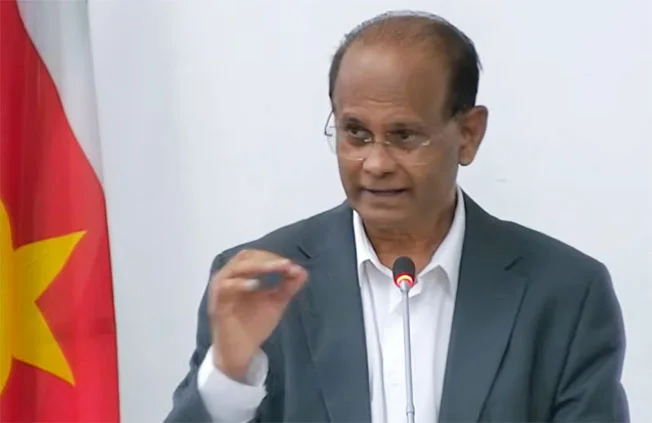
On November 4, 2024, Rabin Parmessar, leader of the National Democratic Party (NDP) parliamentary caucus and chair of the rapporteur committee reviewing the landmark Tax Justice Initiative Law, laid out a series of non-negotiable prerequisites before the new specialized tax judicial system can be formally launched in Suriname. Co-sponsored by VHP caucus leader Asis Gajadien and NDP representative Rossellie Cotino, the proposed legislation is designed to replace the fragmented, long-defunct existing tax appeal framework, which has left the direct tax appeal board non-functional since 1992, with only indirect tax appeal processes partially restored in recent years.
The new system as drafted would route initial tax disputes, including challenges to tax assessments and penalties, to local canton court judges, with appeals escalated to the national Court of Justice. Parmessar emphasized during Tuesday’s parliamentary debate that for the system to deliver meaningful justice, three core pillars must be fully secured first: specialized expertise, full institutional independence, and equitable public accessibility.
On the expertise front, Parmessar noted that while 20 judges have already completed partial tax law training, the specialized field requires deep familiarity not just with domestic tax codes, but with highly complex cross-border fiscal issues related to international corporations, oil and gas operations, gold mining, and transnational financial transactions. He called for formal standardized competency requirements, ongoing mandatory professional upskilling, transparent case assignment protocols, strict conflict of interest safeguards, and robust data security for sensitive tax case files to prevent unauthorized access or tampering.
To protect judicial independence, Parmessar explicitly warned against any undue political, state, or private sector influence over judge appointments or individual case deliberations, stressing that the government must be held to the exact same rule of law standards it imposes on ordinary taxpayers. No political party, state agency, or business lobby should be permitted to interfere with the neutral adjudication of tax disputes, he added.
Turning to public accessibility, Parmessar raised concerns that the proposed court filing fees – set at SRD 250 for individual plaintiffs at first instance and SRD 750 for appeals, and SRD 1,500 and SRD 4,500 respectively for corporate entities – may be prohibitively costly for low-income citizens and small and medium-sized enterprises. He demanded formal reviews to confirm fee affordability, plus formal provisions for fee reductions or full waivers for taxpayers facing financial hardship. He also pushed for expanded access for residents living outside the capital city of Paramaribo, as well as for taxpayers who do not have access to digital administrative infrastructure, to ensure no eligible person is locked out of the system.
Parmessar further flagged long-standing backlogs at the national Tax Administration as a critical pre-implementation risk. While the new law will grant taxpayers the right to judicial recourse if tax inspectors fail to rule on formal objections within mandatory timelines, he warned that the new judiciary could be immediately overwhelmed by decades of unprocessed legacy cases without a full audit of existing backlogged files and a structured phased transition framework. He also called for a revision of the current provision that automatically suspends lower court rulings when an appeal is filed, noting that this rule could leave victorious individual taxpayers waiting years to receive the legal remedies they were awarded at first instance.
Parmessar confirmed he fully supports the core policy goal of the proposed law, which establishes for the first time a dedicated independent check on government tax authority actions. However, he insisted that all unresolved logistical, legal, and operational gaps must be resolved before the system goes live, requiring the national government and the Court of Justice to jointly deliver a detailed, actionable implementation plan that clarifies staffing levels, ongoing training frameworks, the setup of a dedicated tax court administrative office, case file security protocols, long-term system funding, and legacy backlog processing timelines. He also called for mandatory public disclosure of anonymized tax court rulings and regular public progress reports on case resolution rates to maintain full transparency.
The first round of parliamentary deliberations on the draft law concluded on Tuesday evening, with the bill’s co-sponsors and government representatives scheduled to respond to all submitted questions during the next session on Thursday.
Parmessar: Garanties nodig voor onafhankelijke en deskundige belastingrechtspraak