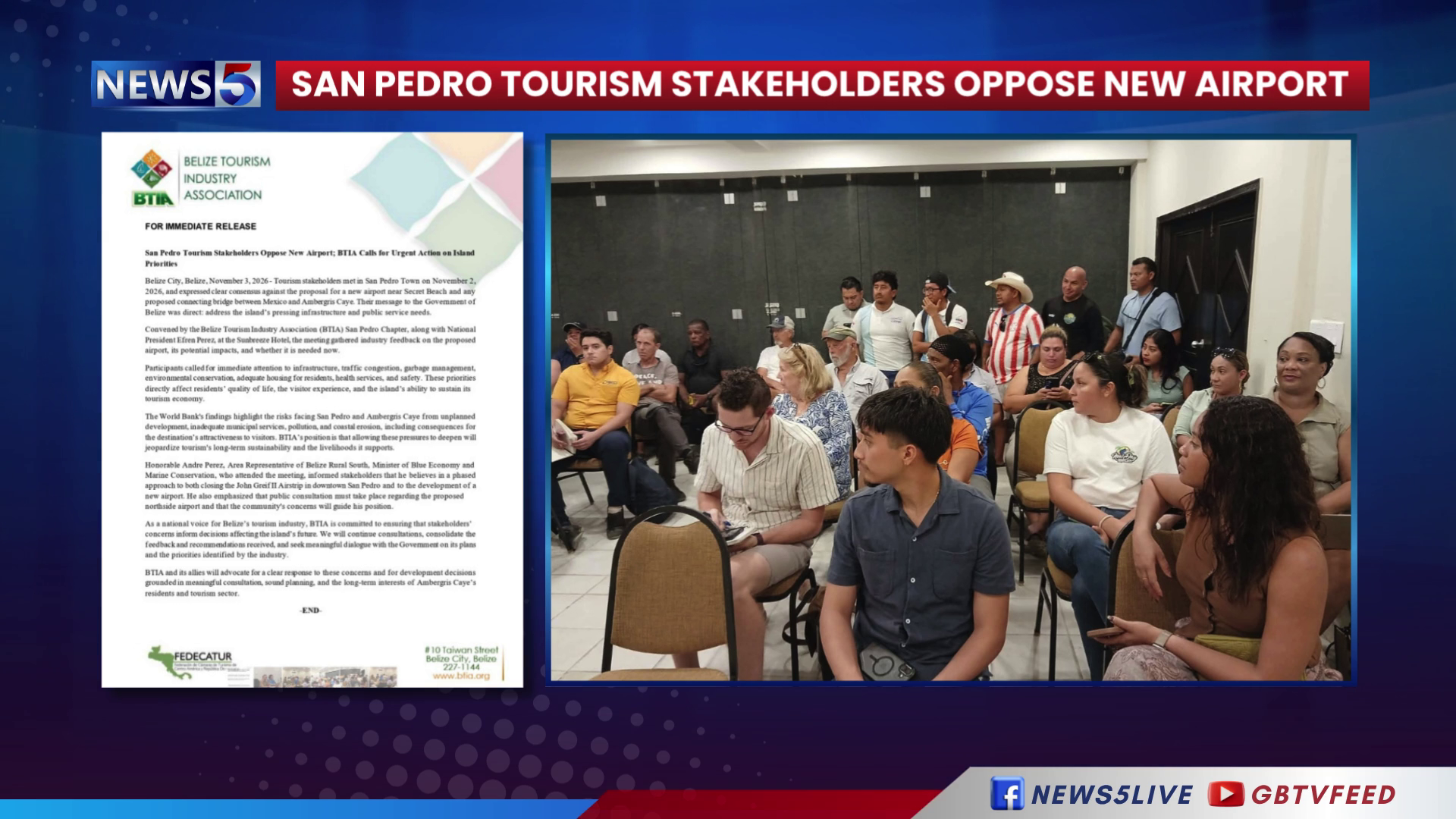
On November 3, 2026, a sharp, community-wide policy debate has erupted across Ambergris Caye’s San Pedro municipality, as local residents, tourism operators, and national government officials clash over the timing and priority of a proposed new international airport near the popular Secret Beach stretch. The core tension at the heart of the dispute hinges on a fundamental question for the fast-expanding island: should public funds and administrative bandwidth be directed first at building a forward-looking aviation hub, or at resolving the cascading, unaddressed daily crises that are already eroding quality of life for San Pedro’s permanent residents and existing workforce?
National government officials have laid out a case for advancing the new airport project, noting that the current John Greif II Airport is rapidly approaching its maximum operational threshold, with limited runway space, outdated safety infrastructure, and no capacity to accommodate projected passenger and cargo demand over the next 30 years. Proponents argue a purpose-built modern airport would not only boost flight safety and streamline passenger processing, but also strengthen island emergency response capabilities, unlock new foreign direct investment streams, and create hundreds of stable local jobs in construction, aviation services, and expanded hospitality operations.
But that vision is facing fierce pushback from local tourism industry stakeholders, who gathered for a formal community forum hosted by the San Pedro Chapter of the Belize Tourism Industry Association to outline their collective opposition. Attendees unanimously rejected both the proposed Secret Beach airport and a parallel planned infrastructure project that would connect Mexico directly to Ambergris Caye via a new cross-border bridge, arguing the government is prioritizing speculative, distant growth over the very basic public services that are already crumbling under the weight of San Pedro’s current population and tourist influx. The list of unmet urgent needs shared by operators includes crippling island-wide traffic gridlock that slows emergency response times, inconsistent garbage collection that has sparked public health and pest risks, a severe affordable housing shortage that pushes low-wage service workers to live in makeshift informal settlements, understaffed local health clinics that cannot meet basic patient demand, rising petty crime rates that erode visitor and resident safety, and accelerating coastal ecosystem degradation from unregulated construction and waste runoff.
Local area representative Andre Perez has publicly stated he supports the long-term phased retirement of the existing John Greif II airstrip and the development of a replacement aviation facility, but stressed that no final binding decision should be made before full, transparent public consultation is completed. That pledge is now under intense public scrutiny, as community members note no full project feasibility study, cost breakdown, financing plan, passenger volume projection, or formal environmental impact assessment has been released to the public to date. Critics warn that rushing the airport project without addressing current gaps will divert limited public budget away from the essential services that keep San Pedro livable, turning a once-thriving island community into an overdeveloped tourist destination that cannot support the people who keep its economy running. Government representatives have promised no closure of the existing airport will take place without prior community input, but local organizers argue that public feedback must be the foundation of the project’s design, not a last-minute procedural step tacked on after key planning decisions are already finalized.
The debate has moved past the oversimplified framing of development against preservation, and now centers on far more nuanced questions of public accountability, project timing, and budget prioritization. Stakeholders on all sides acknowledge that waiting until the existing airport hits full operational capacity will create serious safety and economic risks for the island, but local residents emphasize that a shiny new airport will never pick up uncollected garbage, ease daily rush-hour traffic jams, build affordable homes, or add doctors to the understaffed local hospital. Community groups are now demanding the government fully disclose all relevant project data, including total projected costs, funding sources, projected passenger growth numbers, full environmental mitigation plans for the Secret Beach coastal ecosystem, and a connected ground transportation framework that links the proposed airport to the rest of the island, before any further planning or construction moves forward. San Pedro’s long-term future, local residents argue, should be shaped by verifiable evidence and inclusive, community-wide input, not a series of competing, unsubstantiated public announcements from different stakeholder groups.