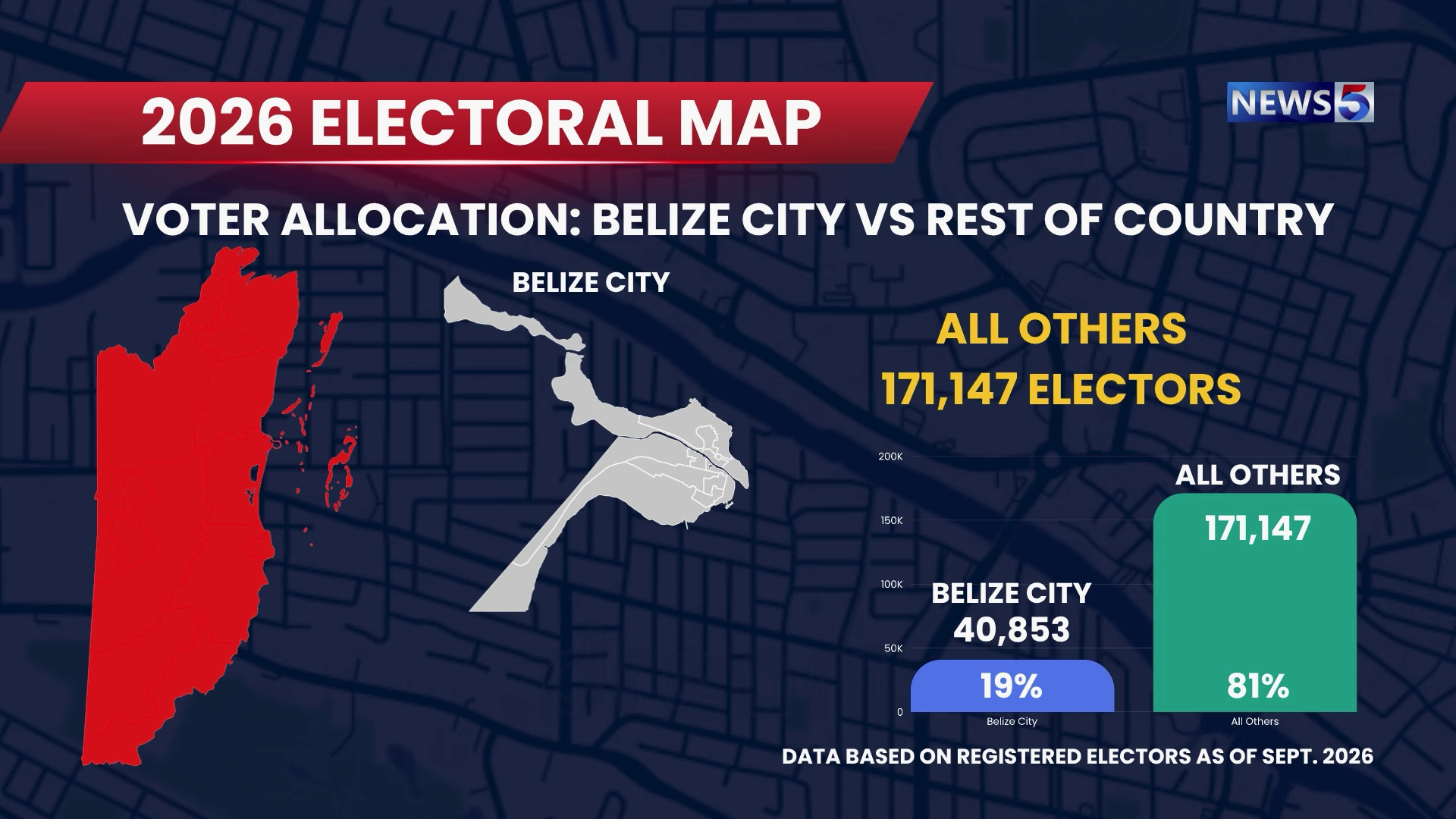
Released in early November 2026, updated official voter registration data for Belize has thrust a years-long, uncompleted redistricting initiative back into national public spotlight, laying bare deeply inequitable electoral representation gaps that run afoul of the country’s constitutional mandates. The newly published September 2026 electoral roll counts 212,000 total registered voters nationwide, with just under 41,000 of those electors residing in Belize City. This urban population is currently split across 10 separate electoral divisions, each allocated a dedicated elected Area Representative. By stark contrast, the country’s four most populous constituencies — Belmopan, Stann Creek West, Belize Rural South, and Toledo East, which combined hold more than 42,000 registered voters — are assigned only 4 Area Representatives total. Veteran social justice activist Jeremy Enriquez, a resident of the Toledo East constituency that includes parts of Punta Gorda, emphasized the scale of this structural unfairness in a recent evening broadcast interview. Per Belize’s constitutional guidelines, each electoral division should hold roughly 6,839 registered voters, allowing for a 10 to 15 percent margin of deviation to accommodate geographic and demographic practicalities. But current data shows Belize City’s 10 divisions average just 4,000 voters apiece, nearly 30 percent below the constitutionally recommended baseline, while the four largest overpopulated divisions carry an average deviation of 62 percent from the ideal size — a discrepancy Enriquez notes ranks as one of the most extreme in the entire Americas region. The activist warned that these lopsided electoral boundaries create cascading harms for underrepresented communities: constituents in overcrowded divisions face longer wait times for government support, less direct access to their elected officials, and systemic bias in public resource allocation that prioritizes the over-represented smaller Belize City constituencies. With the government’s formally mandated redistricting exercise remaining unfinished for months past its initial deadline, Enriquez is calling on national authorities to launch immediate, transparent boundary adjustments before population shifts widen the representation gaps even further, eroding the democratic fairness enshrined in Belize’s foundational legal framework.