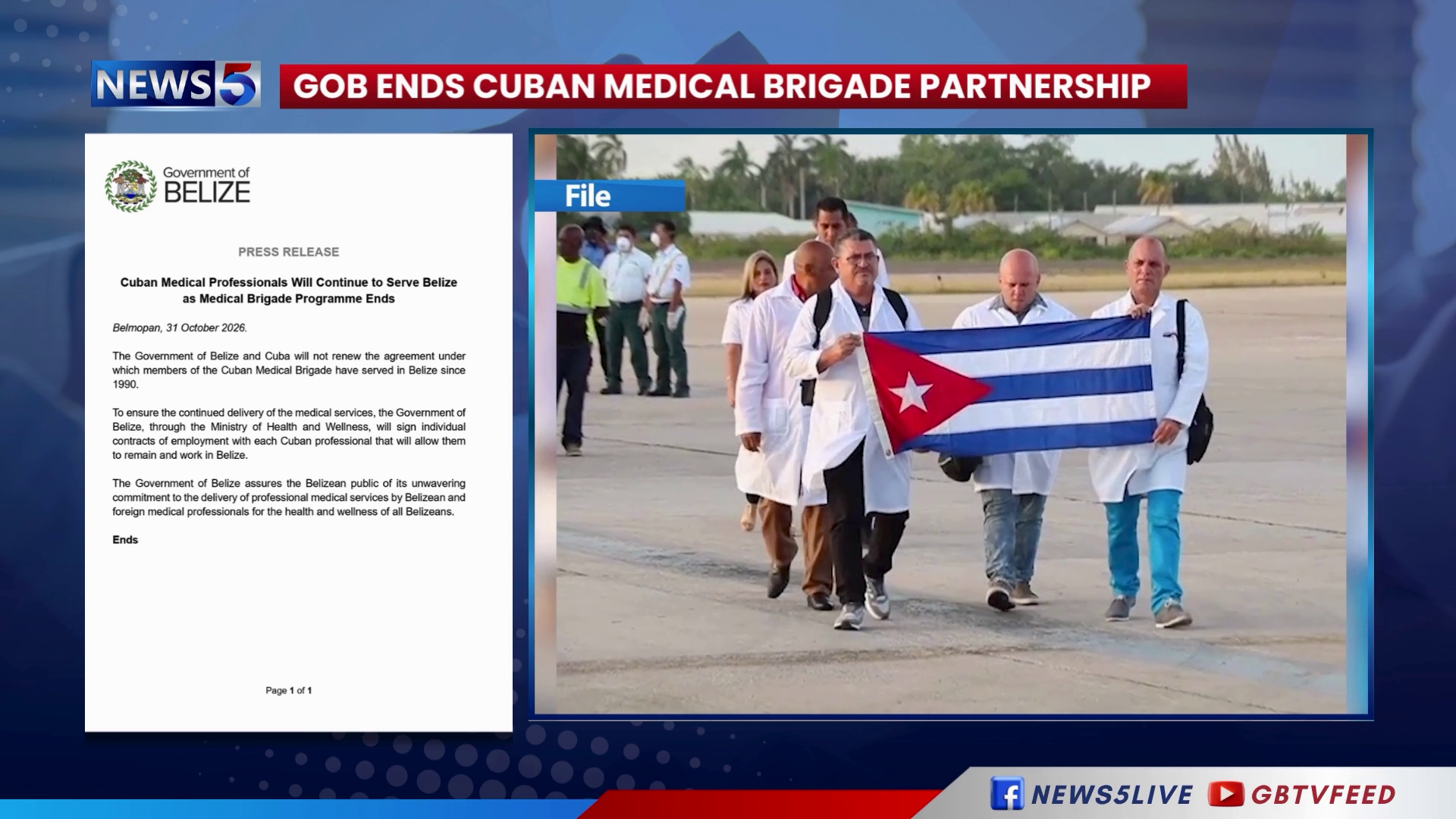
On November 3, 2026, Belize’s Ministry of Health and Wellness formally announced the discontinuation of the Cuban Medical Brigade, a landmark cross-border healthcare partnership that has supported the Central American nation’s public health infrastructure for 36 consecutive years. For decades, Cuban medical personnel have served as a core pillar of Belize’s frontline care system, filling chronic staffing shortages in underresourced rural clinics and urban public hospitals that local recruitment efforts had long failed to resolve. Under the new policy framework, the 92 Cuban medical professionals currently stationed across Belize under the brigade program will be offered direct, individual employment contracts to continue delivering patient care, a transition health officials say is calibrated to avoid disruptions to non-emergency and critical medical services nationwide. Speaking in a live phone interview with local outlet News Five, Health and Wellness Minister Kevin Bernard confirmed the cabinet had formally signed off on the decision to wind down the formal brigade program following months of interagency deliberation. “We have been reviewing all feasible pathways to restructure this longstanding partnership for some time, and the cabinet has formally agreed to end the formal brigade operating model,” Bernard explained. “Our top priority is safeguarding uninterrupted care for Belizean communities, so we chose to pursue direct contractual agreements with each of the Cuban health workers currently serving in our country, rather than letting their postings end abruptly. We are now in the process of coordinating one-on-one engagements through the health ministry to finalize these contracts.” When pressed by reporter Britney Gordon on whether all 92 brigade members had already committed to remaining in their posts, Bernard noted that each medical professional retains full autonomy over their employment decision, but expressed cautious optimism that the vast majority would choose to extend their service to Belize. Beyond the transition for existing Cuban medical staff, Bernard outlined parallel long-term investments to strengthen Belize’s domestic healthcare workforce, including targeted scholarship programs for local medical trainees and a $30 million dedicated workforce development initiative aimed at reducing long-term reliance on international medical staffing. When asked to address unconfirmed public speculation that the decision to terminate the formal brigade program was tied to recent diplomatic frictions between Belize and Cuba, Bernard declined to elaborate, noting that all diplomatic matters related to bilateral partnerships fall under the exclusive jurisdiction of Belize’s Ministry of Foreign Affairs.