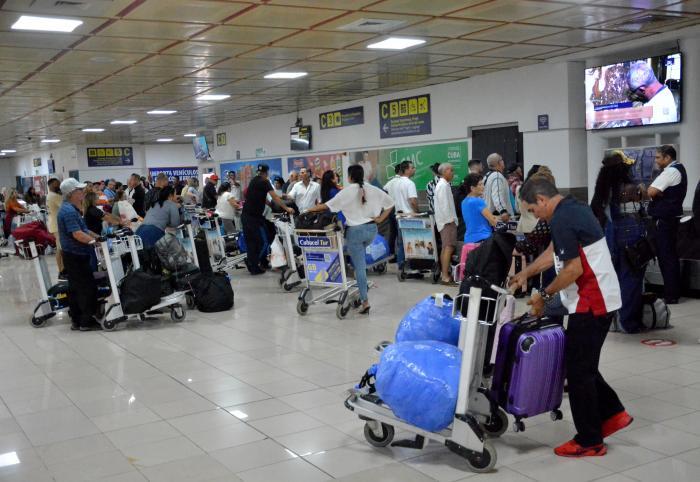
HAVANA – November 3, 2026: A sweeping trio of landmark legislative reforms – formally designated as Laws 171, 172, and 173 – entered official force across Cuba on Sunday, November 1, 2026, following their full publication in Issue 39 of the country’s Ordinary Official Gazette, alongside accompanying implementing rules and the updated Regulations for the National Citizenship Registry. The comprehensive regulatory package overhauls decades-old frameworks governing migration flows, foreign national legal status, citizenship eligibility, diaspora economic engagement, and targeted humanitarian protection pathways. At the core of the new Migration Law (Law 171) is the newly defined standard of “effective migration residence”, which classifies a Cuban national as maintaining formal ties to the nation if they accumulate a minimum of 180 days of physical presence on national soil over the preceding 12-month period, with no requirement for that stay to be consecutive. Citizens who fall short of this 180-day threshold can still apply for official recognition of their effective residence status by submitting verified documentation proving tangible links to Cuba: qualifying evidence includes immediate first-degree family ties to Cuban residents, formal paid employment contracts, registered domestic investments, titled residential property, active Cuban bank accounts, up-to-date tax compliance records, or other documented movable or immovable assets held within national borders. Special exemptions are also written into the law for Cuban citizens who are required to remain abroad for work assignments, urgent medical treatment, accredited academic study, or other formally justified purposes, who can retain their effective residence status by submitting official supporting paperwork for their extended overseas stay. Critically, the reforms eliminate the previous longstanding 24-month maximum cap on permitted stays abroad for Cuban nationals, and Article 31 of Law 171 explicitly enshrines the constitutional property rights of Cubans residing overseas, granting them full legal authority to use, manage, and freely dispose of assets held within Cuba in line with Article 58 of the Cuban Republic’s constitution. For foreign nationals seeking long-term status in Cuba, the legislation streamlines two formal residency tiers: provisional residence, which serves as a mandatory prerequisite for citizenship applications, and permanent residence, with expanded eligibility criteria to welcome qualified global residents. Qualified candidates for permanent residence include foreign spouses or de facto domestic partners of Cuban citizens who hold valid effective residence in the country, parents of Cuban-born citizens residing on national soil, foreign nationals who have maintained continuous legal temporary residency in Cuba for five or more years, globally renowned professionals with advanced expertise in science, sports, culture or the arts who are formally endorsed by Cuban state institutions, and individuals who hold significant verifiable assets either in foreign accounts or registered with Cuban banking entities. Additional pathways to permanent residency are open to qualified foreign nationals or families who can demonstrate sufficient professional expertise and independent financial means to establish self-sustaining livelihoods in Cuba, and who hold the capital required to launch new businesses or make targeted investments aligned with the nation’s official national development priorities. A dedicated, newly created humanitarian residency classification is also embedded in the law to extend targeted protection to vulnerable foreign populations. This category covers three distinct sub-groups: individuals receiving formal UNHCR Havana support seeking refugee or stateless person status, vulnerable foreign nationals facing life-threatening health conditions, mobility impairments that prevent independent living, or personal security risks including survivors of human trafficking and migrant smuggling networks, and temporary protection recipients who encounter unforeseen humanitarian crises at Cuban border points that block their ability to continue travel to their original intended destinations. All approved humanitarian residents are guaranteed access to state healthcare, formal employment pathways, social security benefits, public education, judicial support, and family reunification services, tailored to the specific circumstances that qualified them for protected status. The reforms also codify the longstanding constitutional rights of all Cuban citizens to enter, exit, travel within, and remain on national territory in line with regulatory guidelines, including formal rights to apply for family reunification for foreign relatives residing overseas, re-establish permanent residence in Cuba after extended periods abroad, and import personal household goods in compliance with existing customs regulations. Law 172, the dedicated Citizenship Law, formalizes constitutional citizenship principles, laying out clear rules for acquisition of citizenship by birth or naturalization, official proof of citizenship documentation, and formal procedures for voluntary renunciation, involuntary loss, administrative deprivation, or official recovery of Cuban citizenship. Notably, the law confirms that acquiring a second foreign citizenship will never result in the automatic loss of Cuban nationality, though dual nationals are required to operate exclusively under their Cuban citizen status while within national borders and may not exercise any rights tied to their foreign citizenship during their stay. For naturalization applicants, mandatory eligibility requirements include reaching the age of legal majority, holding valid permanent residency in Cuba for a minimum of five years (reduced to two years for spouses, parents or children of Cuban-born citizens), demonstrating full integration into local Cuban society, maintaining authorized economic activity for working-age applicants, holding no prior criminal record for terrorism, human trafficking, drug trafficking or other serious specified offenses in any jurisdiction, and passing a standardized Cuban citizenship assessment. Law 173, governing the legal status of foreign nationals, establishes clear rules for work authorization: foreign residents holding provisional or permanent status are fully covered under Cuba’s national Labor Code with no additional work permit requirements, while other resident foreign nationals must obtain formal work approval from the Ministry of Labor and Social Security to take up formal paid employment. A defining priority of the full legislative package is to deepen economic and social ties between Cuba and its global diaspora, creating a dedicated “Investor and Business” immigration status exclusively for Cuban citizens residing overseas who wish to pursue authorized economic activities on national soil. This status extends identical legal investment guarantees to overseas Cuban entrepreneurs as those offered to international foreign investors, and confirms that these diaspora investors will enjoy all the full legal rights afforded to Cuban citizens during their stays in the country, drastically strengthening legal certainty for their commercial projects and capital deployed across the national economy. The full Spanish text of the three new laws and accompanying regulatory documents is available for public download via the official Cuban government Gazette portal.
New legal framework on Migration, Foreign Nationals, and Citizenship comes into effect