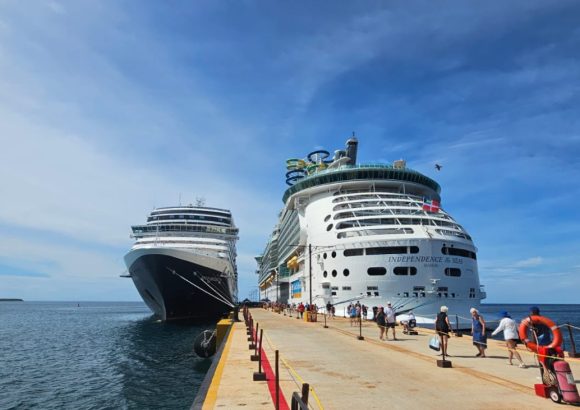
In a landmark sign of the Dominican Republic’s expanding cruise sector, the newly operational Cabo Rojo cruise terminal in the southern province of Pedernales hosted two major international cruise liners on a recent Monday, disembarking roughly 5,771 leisure passengers alongside 2,264 dedicated crew members. The two visiting vessels were Royal Caribbean International’s *Independence of the Seas*, a large-scale adventure-focused cruise ship, and Holland America Line’s premium *Nieuw Amsterdam*, a vessel tailored for curated Caribbean travel experiences.
Dominican Republic Tourism Minister David Collado emphasized that the back-to-back arrivals underscore Pedernales’ rapidly rising profile as a high-priority stop on global Caribbean cruise itineraries, unlocking tangible, inclusive economic gains for local households through small tourism-linked enterprises ranging from guided shore excursions to family-run restaurants, local craft markets, and ground transportation services.
Across the entire island nation, five separate cruise ships docked at Dominican ports that same Monday, bringing a combined total of approximately 15,503 passengers and 6,421 crew members to coastal communities. National tourism authorities project that the country will log roughly 105 total cruise vessel calls over the course of November, with participation from every major global cruise operator including Royal Caribbean, Carnival, MSC Cruises, Norwegian Cruise Line, and Holland America Line.
The sharp uptick in vessel traffic at the Cabo Rojo terminal is a direct reflection of the port’s growing footprint on global cruise route maps, as well as the Dominican government’s deliberate multi-year strategy to reduce overreliance on the country’s long-established northern and eastern coastal tourism hotspots. Since the state-of-the-art terminal first launched operations in January 2024, it has steadily scaled its service capacity, opening up new revenue streams for local operators in the tour, hospitality, and artisan sectors that had previously been largely excluded from the country’s lucrative cruise economy. The broader Cabo Rojo development initiative sits at the core of the administration’s southern regional tourism master plan, designed to draw targeted foreign and domestic investment, create stable formal and informal local jobs, and spread the widely documented economic benefits of Dominican tourism far beyond the traditional resort zones that have long dominated the sector.
For full ongoing coverage of Dominican Republic’s evolving tourism industry, readers can access DominicanScope’s dedicated tourism reporting section.