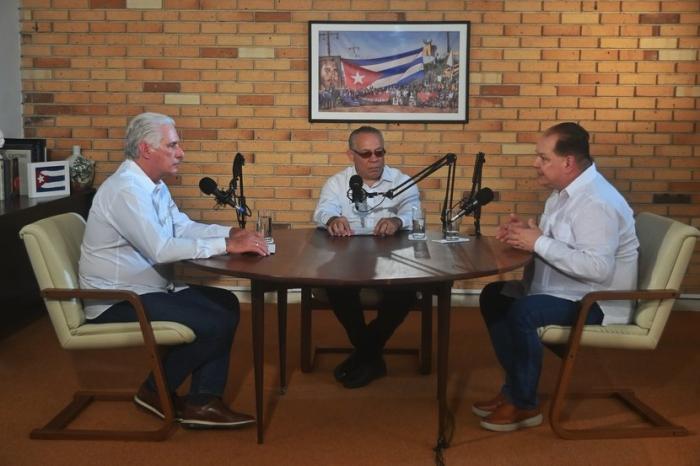
Broadcast as the latest installment of Cuban President Miguel Díaz-Canel Bermúdez’s official podcast *From the Presidency*, the November 2, 2026, episode centered two interconnected core priorities: the Cuban Revolution’s decades-long, unbroken legacy of advancing social justice and protecting the nation’s most vulnerable populations, and the landmark 34th consecutive UN General Assembly vote condemning the decades-long U.S. economic, commercial, and financial blockade against the island. As First Secretary of the Central Committee of the Cuban Communist Party, Díaz-Canel opened the discussion by grounding the nation’s social protection framework in the earliest days of the revolutionary struggle in the Sierra Maestra, emphasizing that genuine socialist governance is inherently incompatible with systems of exclusion. He framed the October 28 UN vote as a resounding global rebuke of what he labeled the genocidal U.S. blockade, including its targeted energy restrictions that impose collective punishment on ordinary Cuban citizens. Despite aggressive U.S. lobbying pressuring nations to oppose the resolution, 130 countries voted in support of Cuba, a result Díaz-Canel framed not merely as a diplomatic win, but as global recognition of the Cuban people’s six decades of courageous, creative resilience against imperial aggression that he argued poses an escalating threat to global multilateralism, peace, and ethical international coexistence. Joining the president for the policy-focused segment of the discussion were Jesús Otamendiz Campos, Minister of Labor and Social Security, and Dr. Enrique Alemán, leader of the renowned grassroots sociocultural project *Quisicuaba*. The conversation built on themes from Díaz-Canel’s biweekly Radio Rebelde program *Shared Views*, diving into the practical implementation of the government’s ongoing social protection agenda, which operates as a core component of the nation’s recently approved 176 economic and social transformation initiatives. Minister Otamendiz detailed the rollout of a new Multidimensional Vulnerability Index currently being piloted across six Cuban municipalities, designed to identify at-risk populations far more accurately than previous assessment frameworks. To date, nationwide door-to-door visits by trained social workers and local Social Policy Support Groups have reached over 1.3 million households, including families with children under five, elderly residents living alone, households with children experiencing malnutrition or stunted growth, and people living with chronic illnesses. These assessments have identified 883,426 people in highly vulnerable circumstances, a dynamic figure that is regularly updated to reflect shifting needs rather than treated as a static statistic. The program also leverages public input from callers to *Shared Views*, who report unmet needs that are then addressed directly by local labor offices and provincial authorities under Communist Party oversight. Food assistance distributed through local neighborhood bodegas is further supported by global solidarity donations and partnerships with international bodies including the World Food Programme. Dr. Alemán, representing community-led civil society efforts, explained that the *Quisicuaba* project, rooted in Havana’s Los Sitios neighborhood, operates on the foundational Cuban revolutionary principle of José Martí: “with everyone and for the good of everyone,” combining direct care for marginalized groups with innovative, science-backed interventions to address the multidimensional roots of vulnerability, rather than relying solely on short-term welfare handouts. He emphasized that addressing complex social gaps requires radical humanism and sensitivity, and that a diverse ecosystem of faith groups, community associations, and family-led initiatives plays a critical role in resolving cases that formal state mechanisms may miss, often due to bureaucratic red tape or gaps in local awareness. Closing the episode, President Díaz-Canel reaffirmed that social protection for vulnerable groups will remain a permanent national priority as long as unmet needs persist, stressing that social justice cannot be delivered through rhetoric alone, but requires functional, accessible institutions and inclusive economic production. He outlined new regulatory requirements mandating social responsibility obligations for all state and non-state economic actors, including private enterprises, cooperatives, and micro, small, and medium-sized enterprises, requiring them to contribute to local community services and support at-risk residents. He explicitly rejected bureaucratic barriers to accessing social support, noting that the success of social policy should be measured by how easily a vulnerable person can receive assistance, not by the number of required administrative forms. Rejecting the framing of vulnerability as a numerical metric, he concluded that every data point collected represents a real human being, and that the nation’s social justice mission carries forward the legacy of revolutionary leaders including Fidel Castro, Raúl Castro, Celia Sánchez, Vilma Espín, Haydée Santamaría, Camilo Cienfuegos, and Che Guevara, who dedicated their lives to dismantling Cuba’s pre-revolutionary deeply unequal capitalist social order.