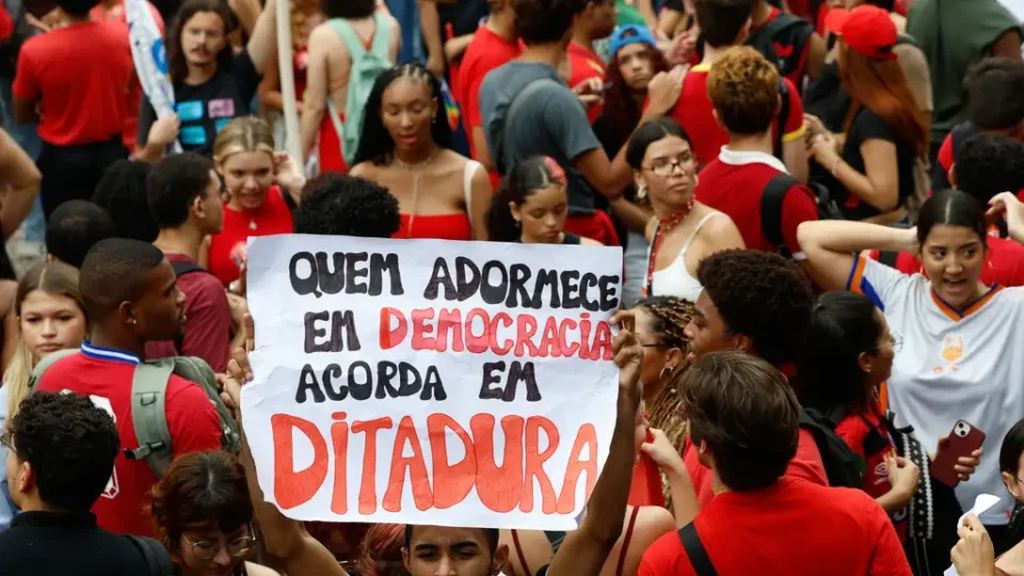
A grassroots pro-democracy demonstration is set to kick off at Morro do Cristo, a prominent landmark in the northeastern Brazilian state of Bahia, under the banner of the newly launched “Brasil com S” (Brazil with an ‘S’) campaign organized by the National Union of Students (UNE), the country’s historic leading student advocacy body. The mobilization is a direct, targeted response to a series of destabilizing statements and disinformation circulated by Flavio Bolsonaro, the senator who lost his bid in the October 25 Brazilian presidential general election. Three days after official electoral authorities formally certified that incumbent President Luiz Inacio Lula da Silva had secured a clear, legally mandated victory to win the presidential race, on October 28, Flavio Bolsonaro distributed a widely shared open letter that initially framed himself as the “true president-elect” in explicit rejection of the verified, court-endorsed election results. The original iteration of the document also carried an official-looking emblem emblazoned with the archaic, pre-1960s spelling of the country’s name “Estados Unidos do Brazil”, a deliberate rhetorical choice that evoked nostalgia for Brazil’s past authoritarian military regime. After facing widespread public backlash over the false claims and provocative historical framing, Bolsonaro quietly revised the letter in subsequent circulated versions: the controversial archaic emblem was removed entirely, and the false “true president-elect” title was reworded to the far more muted label “leader of Brazil”. UNE organizers emphasized that the “Brasil com S” mobilization is rooted in a core commitment to upholding the unassailable integrity of Brazil’s national electoral system, defending the democratic will expressed by millions of Brazilian voters at the polls, and safeguarding the popular sovereignty that forms the foundation of the country’s constitutional order, with plans for coordinated parallel events to roll out across dozens of other Brazilian states in the weeks following the Bahia launch.