Santo Domingo, Dominican Republic – The Dominican Confederation of Micro, Small and Medium Construction Companies (Copymecon) has issued an urgent public call for coordinated, concrete regulatory and policy interventions to resolve two interconnected crises plaguing the nation’s construction industry: unregulated illegal labor and skyrocketing levels of operational informality that are warping the segment’s economic performance, operational quality, and long-term workforce development.
During a press briefing held Wednesday, Copymecon president Eliseo Cristopher laid out the cascading harms of unaddressed gaps in labor oversight, noting that widespread informal hiring and unvetted illegal work arrangements erode job security for formal sector employees, block pathways to formal technical upskilling for local construction professionals, and create consistent execution gaps across public and private construction projects that compromise build quality and project timelines. He emphasized that both short-term emergency interventions and structured medium-term frameworks are non-negotiable to pull the sector back to stable, sustainable growth.
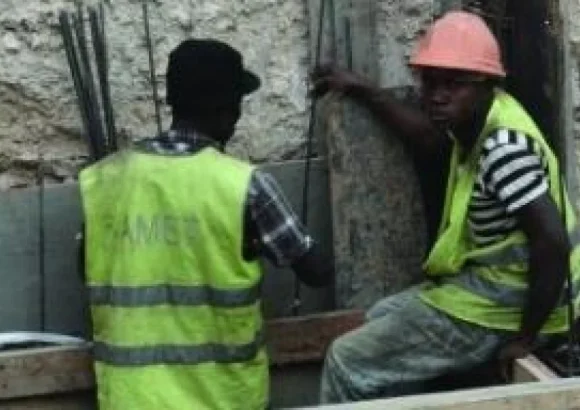
Cristopher specifically highlighted the disruptive ripple effects of recent large-scale repatriation operations targeting undocumented Haitian migrant workers, who currently make up a large share of frontline construction labor across the country. The sudden outflow of this workforce has left dozens of active construction sites understaffed and operating at partial capacity, paralyzing project rollouts nationwide. To mitigate this labor crunch, he stressed that the industry must prioritize recruiting and training local Dominican workers to fill vacant roles, noting that the construction sector has unmet demand for more than 95% of the country’s available skilled local construction workforce, with a long-term roadmap to gradually phase out reliance on irregular foreign labor.
The sector leader went on to flag a staggering statistic on informal operations: over 98% of all construction micro, small and medium enterprises that make up the vast majority of the national industry currently operate outside formal regulatory frameworks, with no targeted government policies rolled out to date to bring these firms into formal compliance, reduce exploitative informal hiring practices, and level the competitive playing field for registered businesses. “Right now, there is zero visible action from the administration to tackle this systemic informality,” Cristopher stated, warning that continued inaction would push even more formalized small construction firms out of business.
Responding to Copymecon’s public appeal, Minister of Housing and Buildings Jean Luis Rodríguez confirmed that the national government recognizes the severity of the dual challenges of irregular labor and widespread informality in construction. He noted that the issue has sparked complex cross-sector debates that intersect with national migration policy, labor rights, and small business support, requiring a collaborative multi-stakeholder solution co-designed with industry representatives. Rodríguez confirmed that inter-agency working groups are currently conducting a full review of the sector’s pain points to draft targeted corrective measures in the coming months.