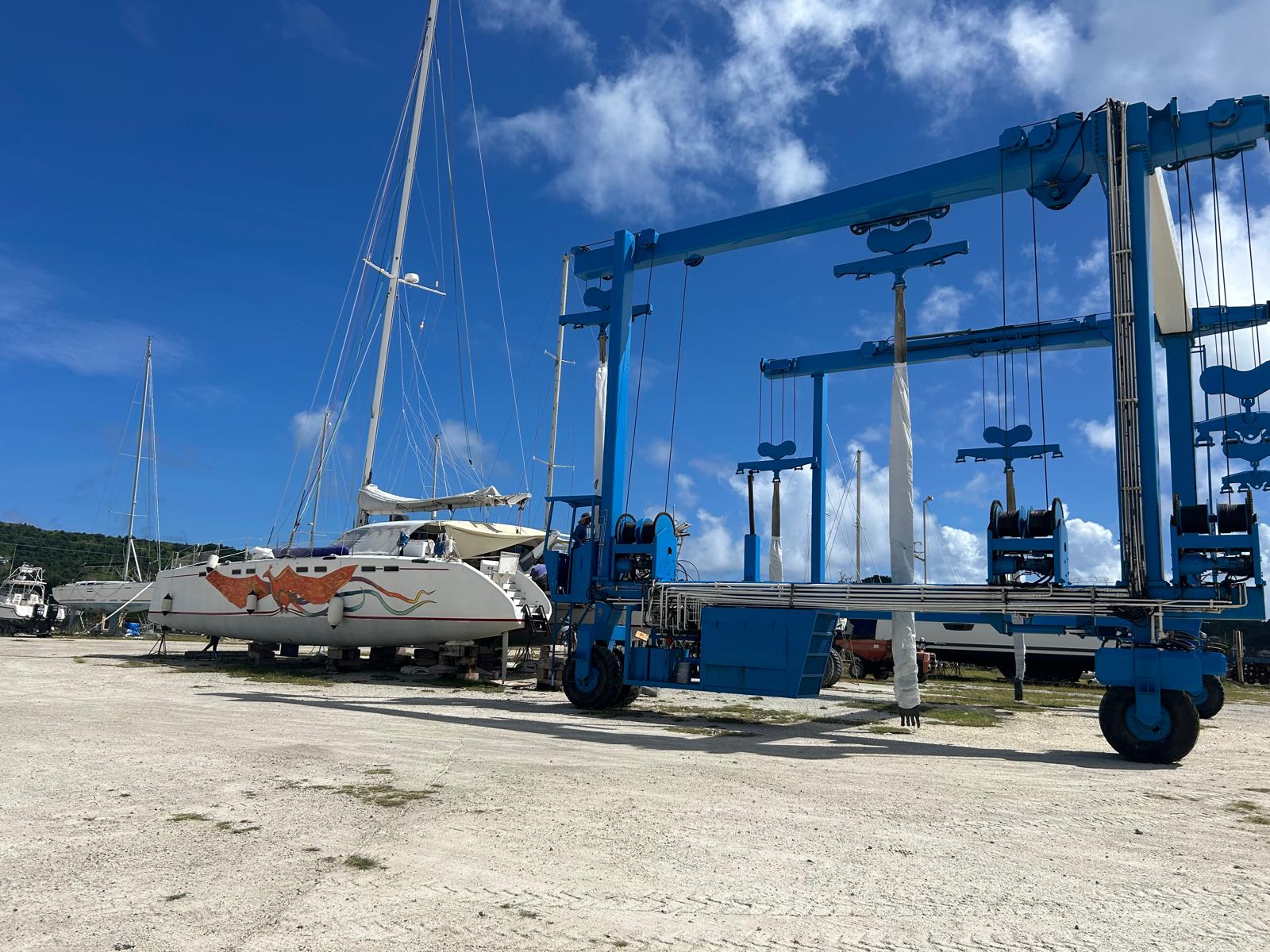
Carriacou’s Tyrell Bay Marina has officially reopened for business following a 7 October successful ruling at the Eastern Caribbean Court of Appeal, bringing an end to a six-month access blockade that left dozens of boat owners trapped on land, unable to launch or sail their vessels. The marina formally announced its return to full operations in a 21 October public statement, where leadership thanked customers for their unwavering patience, marina staff for their consistent dedication, and the broader Carriacou community for its ongoing encouragement through the prolonged crisis. The statement reaffirmed the facility’s longstanding commitment to supporting local patrons, uplifting the surrounding community, and sustaining the growth of Carriacou and Grenada’s broader marine industry, while extending a warm welcome back to returning sailors and new visitors from the global sailing community.
However, the carefully crafted public release deliberately avoided addressing a raft of outstanding pressing questions, including the scope of financial losses incurred by trapped boat owners, potential paths to compensation, accountability for the six-month access restrictions, and the cascading harm the disruption caused to adjacent local marine businesses. In a follow-up email responding to media inquiries, marina representatives noted that ongoing active court proceedings barred them from commenting on nearly all details related to the underlying conflict.
The entire disruption traces back to a decades-long legal battle over a parcel of land directly adjacent to the marina. In January 2023, the Judicial Committee of the Privy Council issued a formal ruling granting full ownership of the disputed land to the Estate of Samuel Corion, but lingering legal questions over rightful possession and permissible use of the property have remained tied up in ongoing court proceedings ever since.
For Leslie Bell-Friedel, a Canadian sailor who had been living aboard her vessel with her husband since 25 April, the recent removal of the barrier fence and restoration of marina access allowed the pair to finally launch their boat and resume their planned travels, but the six-month ordeal left deep, lingering financial, physical, and emotional scars. The couple racked up thousands of dollars in unplanned costs, including inflated shipping and customs fees, alternate internet service subscriptions, unexpected immigration surcharges, unbudgeted travel expenses, and steep legal bills. Their vessel suffered avoidable wear after sitting on dry land far longer than the two-week window they had initially anticipated, forcing them to discard all their frozen perishable food and purchase a standalone air conditioning unit after the boat’s built-in climate systems failed to operate as expected while docked ashore.
Bell-Friedel explained that the months of crippling uncertainty took a heavy toll far beyond financial costs, straining personal relationships, derailing long-held family plans, and eroding the mental health of every boat owner trapped at the facility. Many spent months in constant, paralyzing anxiety over the threat of tropical storms or severe Caribbean weather that could have battered their stranded vessels while they had no ability to sail to safety. The prolonged blockade also forced the couple to cancel planned visits from family, and her father-in-law’s rapidly declining health means he will likely never get to make the long-awaited trip they had arranged to join them on their sailing journey.
While Bell-Friedel acknowledged that the marina acted fairly by waiving all fees for the period boat owners were trapped and unable to launch, she emphasized that the conflict was never a dispute between the facility and its patrons, but a spillover from the wider land battle between the marina and the Corion Estate. She placed full blame on the Corion Estate for erecting the barrier fence and refusing to negotiate a temporary, mutually acceptable arrangement that would have allowed trapped vessels to exit the property safely, and levelled allegations that local authorities including the Royal Grenada Police Force, the national government, and the Planning and Development Authority failed to enforce existing laws and protect affected residents and visitors. She further alleged that the fence and the refusal to grant temporary access violated Article 12 of the Grenada Constitution’s freedom of movement protections, as well as provisions in the national Criminal Code and the Physical Planning and Development Control Act, noting that no party associated with the Corion Estate has ever offered an apology or acknowledged the harm inflicted on the trapped sailors.
The disruption has also inflicted measurable, lasting reputational harm on Grenada and Carriacou’s lucrative marine tourism sector, as word of the trapped vessels spread rapidly across international sailing forums, social media boating groups, and sailing communities in France, Germany, and across the wider Caribbean. Many international sailors now report they are reconsidering plans to moor their vessels, conduct business, or spend extended stays in Grenada, eroding hard-won confidence in the fair and consistent application of local laws.
French sailor Lou Le Sommer, another trapped boat owner, reported total losses of approximately €30,000, with her vessel suffering costly damage to its anchor chain, water purification system, and engines after spending months stranded on land. She and her family were also forced to pay for unexpected accommodation in Martinique when relatives came to visit, as they could not host them aboard their stranded boat. While Le Sommer expressed deep affection for Grenada’s natural beauty and welcoming local residents, she noted the experience has completely shattered her trust in the country’s legal and administrative safeguards, and she will never moor her boat in a Grenada boatyard again, nor recommend the destination to fellow sailors. She echoed calls for full accountability for the failures that led to the crisis, and noted that rebuilding the international boating community’s trust in Grenada will require consistent, transparent enforcement of existing laws applied equally to all parties.
As of press time, repeated attempts to reach a representative for the Corion Estate for comment have been unsuccessful. While marina operations have returned to normal and trapped boats are back in the water, the underlying land dispute remains active in the courts, leaving critical unresolved questions over compensation, accountability, and the long-term recovery of Carriacou’s marine industry hanging in the balance.
Tyrell Bay Marina resumes operations after appeal ruling