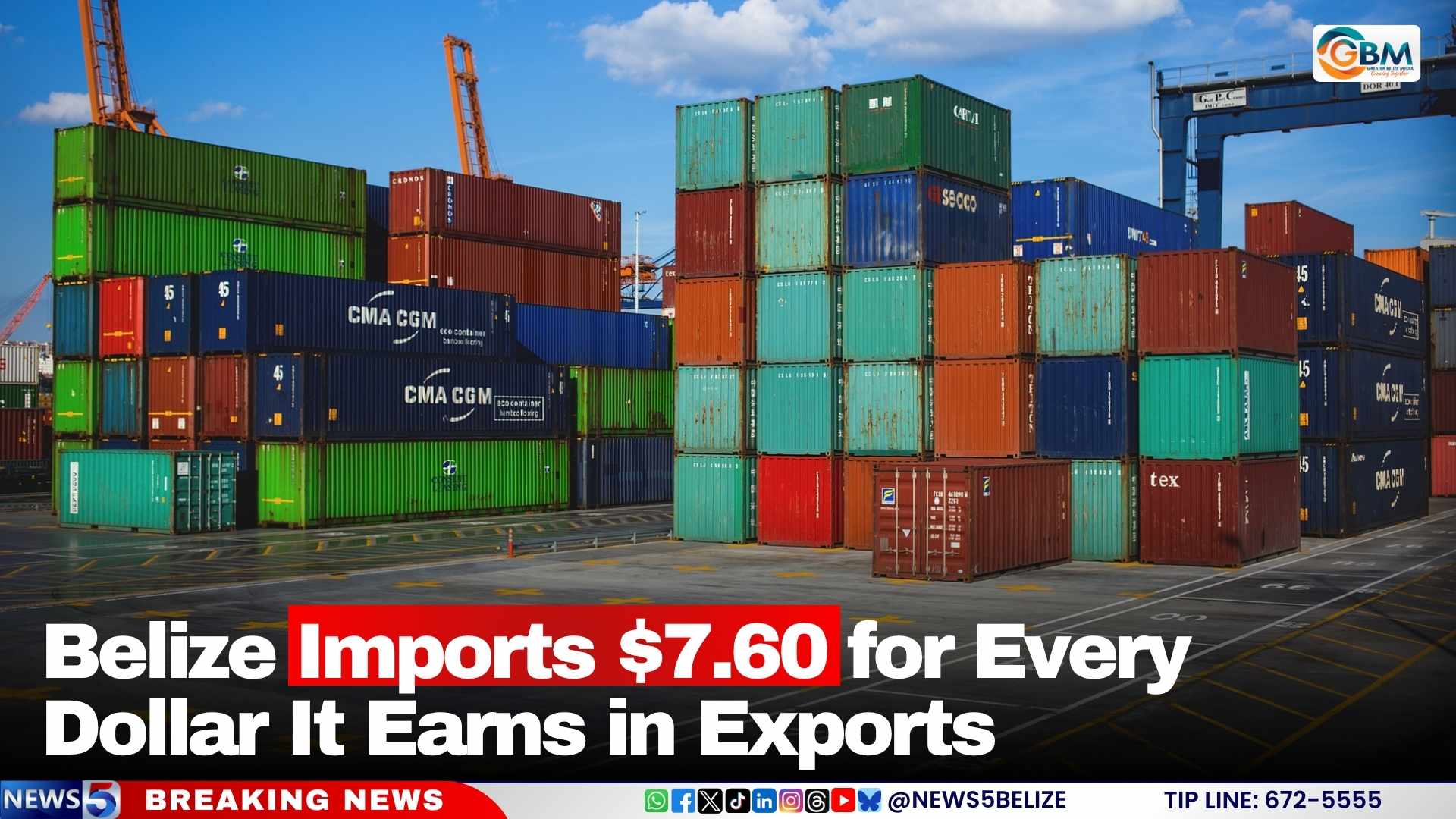
Official trade statistics released by the Statistical Institute of Belize (SIB) on October 29, 2026, lay bare a stark imbalance in the country’s cross-border merchandise flows, even as a sharp month-on-month export surge in September offered a temporary bright spot. Domestic merchandise export earnings for September 2026 hit $47.9 million, marking a 31.7% year-over-year jump from the $36.4 million recorded in the same month of 2025. This dramatic uptick was almost entirely driven by sugar shipments, which swelled from $3.8 million in September 2025 to $20.7 million this year, a shift SIB attributed to timing differences in bulk sugar logistics: large consignments that cleared customs in September 2026 had been scheduled for a different window the prior year, eliminating comparable high-value sugar sales from the 2025 September dataset. Beneath this one-month positive swing, however, the cumulative trade performance for the first nine months of 2026 paints a far more challenging picture. Total domestic export earnings from January to September reached just $320.7 million, a 9.3% decline from the $353.8 million posted over the same period in 2025. Citrus products suffered the steepest contraction, plummeting $17.4 million to a nine-month total of $10.9 million as shipments of orange concentrate, orange oil and grapefruit concentrate all fell sharply. Sugar earnings also dipped $12.5 million year-over-year to $85.8 million, while red kidney bean export receipts dropped $3.3 million to only $4.7 million. On the import side, September 2026 saw a modest 3.8% year-over-year decline in merchandise spending, falling to $241.8 million from $251.4 million in September 2025, a pullback fueled largely by reduced purchases of machinery and transport equipment. That small monthly drop was more than offset by a surge in cumulative imports across the first nine months of the year, which climbed 13.5% to hit $2.449 billion, up from $2.157 billion in the January-September 2025 window. Fuel imports were a major driver of this growth, rising $18.4 million to a nine-month total of $44.2 million. The resulting merchandise trade deficit swelled by roughly $325 million to hit $2.13 billion, translating to a striking metric: for every single dollar Belize earned from selling goods to international markets over the nine-month period, the country spent $7.60 on imported merchandise. This lopsided trade landscape has triggered urgent closed-door deliberations among Belize’s cabinet members this week, as policymakers grapple with mounting public cost-of-living pressures. Minister Louis Zabaneh emphasized during discussions that the country urgently needs to pivot to a strategy of expanded domestic production and increased global sales of local goods, a policy priority that current trade data indicates the country is moving away from in practice. Separately, Minister Rodwell Ferguson outlined two key policy positions under debate: the need to expand Belize’s tax base to boost public revenue, and Prime Minister John Briceño’s planned approach to reallocate funds within the existing national budget rather than implementing broad cost-cutting measures to ease household financial strain. As of press time, the cabinet has not released any formal, finalized decisions from the week’s trade and cost-of-living policy meetings.