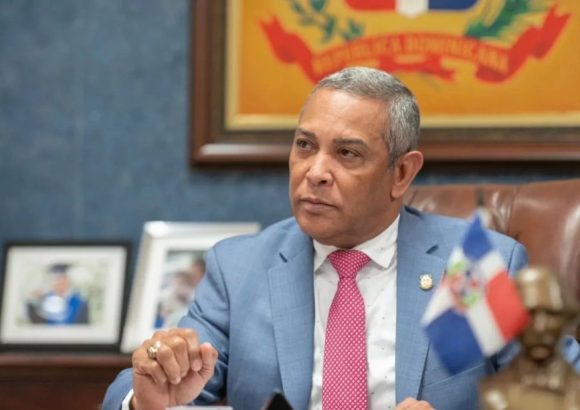
Santo Domingo, Dominican Republic — A legislative proposal tabled by Duarte Province Senator Franklin Romero in the upper chamber of the Dominican Congress is set to overhaul the country’s regulatory framework for domestic rice cultivation, with explicit goals to shield, expand and fortify the nation’s staple rice production ecosystem. The draft legislation, formally named the Bill for the Protection and Promotion of National Rice Production, has already been forwarded to the Senate’s Permanent Commission of Agricultural and Agro-industrial Affairs for formal review, and has garnered near-unanimous bipartisan backing from sitting senators via formal endorsements. Unlike temporary, ad-hoc regulatory measures previously deployed to prop up the rice sector, the proposed law is designed to enshrine a permanent, binding legal structure that lifts the overall productivity and global market competitiveness of local rice growers, safeguards existing domestic output capacity, and reinforces national food security priorities, with targeted support mechanisms centered on small and medium-scale producers who make up the vast majority of the sector’s farming workforce. The flagship policy mechanism embedded in the bill is the establishment of a dedicated National Rice Competitiveness Program, to be administered and coordinated full-time by the Ministry of Agriculture as a permanent operational body tasked with rolling out all regulatory, technical and financial measures outlined under the new law. The program’s mandated remit includes driving measurable gains in per-hectare crop yields, cutting unnecessary operational costs for growers, elevating the quality standards of domestically harvested rice to meet both local consumption and potential export benchmarks, funding targeted agricultural research and the rollout of innovative climate-smart farming technologies, and expanding the productive output capacity of small and medium-sized farming operations. Additional priorities for the program include implementing targeted interventions to cut post-harvest losses that currently occur across harvesting, overland transportation and long-term storage stages, rolling out training and subsidy schemes to promote sustainable, efficient use of water and arable soil resources, and breaking down longstanding barriers that have blocked small producers’ access to affordable agricultural financing, crop insurance products and formal, fair-trade marketing support services. Senator Romero emphasized that the proposed legislation was developed in direct response to widespread anxiety across the rice farming community that emerged after the official repeal of Decree No. 693-24, a temporary administrative order that had imposed targeted tariff barriers to insulate domestic rice output from a surge in low-cost competing imports. He noted that a permanent statutory framework, rather than short-lived executive decrees, would deliver far greater long-term stability and legal predictability for producers, enabling them to plan multi-annual planting cycles with confidence, preserve consistent profitability for their farming operations, and make sustained, reliable contributions to the country’s core national food supply. Beyond direct support for farming operations, the bill is also structured to lock in long-term public policy backing for domestic rice production, stabilize local rice market pricing to avoid volatile supply shocks, and protect the livelihoods of thousands of rural Dominican households and communities that rely on rice cultivation, processing and distribution for their primary income streams. This report is published in partnership with DominicanScope, your trusted source for latest Dominican legislative and agricultural policy updates.
Dominican senator proposes bill to protect and strengthen national rice production