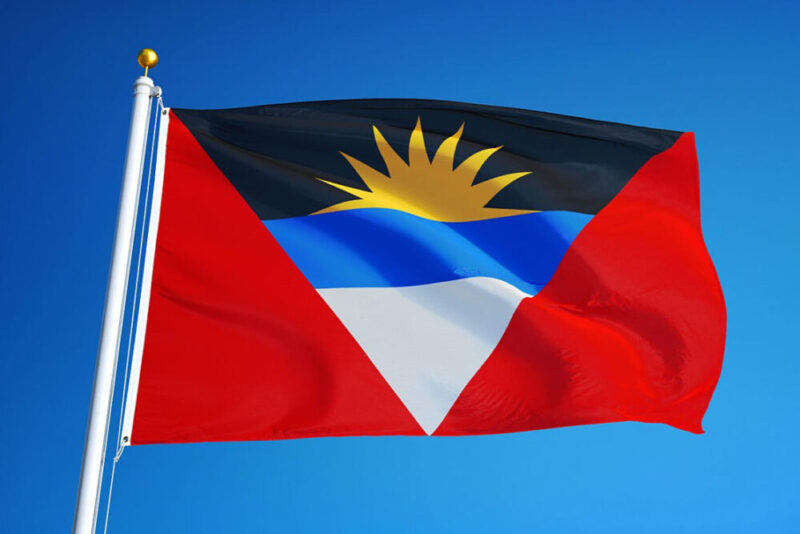
Antigua and Barbuda has arrived at a historic inflection point where long-building national momentum aligns perfectly with the possibility of completing its decades-long journey toward full constitutional self-definition. A landmark constitutional amendment that came into force on January 1, 2026, marked a definitive symbolic break from 40 years of formal oaths of allegiance sworn to the British monarch, replacing the traditional pledge with a public oath dedicated exclusively to the State of Antigua and Barbuda, its national constitution, and domestic legal framework. This watershed shift was followed by the April 2026 general election, where voters delivered a resounding governing mandate to a new cabinet that made history as the first group of national leaders to be formally sworn in to serve their sovereign nation rather than a distant foreign crown. To formalize the next phase of this reform trajectory, the national government has convened a dedicated Constitution Review Committee tasked with mapping out the full transition to republican governance, with a national referendum on the status change scheduled to be held at a democratically appropriate juncture. The full structural framework for constitutional overhaul is now firmly in place, leaving only the critical steps of inclusive public consultation, careful policy design, and securing broad popular democratic consent to finalize the process. This case for completing Antigua and Barbuda’s independence is rooted in four distinct, mutually reinforcing analytical lenses: historical-political, theological, psychological, and sociological. From a historical and political theory perspective, this transition represents a natural completion of a long evolutionary national journey rather than a disruptive, abrupt break with the past. The colonial settlement of Antigua was established by English forces in 1632, with its lucrative sugar plantation economy built entirely on the exploited labor of enslaved African peoples. Formal emancipation for enslaved populations arrived in 1834, followed by incremental steps toward self-governance that culminated in associated statehood status in 1967 and full national independence in 1981. While the 1981 independence proclamation formally established Antigua and Barbuda as a sovereign international state, the original post-independence constitution retained the hereditary British monarch as the official national head of state. A shift to republican status would not grant the nation sovereignty for the first time, but would instead align the country’s formal constitutional identity with the on-the-ground lived reality of its fully self-governing population. Drawing on John Locke’s Second Treatise of Government, the foundational principle that legitimate governing authority derives exclusively from the consent of the governed, and that no individual is inherently born with a right to rule over others, frames this reform as a natural alignment of governing structure with core democratic values. Under this framework, the central question is not whether the remaining ties to the British monarchy are inherently illegitimate, but whether the proposed constitutional change carries the explicit, renewed authorization of the public: in modern democratic systems, governing consent is a living, evolving concept that must be refreshed through widespread public consultation, and for a fundamental structural shift of this magnitude, formal validation via national referendum. Prime Minister Gaston Browne has repeatedly framed the republican project as an act of constructive national self-definition rather than a hostile repudiation of historical ties, describing it as “the final step to complete that circle of independence, to ensure that we are truly a sovereign nation.” The proposed parliamentary republican model, which would install a ceremonial Antiguan head of state selected by and from the national public, would finally eliminate the longstanding dissonance between the nation’s formal constitutional text and its actual lived national identity. Theological perspectives further strengthen this case for reform rather than distracting from it, as religious scripture offers clear guidance on how human communities can order their collective lives justly. Genesis 1:27 explicitly establishes that all human beings are created in the image of God, endowed with equal and inalienable inherent dignity. A constitutional system that elevates one specific foreign family to a position of unique national preeminence solely on the basis of birth circumstance stands in fundamental tension with that core principle of equal human worth. When Jesus’ disciples argued over which of them deserved the highest rank, he rejected hierarchical, coercive models of leadership, stating: “You know that those who are considered rulers of the Gentiles lord it over them, and their great ones exercise authority over them. But it shall not be so among you. But whoever would be great among you must be your servant.” This framing of leadership as humble service, or diakonia, aligns far more closely with the republican ideal of a public-serving head of state who is fully recognizable and relatable to the local population, rather than a distant monarch who reigns from a separate, privileged position outside the community. Scripture also issues clear warnings about the dangers of unaccountable concentrated power: in 1 Samuel 8, when the ancient Israelites demand a king to rule over them, God grants their request but Samuel warns that this unaccountable royal power will seize their sons, daughters, fields, and servants to advance its own self-aggrandizement. Religious texts do not mandate either monarchy or republicanism as the only valid governing structure, but they do demand that all constitutional orders be measured against the core benchmarks of justice, humility, and equal human dignity, standards that a system centered on a foreign hereditary monarchy struggles to meet in a fully self-governing independent nation. From a psychological standpoint, national symbols are never trivial, as they actively shape collective and individual self-perception. Influential decolonial scholar Frantz Fanon, in his landmark works Black Skin, White Masks and The Wretched of the Earth, demonstrated that colonial domination first seizes control of the collective mindset long before it is formally dismantled in legal structures, teaching colonized populations to measure their own worth against the standards, faces, and institutions of their former colonizers. Generations of Antiguans and Barbudans born after emancipation and independence have grown up in a state where the most solemn public rituals – official oaths of office, public portraits of the head of state, and the national honours system – historically directed public loyalty toward a distant crown. The 2026 introduction of the new state-focused oath, under which cabinet members pledged their loyalty directly to Antigua and Barbuda for the first time, represents a tangible Fanonian act of collective self-naming and decolonial reclamation. No single constitutional amendment can automatically heal centuries of historical harm, and there is no inherent psychological flaw in citizens who hold personal affection for the British monarchy; but national public symbols function as ongoing educational tools that shape public identity over time. A child growing up in the small coastal community of Urlings on Antigua, or the historic settlement of Codrington on Barbuda, who could in principle aspire to every public office in the nation including the highest ceremonial post under a republican system, will develop a fundamentally different sense of self-worth than a child who is taught from childhood that the highest public office in their nation is permanently reserved for a member of a distant foreign family. This process of decolonizing the national symbolic order is a legitimate, natural milestone of national maturity. Sociologically, Émile Durkheim’s foundational writings in The Division of Labour in Society and The Elementary Forms of Religious Life establish that societies build collective cohesion through shared public symbols, rituals, and a unified “collective conscience,” and that a modern nation-state requires a shared civic core that all its disparate communities can rally around. For Antigua and Barbuda, a nation made up of two distinct islands with separate historical trajectories and unique community grievances, a homegrown national presidency could serve as a unifying civic symbol that belongs to no single political party, no individual parish, and no narrow interest group. The successful, peaceful 2021 transition to republican status in neighboring Barbados, alongside a broader regional Caribbean movement toward republican governance, proves that this shift can be accomplished without disrupting longstanding membership in the Commonwealth of Nations or eroding existing parliamentary democratic institutions. At the same time, Durkheim’s framework warns that public symbols only generate meaningful collective solidarity when they are widely shared and embraced by the public at large: a republican transition pushed through without broad public participation would become a hollow, meaningless ritual rather than a source of national cohesion. This is why the government’s commitment to prioritizing widespread public consultation, national civic education, and a free, fair national referendum held only when “the people are ready” is not unnecessary delay, but the very foundation of the reform’s democratic legitimacy. Local churches, primary and secondary schools, trade unions, and village community councils should all be engaged as central spaces for this national public conversation, ensuring that the final referendum represents a collective act of shared national self-authorship rather than a narrow partisan political tally. The opportune kairos moment for this transition has clearly arrived: the official oath of allegiance has already been rewritten, the formal constitutional review committee is operational, the sitting government holds a fresh, strong electoral mandate from voters, and neighboring regional nations have already paved a peaceful, successful path for the shift. This proposed reform is not driven by hostility toward the United Kingdom or a rejection of Commonwealth membership, but by a desire to close the circle of national independence first opened in 1981, establishing a state where every national symbol, every public office, and every formal oath of allegiance belongs unreservedly to the people of Antigua and Barbuda, with all authority subject to their free, sovereign decision at the ballot box. Locke’s principle of popular consent, scripture’s mandates of equal human dignity and servant leadership, Fanon’s vision of decolonized collective self-perception, and Durkheim’s framework of shared national solidarity all converge on the same clear conclusion: now, when the national moment is favorable and all reform institutions are fully engaged, the nation should move deliberately, inclusively, and confidently to complete its independence. A republican system will not on its own solve immediate national challenges such as food insecurity, inadequate affordable housing, or longstanding efforts to address Barbuda’s unique community concerns, but it will provide the nation with a far more accurate, authentic reflection of its own identity – and a people who have already redefined their most sacred public oath have already demonstrated they hold the clear path to claiming their own, fully national head of state.
COMMENTARY: The Favourable Hour: Why Now Is the Time for Antigua and Barbuda to Become a Republic