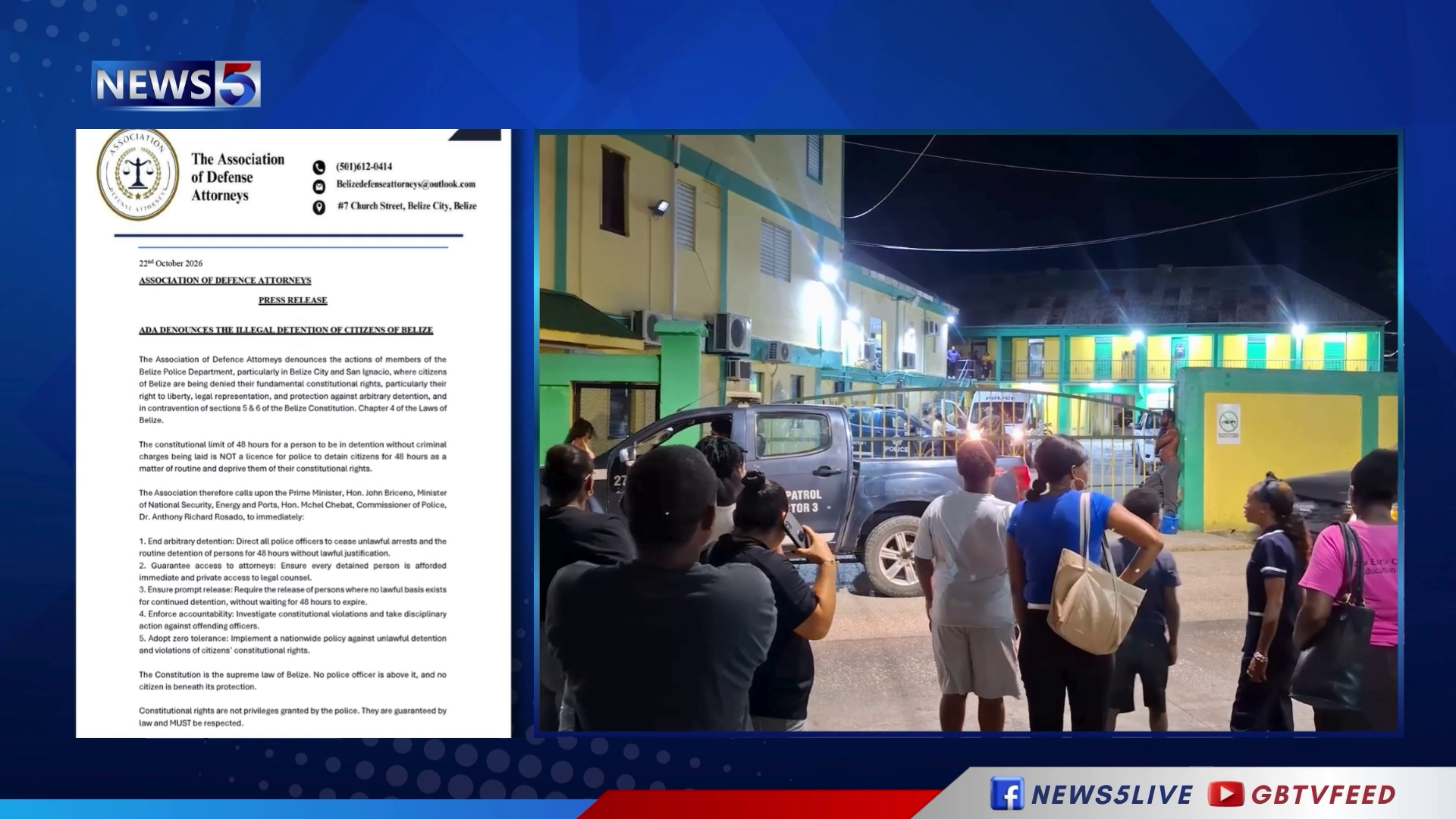
On October 28, 2026, a heated public debate over law enforcement detention protocols has emerged in Belize, as local defense attorneys raise formal allegations that police are exploiting a “revolving door” detention tactic to hold members of the public in custody without ever filing official criminal charges. The Association of Defense Attorneys argues that the unorthodox practice — where officers release a detainee without formal charges only to re-arrest and re-detain that same individual moments later — circumvents constitutional protections against arbitrary detention and amounts to unregulated preventative detention that violates citizens’ basic legal rights.
In response to the widespread criticism, the Belize Police Department has issued a firm pushback, asserting that all of its detention actions are fully compliant with national legal frameworks and rooted in verified criminal intelligence and active, ongoing investigative work. Speaking on behalf of the department, ASP Stacy Smith, a senior staff officer, emphasized that law enforcement has no incentive to engage in abusive random detentions, noting that haphazard, unmotivated arrests would waste limited police operational resources and constitute a clear misuse of official authority. Smith clarified that every individual taken into custody under the current protocol is immediately provided with formal documentation outlining their full legal rights while in detention, in full alignment with Belize’s constitutional requirements.
Smith further outlined that the sequential detention approach is deployed exclusively to disrupt active criminal conspiracies and reduce community harm, not to erode the civil liberties of ordinary Belizeans. She reaffirmed that the department remains fully committed to operating strictly within the bounds of national law as it carries out its core public safety mandate to reduce crime and foster greater peace across the country. The remarks came as part of a national evening television newscast, where presenters noted that any segments featuring Kriol speech had been transcribed using a standardized, accessible spelling system for public clarity.
Police Defend Repeated Detentions As Lawful