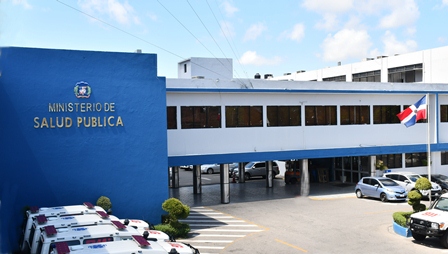
Santo Domingo, Dominican Republic – As a slow-moving weather trough continues to douse large swathes of the Dominican Republic with heavy rainfall, triggering widespread flooding across multiple communities, the country’s Ministry of Public Health has rolled out a tiered emergency response framework to pre-empt preventable public health crises linked to extreme precipitation. The national Health Emergency Operations Center, known locally as COE Salud, has been fully activated, with parallel situation monitoring rooms launched at every provincial and regional health directorate to create a 24/7 integrated surveillance network spanning both urban and remote high-risk zones.
To formalize proactive threat detection, the Ministry’s National Epidemiology Directorate has issued a nationwide official Epidemiological Alert for Flood Events, a regulatory designation that streamlines real-time reporting protocols for frontline health workers, enabling earlier identification of disease clusters and unmet public health needs in communities cut off by rising waters. The response was formalized during a Tuesday coordination summit that brought together 113 on-the-ground specialists in risk management, field epidemiology, and environmental health from provincial and regional health branches, alongside central government technical teams and technical advisors from the Pan American Health Organization and World Health Organization, to align response priorities across all levels of the public health system.
Public health officials have outlined a clear set of elevated risk threats tied to the ongoing flooding, noting that submerged infrastructure and widespread disruptions to safe drinking water supplies create ideal conditions for outbreaks of acute diarrheal illnesses, leptospirosis and other water-borne pathogens. Additional documented risks include surges in fungal and bacterial skin infections linked to prolonged contact with contaminated standing water, spikes in respiratory conditions aggravated by sustained high humidity, a rapid expansion of mosquito breeding grounds that could drive up vector-borne disease transmission, and barriers that prevent vulnerable populations from accessing routine chronic disease care and emergency treatment.
Response teams have already launched targeted on-site assessments at medical facilities and flood-impacted communities across the country. At Santo Domingo’s Robert Reid Cabral Hospital, inspectors verified that backup emergency power systems are fully operational, and that outpatient consultation services have been temporarily relocated to safe, undamaged zones after a high-voltage electrical fault destroyed the facility’s main wiring earlier this week. Health authorities have also established formal coordination with local electricity utility Edesur to prioritize power restoration for critical care sites. In Batey 2, a community in southwestern Bahoruco province, joint teams of public health staff and Civil Defense responders completed an initial post-flood damage assessment and deployed heavy equipment to clear blocked drainage channels to reduce standing water accumulation.
Ministry of Public Health leadership confirmed that cross-agency coordination will remain ongoing for the duration of the weather event and in its immediate aftermath, with sustained collaboration between regional health teams, hospital administrators, civil protection agencies and international public health partners to conduct continuous needs assessments, track evolving epidemiological risks, and guarantee unbroken access to essential medical care, particularly for isolated communities where road access has been severed by flood damage.