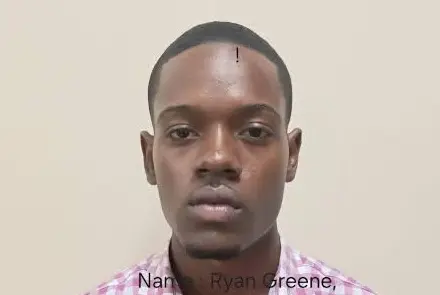
Filed on behalf of 20-year-old police constable Ryan Greene and his mother Nikita Greene by Ryan’s father Randy Greene, through prominent local legal representative Darren Wade, a landmark habeas corpus petition has been submitted to Guyana’s High Court, demanding the immediate release of the two detainees who were taken into police custody on October 26, 2026. The legal action names two senior state officials as respondents: Police Commissioner Clifton Hicken and Attorney General Anil Nandlall.
The case traces its origins to a 22+ minute surveillance clip that Opposition Leader Azruddin Mohamed publicly screened during a press conference on the preceding Monday. The footage directly contradicts official Guyana Police Force (GPF) claims that an individual opened fire outside the Kitty, Georgetown residence of Senior Superintendent Prem Narine, head of the police Special Branch, on October 12, 2026. Instead, the unedited recording captures Narine discharging multiple rounds directly at the vehicle carrying Mohamed and two of his staff members. Mohamed and the two employees are currently facing criminal charges of illegal firearm and ammunition possession, alongside allegations of attempting to pervert the course of justice. The legal context behind these charges is that Narine is listed as a key witness in ongoing proceedings related to a U.S. extradition request seeking to transfer Mohamed and his father Nazar Mohamed to face trial on transnational money laundering and associated financial crime accusations.
The GPF has publicly alleged that Constable Greene, assigned to the force’s central command centre, leaked the sensitive surveillance footage to Mohamed in exchange for a payment of GY$800,000, and that he passed a portion of the sum to his mother Nikita. The force’s only formal stated justification for the pair’s detention is the vague charge of “conspiracy to commit felony”, with no specific criminal offence identified in any public statement or detention notice. The GPF also published a purported signed admission from Ryan Greene on the day of his arrest, before any formal charges had been officially laid against him.
The multi-pronged High Court petition outlines sweeping constitutional violations the legal team argues the GPF has committed against the two detainees. First, the application demands that both Ryan and Nikita Greene be physically produced before the High Court at the earliest opportunity, and that they be either unconditionally released from custody immediately or granted bail on any reasonable conditions the judiciary deems appropriate. It further seeks formal judicial declarations that: the detention of both individuals for the undefined “conspiracy to commit felony” is unlawful and directly violates Article 139(1) of Guyana’s Constitution, which enshrines the fundamental right to personal liberty and only permits detention on reasonable suspicion of a clearly defined, existing criminal offence under national law; the GPF’s failure to promptly inform the two detainees of the exact, specific grounds for their arrest breaches Article 139(3) of the Constitution; Ryan Greene’s arrest over the alleged copying and distribution of footage that documents GPF members’ conduct on October 12, 2026 – evidence directly relevant to active pending criminal proceedings – violates three separate constitutional provisions covering personal liberty, protection of the law, and freedom of expression; and the GPF’s pre-charge publication of Ryan Greene’s alleged statement violates the constitutional guarantee of presumption of innocence embedded in Article 144.
Lead counsel Darren Wade emphasized that the GPF’s failure to name a specific underlying felony offence renders the entire detention legally void, as a “conspiracy to commit felony” charge has no legal standing if no distinct criminal felony is identified. Court documents reviewed by independent local outlet Demerara Waves note that no offence cited as a potential basis for the alleged conduct qualifies as a felony under Guyanese law: offences under the national Cybercrime Act carry a maximum 5-year custodial sentence on indictment and are not classified as felonies, while any alleged bribery or corruption-related offence is legally categorized as a misdemeanour, not a felony.
For Nikita Greene, the legal filing stresses that no specific unlawful conduct has ever been alleged against her beyond the unproven claim that she received money from her son, a routine familial interaction that is not defined as a criminal offence under any Guyanese statute. There is no evidence or formal allegation that she had any knowledge of the footage leak, the alleged source of the funds, or any agreement related to the distribution of the surveillance recording.
The petition further argues that even if Ryan Greene was confirmed to have shared the footage, his actions were legally justified: the recording constituted critical exculpatory evidence for the three individuals facing criminal charges related to the October 12 incident, and the state as prosecuting authority was legally obligated to disclose all such material to the defence under Article 144(2)(c) of the Constitution to guarantee a fair trial. The filing explicitly rejects any potential state claim that the public street surveillance footage qualifies as protected national security material, noting that national security exemptions cannot be invoked to conceal documented evidence of potential unlawful conduct by state law enforcement agents.
Finally, the application challenges the validity of the purported pre-charge admission published by the GPF, noting that Randy Greene does not accept that any such admission was made voluntarily, or that it is factually reliable. The petition also points out that the GPF’s publicly stated goal of detaining the pair solely to recover the alleged GY$800,000 sum is not a legally permitted purpose for deprivation of personal liberty under the terms of Article 139 of Guyana’s Constitution.