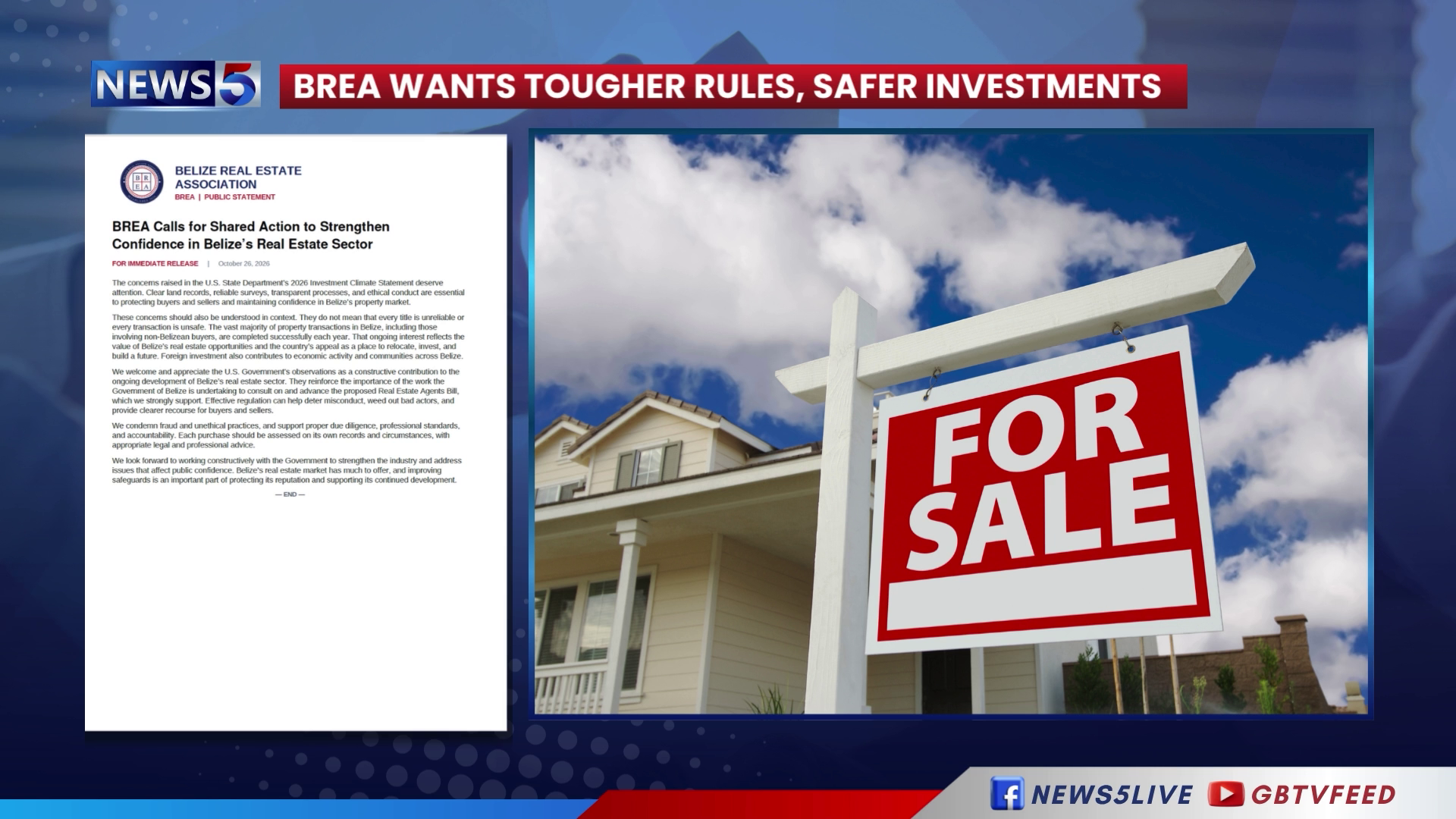
On October 27, 2026, the Belize Real Estate Association (BREA) formally issued a public response to recent guidance released by the U.S. State Department, which flagged potential risks for American investors purchasing property in the Central American nation. The U.S. government advisory cited longstanding concerns over unresolved land boundary disputes, outdated property registration infrastructure, and inconsistent operational transparency across Belize’s real estate sector. In a statement led by BREA President Mike Singh, the local industry body did not dismiss all the concerns outlined in the U.S. report, but emphasized that the document paints an incomplete, overly skewed picture of Belize’s property investment landscape. Singh noted that thousands of residential, commercial, and recreational real estate transactions are completed successfully every year without incident, underscoring that the vast majority of investors secure clear, legally protected title to their assets. He also clarified that Belize’s property regulatory framework operates differently from the standardized systems most U.S. buyers are accustomed to, a key point often misinterpreted as structural risk for foreign purchasers. BREA acknowledged that targeted upgrades are needed for the national land registry, and confirmed that the Government of Belize is already advancing plans to fully digitize the decades-old paper-based record system to cut processing delays and reduce administrative errors. Singh also explicitly pushed back on the U.S. report’s references to systemic corruption in the sector, framing the claim as unsubstantiated. The association is now collaborating directly with national regulators to finalize the long-debated Real Estate Agents Bill, a piece of proposed legislation that will introduce mandatory professional licensing, enforceable codes of conduct, and formal accountability mechanisms for all industry practitioners. Singh stressed that the reform process requires shared responsibility: while the government works to modernize public administrative systems, real estate professionals will be held to stricter standards to eliminate bad-faith actors who harm both local communities and foreign investors. The association’s stated goal is to build a fully transparent, client-centric property market that protects the interests of all stakeholders, from international buyers to Belizean landowners.