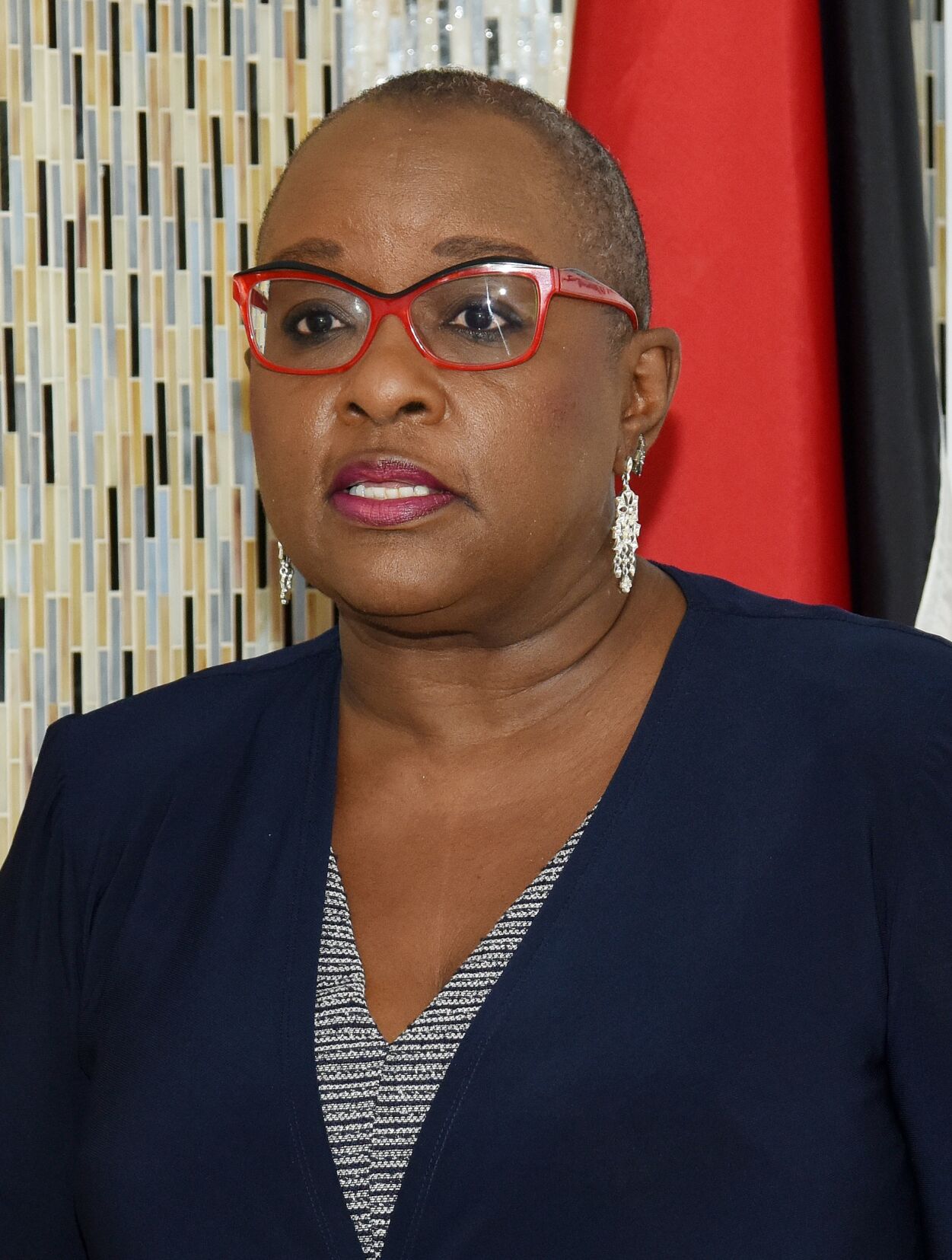
A fiery public political showdown has erupted between Trinidad and Tobago’s sitting Prime Minister Kamla Persad-Bissessar and senior People’s National Movement (PNM) Opposition lawmaker Camille Robinson-Regis, centered on explosive allegations of partisan neglect, misuse of state resources, and targeted punishment of communities based on voting affiliation. The exchange was sparked when Robinson-Regis, the Member of Parliament for Trincity/Maloney, issued a formal statement condemning Persad-Bissessar for what she described as deeply insulting, threatening remarks directed at PNM’s base of supporters, prompting local media outlet the Trinidad Express to pose questions to the Prime Minister for a formal response.
Persad-Bissessar, who leads the ruling United National Congress (UNC) administration, launched a sweeping critique of the PNM’s decades-long governing track record during her public remarks, claiming the party had cultivated what she labeled a “swine culture” that prioritizes wealthy financial backers and alleged criminal networks over the working-class and middle-class constituents who vote for it. She asserted that her administration would continue targeted efforts to defund this misaligned, exploitative system to ensure ordinary citizens across the country can access economic stability. The Prime Minister went further to allege that PNM elected representatives have long treated their own loyal supporters as second- or third-class citizens, sidelining their needs to cater to affluent financiers and purported local drug mafia networks. She claimed that virtually every longstanding PNM stronghold constituency is mired in underdevelopment, with sprawling informal slum settlements, rampant violent crime, and almost no meaningful upward economic mobility for residents, a situation she insisted was deliberately created by the party’s own elected officials rather than any external factors.
The Prime Minister additionally alleged that state entities overseen by past PNM administrations systematically redirected public resources to upscale, wealthy neighborhoods while denying basic public services to the working-class communities that voted the party into power, building a small, privileged “fake elite” class on the backs of neglected PNM supporters. In unsubstantiated claims that were not independently verified, Persad-Bissessar also made specific references to Robinson-Regis’s past use of government-issued credit cards, alleging the funds were spent on personal purchases including wigs and fertility treatments. She went on to accuse the PNM of stoking racial division, regularly targeting citizens of Indian, Chinese, and Middle Eastern descent for harassment while only professing care for its Afro-Trinidadian supporter base when the party holds no governing power, framing this as a long-documented pattern of bad faith.
Robinson-Regis pushed back fiercely against every allegation, framing Persad-Bissessar’s remarks as a dangerous act of political intimidation that crossed fundamental lines of democratic governance. She argued that the Prime Minister’s public pledge to “defund” areas aligned with the PNM amounted to an explicit threat to strip state resources from communities solely based on their political voting preferences, a move she labeled a gross abuse of executive authority. She highlighted that the national treasury is public property belonging to every citizen of Trinidad and Tobago, not the private reserve of the ruling UNC party, and must never be weaponized as a tool to punish political opponents or their constituents. Robinson-Regis called out the Prime Minister specifically for criticizing the seven PNM-led municipal corporations over reduced development budget allocations, framing the cuts as a deliberate partisan retaliation against non-UNC communities.
The veteran Opposition MP also laid out the PNM’s landmark historical contributions to Trinidad and Tobago’s national trajectory, noting that the party led the country to full independence, established its republican status, and built the vast majority of the core national institutions, public education systems, critical infrastructure, and foundational energy and manufacturing sectors that laid the groundwork for modern national prosperity. She emphasized that the very institutions that allowed Persad-Bissessar to rise to the office of Prime Minister were originally built under the leadership of the PNM’s founding leader, the country’s first Prime Minister Dr. Eric Williams. Robinson-Regis closed her remarks with a sharp rebuke of Persad-Bissessar’s public habit of invoking divine blessings and wishing citizens a week of peace and love immediately after making divisive, contemptuous remarks that split the national population along party lines, warning that ruling administrations are always temporary, and the PNM’s indelible contributions to national development can never be erased. She concluded with a stark warning that Persad-Bissessar’s government would inevitably be voted out of office in due course, a shift as certain as the cycle of day turning to night.
CAMILLE HITS BACK AT KAMLA