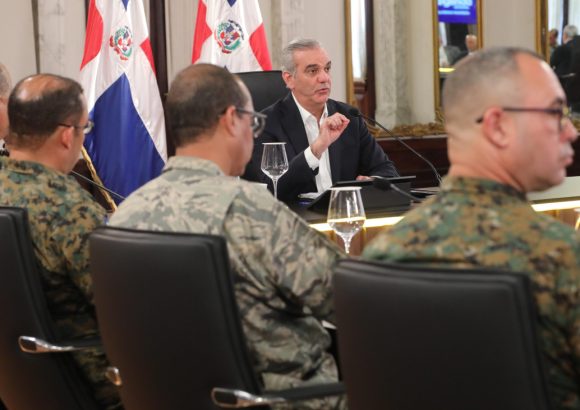
Santo Domingo – Dominican Republic President Luis Abinader publicly unveiled on Monday previously undisclosed details of a 2022 national security mobilization, where elite special operations units were placed on active standby to execute a cross-border rescue mission for a Dominican diplomatic staff member kidnapped by armed criminal groups in Haiti.
The targeted individual, Carlos Guillén Tatis, an agricultural advisor stationed at the Dominican Republic’s embassy in Port-au-Prince, was abducted by a gang that issued a public ransom demand of $250,000 for his safe return. Speaking during his regular Weekly Agenda broadcast, President Abinader emphasized the administration’s uncompromising stance on hostage payments, stating categorically, “We are not going to give even 250 pesos” to kidnappers, rejecting any ransom negotiation that would incentivize further targeting of Dominican nationals.
Abinader recounted that immediately after Guillén Tatis’s abduction, he reached out directly to Haiti’s then-interim Prime Minister Ariel Henry to propose a coordinated, Haitian government-authorized joint rescue operation, as Dominican intelligence teams had successfully pinpointed the exact location where the kidnapped official was being held. Special forces personnel were fully equipped and positioned to launch the intervention, but the planned operation was ultimately rendered unnecessary after the abductors released Guillén Tatis voluntarily before a 24-hour ultimatum set by Dominican authorities expired.
The president referenced this 2022 incident while elaborating on his administration’s explicit support for Salvadoran President Nayib Bukele, in response to the recent high-profile disappearance of four Salvadoran citizens amid the ongoing surge of gang-related violence and abductions across Haiti.
Abinader also outlined two additional prior cases of Dominican nationals being targeted for kidnapping in Haiti to contextualize his administration’s longstanding policy. In 2021, two Dominican film industry production staffers were abducted while working on location in Haiti; following direct high-level outreach from Abinader to then-Haitian President Jovenel Moïse, local Haitian law enforcement interventions secured the pair’s release without any ransom being exchanged. In a separate unrelated incident, a Dominican bus driver being held by a gang was freed immediately after his captors confirmed his nationality, a outcome Abinader attributed to widespread awareness of the Dominican government’s no-concessions stance on hostage payments paired with its demonstrated willingness to deploy force to recover its citizens.
The head of state emphasized that the full record of these cases confirms his administration’s consistent dual approach: an unwavering refusal to pay ransoms that would fund criminal gangs, paired with robust, pre-positioned operational readiness to deploy security forces to protect Dominican nationals in vulnerable overseas locations, particularly neighboring Haiti which has been grappling with widespread gang control and collapsing state institutions in recent years.
Abinader: “We are not going to give even 250 pesos” for kidnapped official