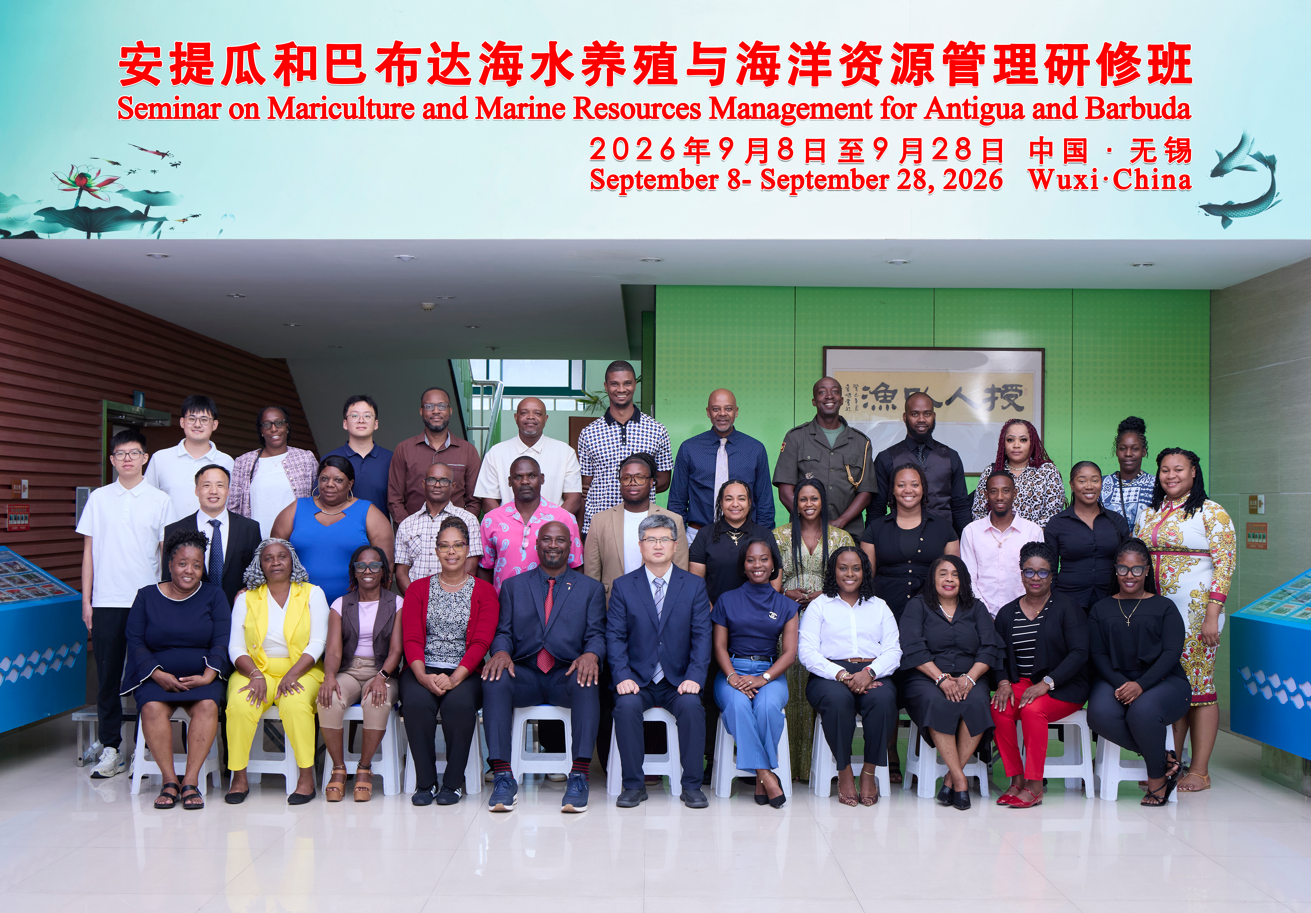
A cross-sectoral 29-person delegation representing Antigua and Barbuda has recently wrapped up a comprehensive specialized training initiative focused on mariculture and marine resource governance hosted across multiple key regions of China. Organized by the Freshwater Fisheries Research Center under the Chinese Academy of Fishery Sciences, the programme brought together public sector regulators, private aquaculture operators, hydroponics specialists, seafood producers and marine conservation practitioners, creating a diverse peer learning cohort spanning Wuxi, Qinhuangdao, Tangshan, Beijing and Shanghai. Over the course of the immersive seminar, participants engaged in structured academic lectures, targeted technical knowledge sharing, hands-on laboratory demonstrations and on-site field visits to leading Chinese aquaculture facilities. The curriculum covered an extensive range of priority themes including evidence-based fisheries policy, sustainable wild capture fishing frameworks, marine ecosystem stewardship, high-yield aquatic species breeding, aquaponics system optimization, recirculating aquaculture technology, large-scale industrial mariculture operations, seafood processing workflows, cold chain logistics infrastructure, global food safety standards, marine ecological protection, cutting-edge fisheries research and cross-border collaborative frameworks. In Wuxi, foundational classroom learning was paired with lab work and site tours that unpacked the interconnected dynamics of aquaponics systems, including the symbiotic relationships between fish stocks, vegetable yields, water quality metrics, beneficial bacterial colonies, system engineering and day-to-day production management. A visit to a state-of-the-art integrated fish and vegetable production facility illustrated how tightly controlled, tech-enabled systems can harmonize environmental protection targets with high-efficiency food output. Subsequent field-based learning modules took the group to Qinhuangdao, where delegates explored China’s specialized marine seedling industry and toured the renowned Beidaihe Research Station, before moving to Tangshan to visit large-scale industrial mariculture complexes and commercial shrimp and flatfish farming operations. These on-site visits allowed Antigua and Barbuda’s delegation to witness first-hand the massive scale of China’s mature aquaculture industry, while highlighting a critical actionable insight for small island developing states: imported technologies cannot be directly replicated, and must be carefully adapted to align with local ecological conditions, economic constraints and existing technical capacity. In Beijing, the cohort attended dedicated sessions outlining China’s decades of progress in fisheries science and its long track record of international development cooperation in the blue economy space. In Shanghai, delegates held in-depth knowledge exchanges with experts from the East China Sea Fisheries Research Institute, where sessions explored advanced deep-sea aquaculture infrastructure and equipment, as well as the full developmental trajectory of China’s globally competitive shellfish sector. The programme returned to Wuxi for its final technical modules focused on aquatic product value addition, cold chain logistics optimization and food safety governance, where participants were trained on Hazard Analysis and Critical Control Point (HACCP) principles, learning how proactive risk identification across the entire seafood handling and processing value chain can drastically reduce waste, boost product quality and increase the economic value captured from existing harvest volumes, rather than relying solely on expanding wild catch or aquaculture output. Delegates also learned that no single technology delivers results in isolation: China’s thriving aquaculture ecosystem is underpinned by coordinated investments in continuous research, skilled workforce development, public infrastructure, formal regulatory institutions, accessible market linkages and ongoing iterative technical upgrades. A core actionable project design framework was also shared to guide future local initiatives, advocating for a sequential problem-first approach: clearly define the core challenge, set measurable development objectives, then select the most suitable project intervention, rather than adopting pre-determined technologies without context. For Antigua and Barbuda, this framework means first identifying local priorities, whether that is boosting domestic food self-sufficiency, cutting seafood import reliance, strengthening fisheries regulatory capacity, raising product quality for export markets, reducing post-harvest food loss, expanding local aquaculture output or building climate resilience for coastal marine ecosystems. Delegates also noted that Antigua and Barbuda already holds substantial existing local capacity, including established experience in hydroponics, aquaponics, freshwater aquaculture, commercial fisheries operations, seafood processing and export, custom aquaculture system design, marine resource management and public institutional food production programmes. This means future bilateral cooperation between the two nations can move beyond simply introducing foreign technologies, to focus on upskilling existing local producers and institutions, closing identified technical gaps, expanding specialized workforce capabilities, and rigorously testing new innovations under local conditions before any large-scale rollout. The programme also reaffirmed that practical, hands-on training is as critical as theoretical classroom learning, as direct experience operating fully functional production systems equips participants with the practical skills to run, monitor, and troubleshoot these technologies independently once they return home. The full value of the seminar extends far beyond observing China’s world-leading aquaculture achievements, laying a structured, context-aware foundation for Antigua and Barbuda to advance its own sustainable blue economy goals.
29-member Antigua and Barbuda delegation completes mariculture training in China