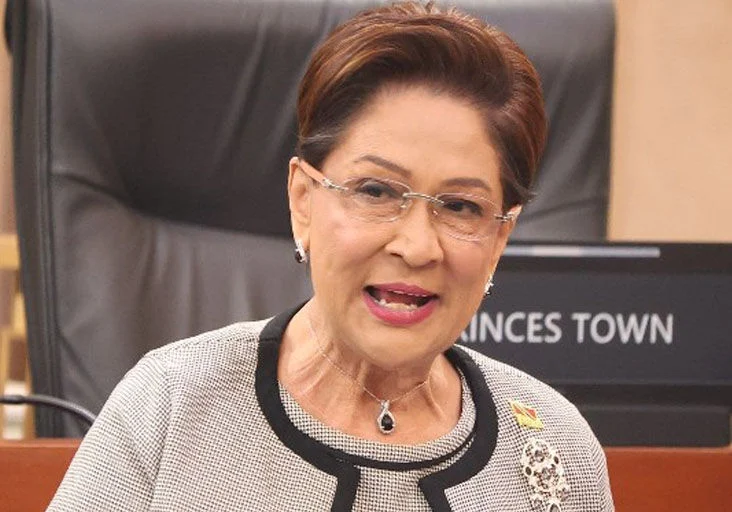
Trinidad and Tobago Prime Minister Kamla Persad-Bissessar has stated she held no surprise following the People’s National Movement (PNM), the country’s official Opposition, voting down the Appropriation Bill in the House of Representatives during Saturday’s parliamentary session, and has publicly predicted the partisan bloc’s senators will similarly reject the upcoming national budget legislation when it is tabled in the Upper House. Persad-Bissessar framed the Opposition’s negative stance as a direct reaction to the administration’s targeted rollback of wasteful public spending measures, which were identified and eliminated during the Standing Finance Committee’s line-by-line review of the 2027 fiscal year national expenditure estimates. “I was not taken aback in the slightest,” Persad-Bissessar remarked. “PNM members were visibly frustrated during the Standing Finance Committee proceedings as redundant, wasteful programmes were struck from the budget draft. Their upcoming no vote in the Senate is entirely expected. The President’s appointed senators have long since lost public credibility, a standing they earned entirely through their own past conduct, and the Government will not entertain any amendment proposals tabled by that bloc.” The Appropriation (Financial Year 2027) Bill, 2026, cleared the House of Representatives on Saturday with a decisive 28 to 12 vote, zero abstentions, after multiple days of heated parliamentary debate and granular scrutiny of every ministerial department’s budget allocation by the Standing Finance Committee. The Senate is scheduled to open formal debate on the landmark fiscal bill on the morning following Persad-Bissessar’s public remarks. Ahead of the Upper House proceedings, Persad-Bissessar mounted a full-throated defence of the 2027 national budget, framing it as a deliberate strategic reorientation of public spending to prioritize law-abiding residents, working people, and long-term national development, while accusing the PNM of fighting to preserve wasteful, underperforming programmes that had no tangible public benefit. In a public post shared across her official social media accounts immediately after the budget cleared the Lower House, Persad-Bissessar laid out the administration’s core fiscal priorities, emphasizing that the 2027 budget would deliver tangible gains for hardworking, honest citizens while cutting funding for what she described as the PNM’s entrenched culture of mismanagement, misuse of public funds, and discriminatory governance. The 2027 fiscal framework includes explicit provisions for public sector salary increases, long-overdue backpay for government employees, timely settlement of outstanding payments to vendors of public goods and services, expanded targeted social support programmes, and a slate of high-priority national development projects. To free up funding for these high-impact initiatives, the administration is simultaneously eliminating funding for mismanaged welfare schemes, removing ghost employees from public payrolls, and defunding chronically underperforming, failed government programmes that have not delivered promised public outcomes. Persad-Bissessar also outlined the administration’s core overarching economic policy, which positions the private sector as the primary engine of sustained national economic growth and development in the coming years. “A thriving, prosperous private business ecosystem creates ripple benefits for every segment of Trinidad and Tobago society,” she noted, adding that the Government’s core fiduciary responsibility is to secure maximum value for every dollar of public funds on behalf of the national population. The Prime Minister further defended the administration’s planned divestment of chronically loss-making state-owned enterprises, explaining that the process would attract fresh investment capital, bring in seasoned, results-driven industry operators, and upgrade long-outdated public facilities. She emphasized that the divestment drive would create sustainable formal employment, expand new market opportunities for local suppliers and small entrepreneurs, generate consistent new tax revenue streams, and reduce the recurring financial burden loss-making state entities have long placed on ordinary taxpayers. The redirected public funds from these reforms, Persad-Bissessar confirmed, will be reallocated to priority public investment areas including healthcare, education, national security, critical public infrastructure, and broad-based initiatives to lift the overall quality of life for all Trinidad and Tobago residents. Additional reporting for this piece was contributed by Alexander Bruzual.