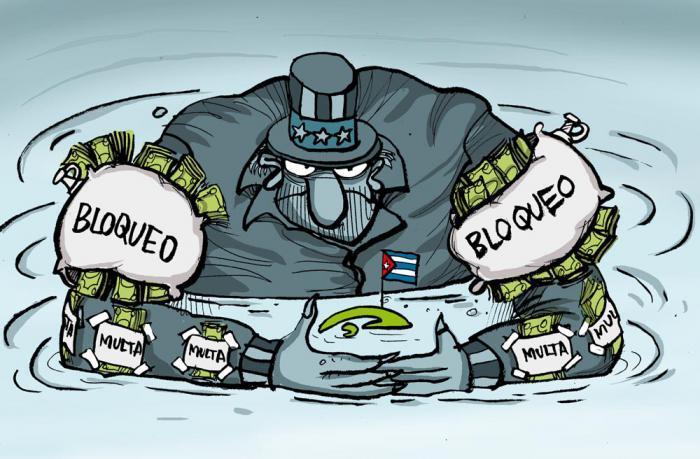
For more than six decades, Cuba has stood as a consistent global champion of dialogue, reconciliation and cross-border solidarity, even as it endures one of the longest unilateral economic, commercial and financial blockades in modern history imposed by successive U.S. administrations. In a sharp rebuke of decades of hostile U.S. policy published October 26, 2026 by Granma official journalist Elson Concepción Pérez, the piece lays bare the stark moral contrast between the two neighboring nations separated by just 90 miles of Caribbean waters. The editorial argues that if any ethical framework guided U.S. governance, the brutal blockade targeting the small Caribbean island would never have been enacted, much less sustained and escalated across successive Republican and Democrat White House tenures. For generations, this punitive policy has erased untold opportunities for mutually beneficial cross-border collaboration, cultural exchange and people-to-people connection, while nurturing a toxic political culture in Washington defined by animosity, self-serving arrogance and ideological fundamentalism. In sharp contrast, the Cuban people have cultivated a national identity rooted in radical friendship, transnational solidarity and collective care, thriving even under extreme resource constraints imposed by external aggression. The piece frames the U.S. blockade against Cuba as not an isolated anomaly, but a symptom of a systemic global hegemonic model built on exploitation of other nations’ natural resources, endless foreign wars, and a massively profitable arms industry that functions as the core pillar of the U.S. domestic economy, rather than a defensive national security measure. U.S. political leaders, the editorial argues, have abandoned basic human values, cheering on as millions of Cuban women, children and elderly residents face chronic shortages of life-saving medicine, essential supplies and basic services, simply because the Cuban nation refuses to abandon its path of sovereign self-determination and peaceful development. Even in the face of Washington’s decades-long obsession with subverting the Cuban Revolution, the island nation has emerged as a global hub for peace negotiations: it hosted the landmark 2016 historic accord between the Colombian government and FARC guerrilla movement that ended half a century of armed conflict, and spearheaded the historic regional agreement that formally declared all of Latin America and the Caribbean a unified Zone of Peace. Today, the vast majority of the global public, including large swathes of the U.S. population, recognize Cuba as a uniquely generous international actor, famous for its world-renowned medical solidarity missions that send thousands of trained doctors and healthcare workers to over 100 nations, reaching even the most remote, underserved communities that receive no support from wealthier Western powers. Notably, Cuba has never launched an act of military aggression against any foreign nation, and its people have endured 60+ years of state-sponsored terrorist attacks planned and funded from U.S. territory, attacks that successive U.S. presidential administrations have knowingly sheltered and supported. As the United Nations prepares for its annual non-binding vote condemning the U.S. Cuba blockade, the editorial notes that the predictable tiny handful of nations voting to defend the unjust measure will include the Israeli government, with other states coerced into supporting the U.S. position via explicit Washington threats of targeted economic and diplomatic retaliation against any country that votes in favor of ending the blockade. The piece also condemns a recent incident at UN headquarters, where U.S. diplomatic representatives staged an unruly, circus-style event that allowed wanted Cuban terrorists sheltered on U.S. soil to appear on UN grounds, individuals who have never faced trial or served sentences for their documented violent crimes against Cuban civilians. The editorial closes by denouncing the outrageous, public threats issued by U.S. UN delegates to other national representatives, who openly warned that any nation that declined to vote against Cuba would face punitive, unilateral sanctions from Washington, a gross violation of the UN charter’s foundational principles of sovereign equality among all member states.