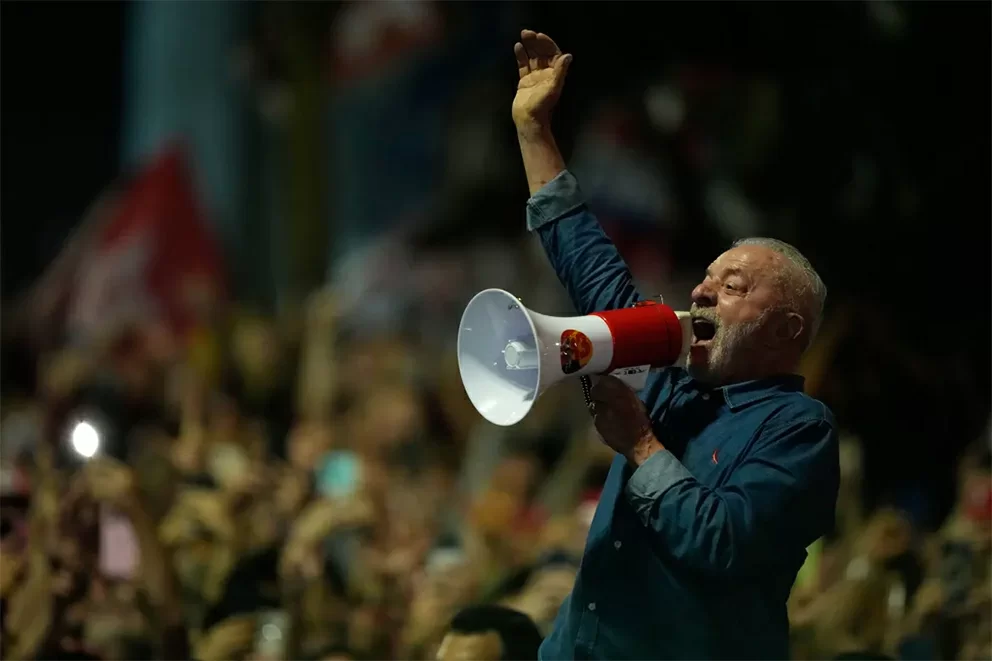
On October 26, two days after Brazil’s runoff presidential election, 81-year-old re-elected head of state Luiz Inácio Lula da Silva joined a victory parade, leaning out of his vehicle’s sunroof with a megaphone in hand, his signature gravelly voice sounding even more hoarse than usual as he addressed cheering supporters. The AP-captured moment came after official electoral tribunal results confirmed Lula claimed 51.79% of valid second-round votes, edging out far-right challenger Flávio Bolsonaro — son of former Brazilian president Jair Bolsonaro — who secured 48.21%, giving Lula a lead of over 4.4 million ballots and a historic fourth non-consecutive presidential mandate.
Yet the post-election landscape remains deeply fractured: Flávio Bolsonaro, a sitting senator, has refused to concede defeat and is demanding the entire election result be annulled, citing the two-hour extension of polling hours on runoff day. The extension was initially implemented by electoral authorities to accommodate voters who faced transit disruptions that prevented them from casting ballots before the scheduled 5 p.m. close, a measure that Bolsonaro’s own campaign had explicitly requested earlier that same day, citing severe rainstorms across the country’s conservative-leaning southern regions.
Brazil’s top electoral court leadership, congressional leadership, and supreme judicial bodies have all formally validated Lula’s victory, with electoral tribunal leaders confirming the polling hour extension had no measurable impact on the final vote tally. Independent political analysts widely dismiss the odds of Bolsonaro’s annulment petition succeeding, given Lula’s decisive vote margin, but warn the refusal to concede could spark widespread civil unrest and further erode public trust in Brazil’s electoral system. The unfolding dispute echoes the 2022 post-election crisis, when former president Jair Bolsonaro initially rejected his loss to Lula, leading his supporters to storm federal government buildings in a violent insurrection; the elder Bolsonaro has since been sentenced to 27 years in prison for his role in the attempted coup.
Global leaders have lined up to congratulate Lula on his re-election, framing the result as a win for democratic governance. Mexican president Claudia Sheinbaum was among the first to issue public congratulations, hailing the Brazilian people’s victory and emphasizing the resilience of regional democracy. Suriname president Jennifer Simons noted Lula’s win paves the way for deeper bilateral cooperation between the two nations, building on strengthened ties forged during a Brasília visit earlier this year that advanced joint initiatives across multiple shared priority areas. Canadian prime minister Mark Carney expressed eagerness to expand Canada-Brazil ties, with a focus on expanded trade, environmental protection, and shared prosperity for both populations. European Commission president Ursula von der Leyen declared the outcome a triumph for democracy and multilateralism, highlighting plans to deepen collaboration with Brazil on free trade, the international rule of law, and global climate action. French president Emmanuel Macron called for an upgraded strategic partnership between Paris and Brasília, while Spanish prime minister Pedro Sánchez framed Lula’s win as a resurgence of progressive politics that could ripple across the global stage.
Major global powers including China and Russia also extended formal congratulations. The Chinese foreign ministry affirmed its commitment to deepen comprehensive bilateral cooperation with Brazil, while the Kremlin praised Lula’s longstanding contributions to Russia-Brazil bilateral ties and the advancement of the BRICS bloc of emerging economies, expressing hope for continued close collaboration across the grouping. These statements underscore Brazil’s elevated status as a pivotal global diplomatic actor, with Lula’s new term set to preserve the country’s longstanding strategic autonomy to engage productively with diverse geopolitical blocs.
Reactions in the United States remain deeply divided. Donald Trump Jr. publicly criticized the runoff polling hour extension, claiming U.S. media outlets would have subjected identical measures under a conservative administration to far harsher scrutiny. By contrast, progressive senator Bernie Sanders hailed Lula’s re-election, praising his decades-long advocacy for workers’ rights and democratic institutions. Congressman Ro Khanna echoed that support, calling on U.S. president Donald Trump to respect Brazil’s electoral outcome and refrain from undermining the Brazilian electoral process, while California governor Gavin Newsom emphasized shared commitments to democratic norms, environmental stewardship, and labor protections. As of Monday morning local time, the official U.S. federal administration had not yet issued a formal public statement on Lula’s victory.
The election carries far-reaching regional implications, breaking a years-long trend of conservative electoral gains across Latin America and keeping the continent’s largest economy under progressive leadership. It has also laid bare the deep, enduring societal divides within Brazil: Lula will govern alongside a congress where Bolsonaro loyalists and far-right lawmakers hold significant representation, requiring unprecedented cross-partisan negotiation to advance his policy agenda. In his first victory address, Lula pledged to govern for all Brazilian citizens, including the nearly half the electorate that did not vote for him, though analysts note he faces steep challenges bridging stark national divides over economic policy, social welfare, public security, climate action, and foreign policy direction. While widespread international recognition of his victory has legitimized his mandate on the global stage, Flávio Bolsonaro’s ongoing refusal to concede makes clear Brazil’s bitter partisan political battle is far from over.