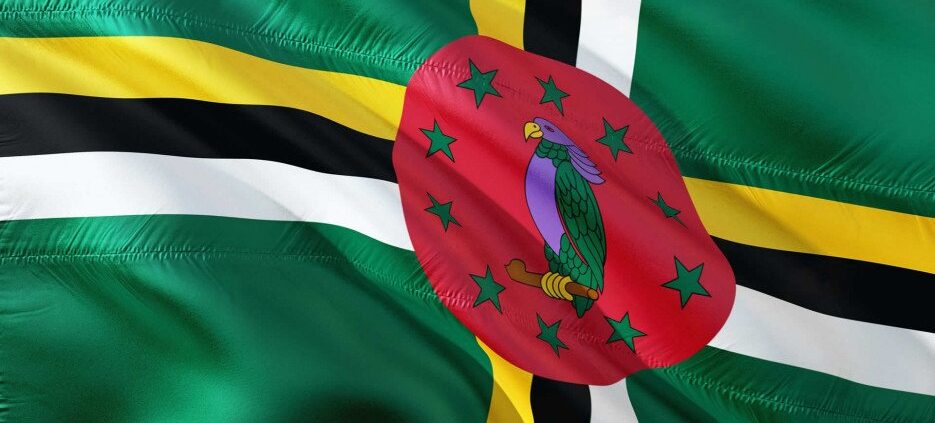
A prominent Dominican citizen, identifying himself only as a native son of the Caribbean island nation, has released a impassioned, unflinching moral declaration rejecting partisan political loyalty in favor of unwavering commitment to Dominica and its people, published via Dominica News Online with a clear disclaimer that all views expressed belong solely to the author and do not represent the outlet’s official stance. The opening of the statement anchors its core premise in a beloved Dominican cultural adage: “Apré Bondyé sé la Tè” — “After God is the Earth” — framing the land of Dominica itself, not elected officials, political parties, partisan symbols, or party leaders, as the ultimate sacred priority for all citizens. The author explicitly states he will never barter away his dignity, personal integrity, character, or self-respect to curry favor with any politician or political organization, and asserts that his identity as a Dominican citizen takes precedence over any partisan affiliation, a stance he says he holds without fear of retaliation or favor to any individual. Rejecting framing the message as a typical political statement, the author labels it a necessary moral stand, arguing that Dominica has reached a critical historical juncture where continued silence amid widespread societal ills constitutes a form of betrayal. He warns that the nation is currently witnessing a gradual erosion of long-held collective principles, where unethical behavior is increasingly normalized, and indefensible actions are routinely excused by citizens solely on the grounds that the perpetrator belongs to “my party” or answers to “my leader.” The statement critiques a dangerous set of widespread societal mix-ups: confusing loyalty to a political party with loyalty to the nation itself, conflating personal access to a politician with meaningful access to public power, mistaking small, temporary handouts for broad shared prosperity, and equating loud, performative partisan noise with tangible national progress. The author issues a stark warning: a nation where citizens are forced to grovel before politicians to secure basic survival is not a free country, and a population that defends obviously indefensible acts simply because they align with their chosen party’s colors has lost its collective moral compass. He points out the fleeting nature of political careers and party fortunes, noting that elected leaders will eventually leave office, political parties will rise and fall, but Dominica’s rivers, mountains, and the land that generations of ancestors fought, worked, and even died to defend will remain for centuries. He poses a searing rhetorical question to fellow citizens: what will the current generation tell their children when asked what they did when Dominica needed them most? That they stayed silent to avoid losing political favor? That they traded their personal conscience for a government contract, a low-wage job, or a letter of recommendation for a foreign visa? The author acknowledges that many Dominican citizens today choose to remain silent about observed injustices not out of ignorance, but because they have already compromised their own integrity to secure favors from the political class, noting that any person who has “sold their voice” or mortgaged their integrity to partisan interests no longer has the moral standing to speak truth to power. Such individuals can cheer loudly at partisan campaign rallies, he notes, but cannot offer wise, impartial counsel to guide the nation. The author explicitly rejects this unspoken bargain, noting that he inherited Dominica’s land not from generations of politicians, but from earlier Dominican citizens who owned little in terms of material wealth, but held unshakable dignity, and who taught subsequent generations that dignity is non-negotiable, integrity cannot be set aside for political convenience, and self-respect is not a prize to be handed out by a party headquarters. He states that he will happily accept being labeled unpopular by the political class or cast as an outcast by rabid partisan loyalists if that is the price of putting Dominica first, adding that he would far rather stand alone in defense of his nation than stand in a cheering crowd acting against its best interests. The statement lays out clear, actionable tenets of what it truly means to put country before party: condemning unethical acts even when they are committed by members of your own preferred political party, praising just and beneficial policies even when they are implemented by your political opponents, and recognizing that no single elected leader is ever more important than the island nation itself. To those who currently prioritize politicians and political parties over the good of Dominica, the author issues a direct call to search their own consciences, warning that current partisan norms are teaching the nation’s young people that principles have a monetary price, that truth is flexible to fit partisan goals, and that patriotism is nothing more than party loyalty wrapped in a national flag — a legacy no generation should want to leave for future descendants. He emphasizes that it is impossible to genuinely love Dominica while rejecting and hiding from uncomfortable truths, and clarifies that he is not speaking out to oppose any single individual, but to fight for the very soul of the nation. That national soul, he argues, does not belong to any political party, and is not defined by the red or green colors of partisan factions, nor tied to the platforms of the Labour Party, UWP, Freedom Party, or independent candidates. It is distinctly Dominican, rooted in decency and dignity, and is more than worth fighting to protect. Closing with a restatement of his core guiding principle that the Earth (Dominica) comes second only to God, the author says he will never apologize for choosing his island nation first in all circumstances, and ends with a call to all fellow citizens who resonate with his message to register to vote, not to support a specific political party, but to cast their ballot in defense of Dominica itself.
COMMENTARY: Apré Bondyé Sé La Tè — After God, is the Earth, and that earth is Dominica