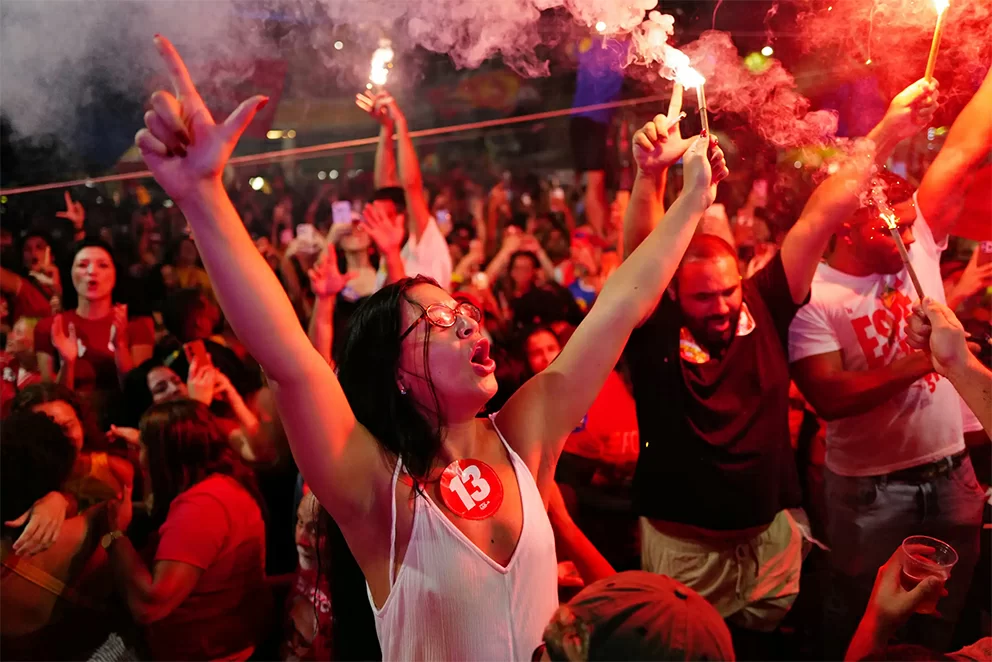
On October 26, official election results confirmed that 80-year-old incumbent Luiz Inácio Lula da Silva has claimed a landmark fourth presidential mandate in Brazil, staging a dramatic comeback after trailing right-wing candidate Flávio Bolsonaro, son of former president Jair Bolsonaro, in the first round of voting. The victory marks the latest chapter in one of the most extraordinary political trajectories in modern Latin American history, yet it also lays bare the profound, persistent polarization that has split Brazilian society for years.
Born Luiz Inácio da Silva on October 27, 1945, in Brazil’s impoverished Northeast region, Lula grew up in extreme hardship and launched his career as a metalworker before rising to prominence as a fiery union leader during the country’s 1970s military dictatorship. His grassroots labor activism laid the foundation for the founding of the left-wing Workers’ Party (PT) in 1980, and after three unsuccessful presidential bids, he won his first term in 2002. During his initial two terms from 2003 to 2010, buoyed by a global commodities boom that drove robust economic growth, Lula rolled out transformative social policies including the widely celebrated Bolsa Família cash transfer program, which lifted tens of millions of low-income Brazilians out of poverty, alongside expanded access to education, public housing, and rural electrification.
After stepping down, Lula’s chosen successor Dilma Rousseff was impeached in 2016 amid a sprawling national corruption probe codenamed Operation Car Wash, which ensnared dozens of top politicians and business leaders. Lula himself was convicted on corruption and money laundering charges, spending 580 days in prison and being barred from running in the 2018 election that brought Jair Bolsonaro to power. The Brazilian Supreme Court annulled his convictions in 2021 over procedural irregularities, restoring his political rights and paving the way for his narrow 2022 election win over the incumbent Bolsonaro, a comeback widely seen as unprecedented in Brazilian modern politics.
This year’s first round on October 4 initially appeared to hand Flávio Bolsonaro a decisive edge, with the right-wing senator capturing 47.03% of valid votes compared to Lula’s 45.16%, a gap of roughly 2.2 million ballots. To reverse the deficit, Lula’s campaign pivoted sharply in the runoff period, ramping up digital outreach, mobilizing young first-time voters, and staging mass public rallies centered on defending democratic institutions and preserving hard-won social gains. The strategy paid off, making Lula the first candidate since Brazil restored direct presidential elections to win the presidency after placing second in the opening round.
Crucially, Lula’s victory does not signal the demise of the powerful Bolsonaro-aligned right-wing movement. Flávio Bolsonaro ran on a platform of tough anti-crime policies, tax cuts, pro-market economic reforms, and judicial system overhauls, and his candidacy was deeply tied to calls for the release of his father Jair, who was convicted earlier this year for attempting to subvert the 2022 election result to block a peaceful transfer of power. Down-ballot results show conservative and right-wing candidates made major gains in congressional and state-level races, granting the movement significant institutional leverage that will force Lula to negotiate across party lines to pass key legislation, from budget measures to tax reforms, rather than governing unilaterally.
The election campaign revolved around issues that directly touch the daily lives of Brazil’s 215 million people: soaring cost of living, widespread household debt, rampant violent crime, public frustration with systemic corruption, and the country’s long-term economic trajectory. Voters also faced a clear choice over Brazil’s global posture: Lula has long advocated for an independent foreign policy centered on strengthening ties with the Global South and deepening trade and investment partnerships with China, while Flávio Bolsonaro ran on a pledge to align Brazil closely with a second Donald Trump U.S. administration, which has previously imposed steep tariffs on Brazilian agricultural and mineral exports.
Lula’s new term also carries major stakes for global climate action, as his administration has prioritized reversing the surge in Amazon deforestation that occurred under Jair Bolsonaro’s rule, cracking down on illegal logging and mining, and securing international climate finance to protect the world’s largest tropical rainforest. The policy requires careful balancing, however, as Brazil’s economy is heavily dependent on agribusiness, livestock farming, and mineral extraction, sectors whose interests often clash with rainforest conservation goals.
Lula’s fourth term is set to be sworn in on January 5, 2027. While his supporters celebrate his historic win, the president faces the towering challenge of bridging the country’s deep partisan divides, delivering tangible improvements to household incomes and public safety for ordinary Brazilians, and uniting a nation that remains sharply split between left-wing voters who prioritize social equity and right-wing constituents who favor conservative values and market-led growth. The final legacy of his new mandate will depend entirely on his ability to reconcile these competing priorities while upholding Brazil’s democratic institutions.