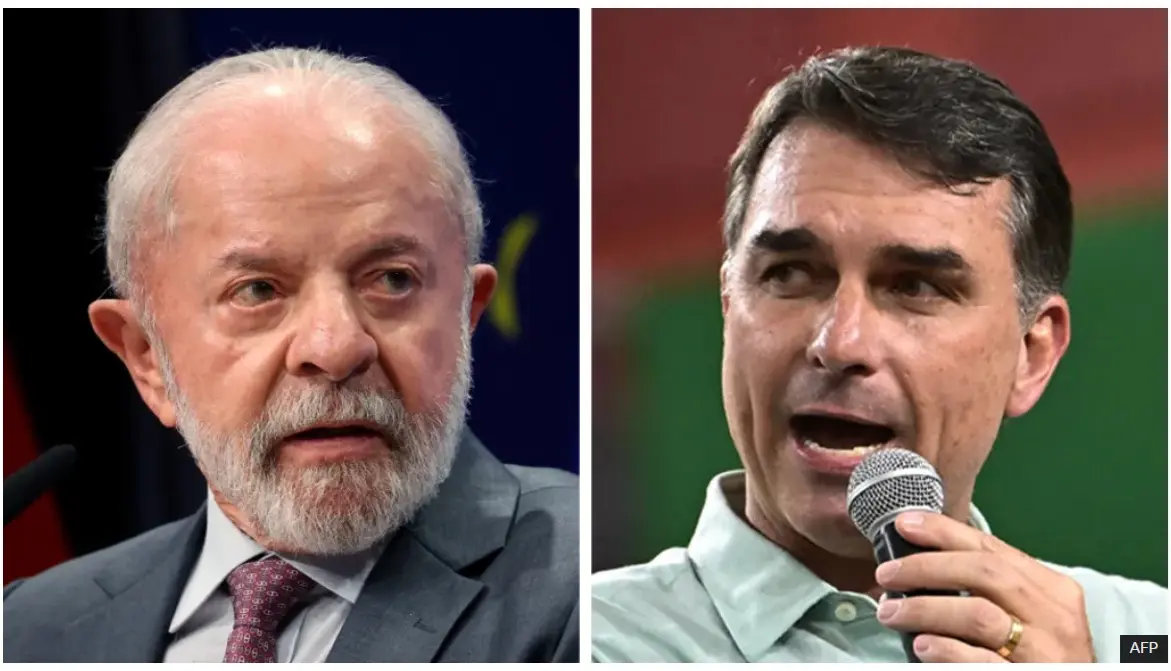
Brasília, Brazil – In a landmark upset that rewrote modern Brazilian political history, incumbent left-wing President Luiz Inácio Lula da Silva has claimed a narrow but decisive victory over far-right Senator Flavio Bolsonaro in the 2026 Brazilian presidential runoff, defying widespread expectations after trailing his challenger in the first round of voting held October 4.
Brazil’s Superior Electoral Court officially projected Lula as the victor at 9:13 p.m. local time (00:13 GMT) on election night, with more than 96% of all national ballots tabulated. Final partial tallies showed Lula capturing 51% of the popular vote, totaling 51.49 million valid ballots, while Bolsonaro secured 48.68% of the vote, or 48.8 million ballots. The outcome marks the first time in Brazil’s post-democratization electoral record that a presidential candidate lost the initial round of voting and rebounded to win the second-round runoff.
The election day process was not without controversy, as multiple opposition-aligned advocacy groups documented allegations of targeted voter suppression, including unannounced suspensions of public transit routes in working-class neighborhoods that traditionally lean toward Lula’s progressive base. Compounding logistical hurdles, widespread heavy rainfall across large swathes of the country disrupted travel for millions of voters, prompting both the Lula and Bolsonaro campaigns to file joint petitions with the Brazilian Supreme Court to extend polling hours. The court ultimately approved a two-hour extension, keeping all national voting sites open until 7 p.m. Brasília time (22:00 GMT).
The runoff victory cements Lula’s hold on the presidency of Latin America’s largest and most economically powerful nation, delivering a major setback to a regional right-wing resurgence that had seen conservative candidates win presidential contests in Peru, Colombia, Argentina, Bolivia and Ecuador in recent years. Many of those newly installed right-wing leaders had aligned closely with U.S. President Donald Trump, who returned to office in January 2025.
At 80 years old, Lula, a former metalworkers’ union organizer who first entered politics in the final years of Brazil’s military dictatorship in the 1980s, will be sworn in for his fourth non-consecutive presidential term on January 5, 2027, breaking his own previous record as the oldest head of state to take office since Brazil restored democratic rule in 1985. He has now run for the Brazilian presidency seven times total, previously serving two consecutive terms from 2002 to 2010 and a third term following the razor-tight 2022 election against former far-right president Jair Bolsonaro – Flavio Bolsonaro’s father. The elder Bolsonaro is currently serving a 27-year prison sentence for his role in a 2023 plot to overturn the 2022 election results and stage a military coup.
Heading into the October 4 first round, pre-election polling had shown Lula with a slim marginal lead, but he underperformed projections to take only 45% of the vote against Flavio Bolsonaro’s 47%, leaving both candidates short of the 50% threshold required to win the presidency outright. Over the intervening three-week runoff campaign period, Lula’s team pivoted sharply to center working-class cost-of-living priorities, rallying voters around a landmark constitutional amendment passed earlier in October that shortened Brazil’s standard workweek, alongside a popular policy proposal to roll out fully free weekend public transit across all major urban centers.
Despite his historic win, Lula enters his fourth term facing significant structural challenges. While his third administration delivered sharp reductions in national poverty rates and sustained low unemployment, widespread surges in household indebtedness left millions of Brazilian households reporting worsening financial precarity, prompting Lula’s administration to implement a nationwide ban on unregulated online gambling and sports betting apps in September 2026 to curb consumer financial harm. He also faces sustained public scrutiny over his advanced age, national public safety crises linked to rising gang violence, and deeply entrenched partisan polarization across the country. Most notably, the incoming national Congress sworn in alongside Lula in January will be the most heavily right-leaning legislative body Brazil has seen in decades, creating major legislative gridlock risks that could block many of his signature progressive policy priorities from advancing.