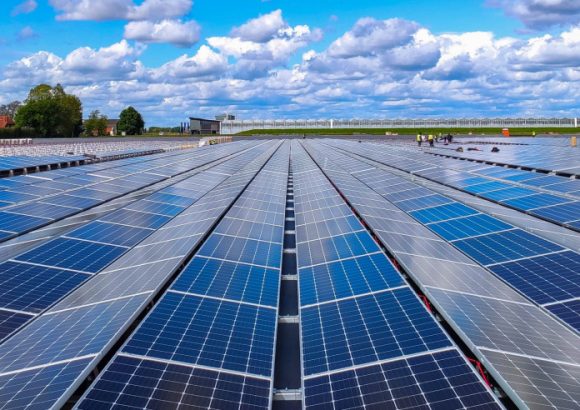
Mid-2024 data released by the Dominican Republic’s National Energy Commission (Comisión Nacional de la Energía, CNE) recorded roughly 15,400 households and commercial entities connected to the national electricity grid running self-owned photovoltaic systems to generate on-site solar power. Industry insiders with on-the-ground market experience confirm that this user base has expanded significantly in the months following the CNE’s initial report, driven by widespread demand for more reliable electricity access and long-term household financial resilience amid inconsistent public power supply.
Pascual Morillo, a two-year veteran in the local solar system sales and installation sector and owner of renewable energy firm Green Deport Eléctricos, notes that the core draw of small-scale solar setups is their ability to cut or even eliminate monthly utility bills, as self-generated renewable power offsets the need to purchase electricity from the public grid entirely for many users. Unlike common misconceptions that households need to meet a minimum monthly electricity consumption threshold to qualify for a solar installation, Morillo explains that all systems are fully customizable to match a property’s exact energy needs, with no mandatory special permits required from national electrical regulators for off-grid, private-use solar arrays. For standalone off-grid systems that operate independent of the public utility network, customers only need to purchase core components including panels, an inverter, and energy storage batteries, with no additional regulatory approvals required because the entire setup is restricted to personal on-site consumption.
For users who wish to connect their systems to the public grid to access net metering benefits, however, additional steps are mandatory: full project blueprints, technical certifications, and formal authorization from local electricity distribution companies (EDES) are required. Distributors will conduct on-site supervision to calculate the exact volume of excess energy a user’s panels can safely feed back into the public grid, calibrated to match the property’s historical consumption patterns.
The design process for every system begins with a review of the property’s past monthly electricity bills to map total kilowatt-hour usage, ensuring the final array is sized to fully meet the user’s typical energy demand. Under peak sunlight conditions during daytime hours, the panels power the property directly, pausing the utility company’s electricity meter entirely. When cloud cover reduces solar output or after sunset, the system automatically switches over to draw power from the public grid, or from on-site storage batteries for users who opt to include them, which also provide backup power during unplanned grid outages. For most distribution company customers, any excess power generated beyond on-site usage is fed back into the public grid and credited against future electricity bills – though this policy will shift for Edesur, the Southern Electricity Distributor, starting November 1 of 2024, when the firm rolls out a revised billing framework to comply with the Superintendency of Electricity (SIE) official mandate Resolution SIE-007-2026-REG.
Installation timelines vary significantly based on project scale: small residential setups can be fully commissioned in as little as three days, while large commercial solar installations may take up to two weeks to complete. Total costs also scale to match user needs: a basic entry-level kit, designed to power core small household appliances such as a fan and television with no grid dependency, retails for approximately RD$45,000. For high-consumption households or businesses seeking full, 100% independence from the public electricity grid, total investments can range from RD$600,000 up to RD$800,000. Morillo notes that the vast majority of users recoup their full initial investment in the system in roughly two years, and many break even even faster. He cites a local customer who previously paid RD$6,000 per month in electricity bills, and saw their monthly bill drop to under RD$100 just six months after their solar array went live. Beyond direct cost savings, Morillo emphasizes the added quality of life benefit of full energy autonomy: users retain full control over their power supply even during unexpected grid blackouts or utility system failures.
The components of a typical solar system are built for long operational lifespans: inverters and storage batteries last between 10 and 15 years, while the photovoltaic panels themselves can remain operational for up to 25 years. Minimal ongoing maintenance is required, with the primary task being periodic cleaning of dust buildup on panel surfaces – especially recommended after two years of operation – to avoid performance degradation. Most modern systems are equipped with smart connectivity features that allow users to monitor real-time energy output remotely via mobile phone or desktop, and send automated preventive maintenance alerts if any component experiences an operational issue.
Solar panels are gaining ground due to the cost of electricity and power outages.