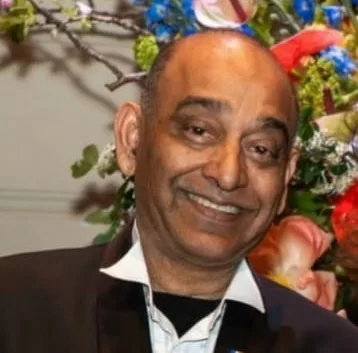
As Suriname’s Vooruitstrevende Hervormingspartij (VHP, or Progressive Reform Party) gears up for its critical leadership elections scheduled for May 2027, a prominent diaspora party figure has launched a landmark initiative to reframe the party’s internal contest away from personality-driven politicking and toward substantive, future-focused debate. Lachman Soedamah, chair of the VHP’s Netherlands-based chapter, has published a 20-question discussion framework on a personal basis, urging the party’s membership to prioritize defining the VHP’s long-term political direction before selecting a new leader, rather than the common existing practice of picking a chair first and drafting a policy platform later. The upcoming leadership contest is already shaping up as a high-stakes race, with former minister Armand Achaibersing and incumbent VHP vice chair Asis Gajadien both positioning themselves to take the reins of the longstanding Surinamese political movement. Soedamah’s intervention comes in the wake of the VHP’s 2025 general election results and its full 2020–2025 tenure in national government, which he argues demands a thorough, unflinching institutional evaluation far beyond a routine leadership transition. His 20 guiding questions are organized across five core thematic pillars: political identity and strategic vision, internal party democracy, youth and gender representation, good governance, and the formal role of the Surinamese diaspora in party decision-making. Top among the prompts is a demand for all leadership contenders to articulate concrete lessons drawn from the 2025 electoral performance and the VHP’s governing track record over the preceding five years, alongside a clear roadmap to evolve the party into a fully inclusive national organization that represents every demographic group across Suriname’s multi-ethnic society. Candidates are also required to outline how they will translate the party’s founding principles of fraternity, social justice, and national unity into tangible 21st century policy, as well as share their long-term visions for the VHP’s role in Suriname as far out as 2030 and 2050. On internal governance, the framework pushes contenders to detail how they will expand ordinary members’ decision-making authority, whether they support a formal separation between the role of VHP party chair and the office of Suriname’s national president, and their positions on term limits for party board members, regular leadership refreshment, and full transparency around candidate nominations, party elections, internal finances, and policy deliberations. Soedamah also stresses the need to break the hold of long-entrenched political networks that block generational renewal, calling for expanded leadership opportunities for young people and equal gender representation across all party bodies and electoral candidate lists. Beyond internal party affairs, the questions demand clarity on the VHP’s future socioeconomic agenda, including actionable plans to reduce widespread poverty, lower unemployment, and narrow structural inequality, as well as detailed policies for managing Suriname’s fast-growing oil and gas sector to ensure natural resource revenues deliver tangible benefits to all current residents and future generations. Contenders must also outline measures to strengthen public sector integrity, institutional transparency, judicial independence, and erode widespread public distrust in state political institutions. A dedicated section of the framework addresses the Surinamese diaspora’s role, asking candidates to commit to overhauling the formal relationship between the VHP’s domestic Suriname leadership and its international chapters to give overseas members meaningful, substantive input into policy design. Soedamah noted that the VHP’s Netherlands branch previously submitted a set of modernization proposals to then-party chair Chan Santokhi at a November 2025 gathering in Wassenaar, covering internal democratic reform, transparency, generational renewal, gender parity, and institutional professionalization, and that the Dutch chapter is now drafting a formal policy memo outlining its full position ahead of the 2027 leadership vote. Soedamah has explicitly clarified that his 20-question document does not represent an official position of VHP-Nederland, nor does it signal any endorsement of a specific leadership candidate. Instead, he is calling on all official VHP governing bodies to organize a fair, fully accessible leadership debate process that guarantees equal speaking opportunities for all contenders and allows members to raise critical feedback without facing exclusion or intimidation. He has demanded every candidate release a fully public, verifiable policy manifesto ahead of the 2027 vote, complete with concrete priorities, actionable reforms, and measurable performance targets, and stressed that cross-factional, cross-generational collaboration must remain a core party value even after the leadership election concludes. While noting that the final decision on the new VHP chair rests exclusively with the party’s accredited domestic members and governing bodies in Suriname, Soedamah emphasized that the choice must be rooted in policy substance and collective responsibility, rather than longstanding political habits or personal power accumulation. His core guiding mantra for the contest is: “First define the vision, then select the leader.” The full text of his contribution, including all 20 questions for leadership candidates, is published alongside the official party document VHP_op_weg_naar_2027.pdf.
Soedamah legt VHP-kandidaat-voorzitters 20 vragen voor: ‘Eerst visie, dan leiderschap’